

ALEXANDRIA, Va.–Representatives of four credit union/regulator trade groups offered their feedback on NCUA’s proposed 2023-24 budgets during the agency’s budget briefing here, with all four, not surprisingly, calling for budget reductions.
As CUToday.info has been reporting, NCUA earlier announced a proposed combined 2023 staff draft budget of $367.0 million, an 8.1% increase from the 2022 staff budget. NCUA’s proposed operating budget is $350.8 million, which is 9.6% higher than in 2022.
The proposed 2023 capital budget is $11.2 million, or 14.1% lower than in 2022. The proposed Share Insurance Fund administrative budget is $4.9 million, or 21.5% lower than in 2022, NCUA said.
Here’s a look at what each of the representatives had to say:
CUNA: Jason Stverak, Deputy Chief Advocacy Officer for Federal Affairs
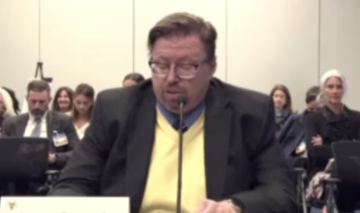
Jason Streak
Stverak told the board the proposed expenditures generally align with CUNA’s strategic objectives, but while the size of the proposed budget is “unsurprising, CUNA is concerned over size of increase.”
Stverak said credit union net income in 2022 is on track to decline by 30 basis points this year, and that most economists are saying the Fed’s moves will put the country into a recession, which will only raise the challenges to CUs.
“The proposed 9.6% increase is dominated by pay and benefits,” he said. “We recognize the lack of flexibility the agency has related to pay and benefits (due to federal rules, labor agreements), but…the budget reflects 25 new positions, including 20 new positions and five previously proposed positions at a cost of $4 million. The agency does have greater latitude in the number of new positions it creates and the vacancies it fills. We support creation of certain positions and understand the potential need for specialist examiners at the regional level. However, we urge the agency to (reexamine) if the 10 new positions at the regional offices are necessary, particularly given the increases in the ONES office.”
Hurting Ability to Serve
Stverak said the budget increases and costs to CUs will “stifle” the ability to serve members.
Like others speaking to the board, CUNA called on NCUA to contain its travel costs using off-site exams and virtual options for training.
“We believe there is an immense capacity for NCUA to reduce its footprint and to right size the institution to become a more effective regulator,” he said.
NAFCU: Curt Long, Chief Economist and VP of Research
Long told the board NCUA should spur efforts to have YoY budget decreases, not increases.
“NCUA’s budget continues to increase and this draft budget once again overlooks opportunities for cost savings,” he said. “NAFCU urges NCUA to reign in the recent trend of substantial increases in its budgets.”
Long told the board the last two years during which exams were conducted virtually came at no cost to the system, noting that NCUA expects the share insurance fund ratio to increase to 1.3%.
He pointed out the draft budget has a large increase for travel expenses that reaches 75% of pre-pandemic levels of spending, even though the reduction in travel did not negatively impact agency operations over the past three years.
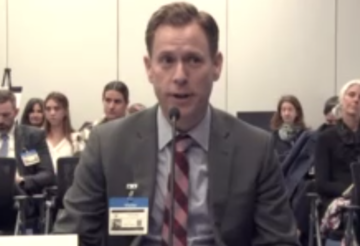
Curt Long
He called on the agency to return to virtual examination procedures and to use virtual training when suitable, adding NAFCU does recognize the value of in-person interactions.
“NAFCU urges the NCAA to prioritize a hybrid exam model to reduce travel costs,” he said.
Meanwhile, Long said NAFCU has been extremely pleased to see the NCUA facilitate a return of excess cash from the operating fund to federal credit unions, but the trade group now sees the current cash balance is “elevated once again.”
“NAFCU urges the agency to carefully scrutinize cash needs and to provide a refund to credit unions in the amount of any surplus,” Long said.
In addition, Long labeled the proposed $11.1 million increase in the budget for contracted services for its MERIT system a “significant concern,” saying what was once a $37.9 million budget item has now ballooned to $65.6 million.
NAFCU wants NCUA to make a “concerted effort to lower costs associated with MERIT and provide credit unions with a reliable cost estimate,” Long said.
Additional Points Made
Other points raised by Long:
- NAFCU is concerned about the “dramatic increase" in the number of specialist examiners
- NAFCU wants to see specificity on which areas of consumer compliance warrant the additional positions
- NAFCU supports efforts to improve cyber security and resilience to security threats but requests NCUA provide transparent metrics around the added value of new cyber security investments
- NAFCU “applauds” the agency’s commitment to financial inclusion and supports the efforts of NCUA's ACCESS initiative and the addition of one support person
- NAFCU supports the addition of two people in the Ombudsman’s office
NASCUS: John Kohlhoff, Senior Vice President of Policy and Supervision
Speaking on behalf of the country’s nearly 2,000 state-chartered CUs and various state regulators, Kohlhoff noted the state-chartered CUs paid $86.3 million in state operating fees in 2021, ensuring what he said was “robust independent oversight throughout the country.”
“These monies funded thousands of examiner hours and numerous reports that in many cases provide…the only outside perspective of an institution,” said Kohlhoff. “We raise this point because enterprise budget justification illustrates what it purports to be the relative cost borne by state and federal credit unions to fund supervision, without recognition of the savings afforded the NCAA budget by the application our state resources. This is most evident when the budget notes the state credit unions pay only 31.2% of NCUA's operating budget, with a footnote acknowledging state credit unions pay supervisory fees to their state regulator."
A ’Disservice’
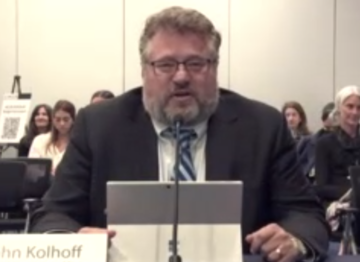
John Kohlhoff
“In the narrow context of NCAA budget funding this is of course true, but it does a disservice to the material expense borne by state credit unions to fund the supervision relied upon by the SIF and presents a misleading picture of the true expense allocation impacting the fund the recognition of this impact of the state supervisory programs,” he continued. “The related cost carried by the credit unions takes on an added relevance when considering the context of the overhead transfer rate methodology. The overhead transfer rate is often overlooked by credit union stakeholders as it results not from an expense item every year, but from lost opportunity cost both in interest income and capital held as a result of the deposits with NCUA as part of the deposit insurance fund.
“However every dollar transferred from the SIF by the overhead transfer…is $1 unavailable to cover losses in the system and lost future income.”
‘Prudent’ Management Needed
Kohlhoff called for “prudent” handling related to what he said is a potential imbalance and a disadvantage to the dual charter system.
“Work done by state regulators directly benefits the SIF, reducing its administrative costs and maximizing funds available to cover losses or generate revenue to be repaid to all insured credit unions through the current overhead transfer methodology,” he said. “However, the cost-benefit with respect to federal charters works in reverse. The SIF absorbs costs of supervising federal credit unions and the benefit flows to the federal charter. To be clear, costs associated with administering the fund should be allocated to the fund. That is what Congress intended.”
Virginia Credit Union League: Carrie Hunt, President
Hunt said she continues to have questions over why NCUA continues to say it needs more examiners.
“I have reviewed the CAMELS system and refresh my recollection, of all the factors that in the end sway the measure--capital adequacy, asset quality, management, earnings, liquidity and sensitivity to market risk--within each of these buckets the NCUA looks at all these different factors and it really is a blend of safety and soundness in its role as a functional regulator,” said Hunt. “The budget adds several FTEs in areas of specialization, and from my perspective most of those really fall at one end of the asset spectrum. That is to add additional staff to examine larger and more complex credit unions. In my written testimony I have ‘more complex’ in quotes, because I really have to question whether size really equates to complexity.
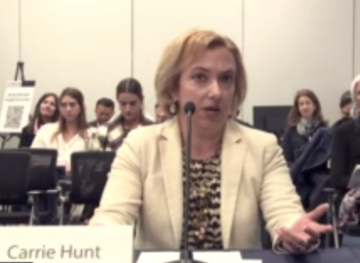
Carrie Hunt
“I think, certainly, you could have a large credit union that does more and more activities, but from my perspective and looking at the credit union industry I have not seen that to date,” she continued. “So, in looking again at the CAMELS system, the risk in the end NCUA is seeking to address with additional examiners is already taken into account in terms of what it looks at.
“So, it looks like to me that NCAA is seeking to protect both the safety and soundness of the credit union system overall with that, but also could be over-regulating just due to size.”
Hunt said the result of all that is tighter and tighter regulation of CUs, regardless of risk profile.
“If I'm correct in some of my assumptions then I do think NCUA is doubling down on risk mitigation and credit unions end up paying more and more, really, for the same insurer role,” she added.
About Cybersecurity
Separately, while Hunt said cybersecurity is “incredibly important,” she called on NCUA to consider making data security protections on the merchant side a legislative priority.
“I realize that this is not a direct relation to what the NCUA regulates, but what happens in the whole ecosystem does have a direct impact on credit unions and safety and soundness,” Hunt said. “Credit unions are facing ever-evolving attacks on systems, but a lot of this comes through weaknesses in in merchant protocols and not necessarily those of credit unions.”
Small Credit Unions
In the merger/chartering environment in Virginia, she said she is seeing CUs seek different avenues beyond the traditional merger scenario of a smaller credit union merging into a larger credit union.
“We're also seeing mergers of equals of various sizes, consideration of purchasing bank assets, credit unions looking at charter conversions and credit unions merging with out of state credit unions. We appreciate the NCUA's acceptance of these transactions as mechanisms where credit unions are able to reach more consumers. It is extremely, extremely challenging to run a financial institution without coming to scale and while we support (the) initiative in reaching out to the industry leaders and stakeholders to identify additional ways to help new small and low-income designated credit unions, solving this does go beyond this scope of the budget process and we look forward to working with the agency on that.”