

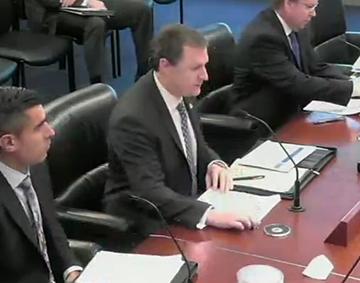
Larry Fazio
ALEXANDRIA, Va.—The NCUA Board Thursday said it will publish an advance notice of proposed rulemaking (ANPR) on supplemental capital, most likely in January 2017.
During the agency’s board meeting, staff stressed that supplemental capital and secondary capital are two separate things and should not be confused. Moreover, alternative forms of capital will mean new rules and potentially even other regulators for a credit union to deal with in the SEC and OCC. Staff noted credit unions that turn to supplemental capital would need to deal with rules related to broker-dealers, investor advisory roles, state regulations and filing fees.
In addition, there are a host of anti-fraud rules that NCUA would need to research, write, propose, put out for comment and eventually adopt.
The board was told that subordinate debt can be expensive, with banks paying between rates 5.25% to 6.5%, and that’s before any legal fees. For banks those costs are tax-deductible, which would not be the case at federal credit unions.
NCUA Director of Examination and Insurance Larry Fazio said proposed rulemaking in 2017 around supplemental capital “would be great way to get stakeholders involved. An ANPR would allow a public vetting before staff proposed any rule.”
CUToday.info previously reported that Board Member Mark McWatters, during the 2016 NASCUS State System Summit, said the ANPR might be coming at the start of next year. Thursday, McWatters and Chairman Rick Metsger concurred that plans for formulating a sound supplemental capital proposal that would truly benefit credit unions would require an ANPR.
The announcement of NCUA’s intent to propose a supplemental capital rule—not a rule on secondary capital—came during a board briefing in which Metsger and McWatters heard from NCUA’s team, headed by Fazio, charged with bringing a supplemental capital proposal forward.
Fazio and his team outlined a series of detailed issues that creating a supplemental capital rule involves. McWatters, a tax attorney, noted that this process is “not easy” and is a “complex issue."
Former NCUA Chairman Dennis Dollar, in a previous report in CUToday.info, compared the work in creating a supplemental capital rule to efforts around field of membership. Dollar, principal at Dollar Associates in Birmingham, Ala., termed a supplemental capital plan complex, noting that unlike the work around FOM, with supplemental capital NCUA is “starting from scratch on an extensive supplemental capital rule. . . If the devil is in the details, there is a lot of devil to deal with in supplemental capital availability for all credit unions—not just low-income credit unions.”
McWatters, as he has consistently stated, emphasized that credit unions need to provide strong input into the how a supplemental capital rule should be shaped.
"People have asked me about this for two years. So here it is. We need your ideas and suggestions and questions. And we may then come back with working groups and see if we can come back with a structure that will allow credit unions to issue supplemental capital,” said McWatters, who has led the effort on supplemental capital inside the agency.
NASCUS shared its perspective on NCUA's supplemental capital announcement.
“The state system would work closely with NCUA in addressing the tax exemption issue – and others," said NASCUS President and CEO Lucy Ito. "Supplemental capital is an important tool in enhancing credit union safety and soundness, and the state system must be part of the discussion to ensure that both federal and state credit unions have the opportunity to use this tool, and that neither be at a disadvantage. NASCUS has a long record of supporting this critical safety and soundness enhancement, and will continue to build that record.”