

ALEXANDRIA, Va.—The NCUA board Thursday voted 3-0 to issue a proposed rule to “streamline and modernize” derivative investment authority for credit unions.
The agency also approved a final rule on corporate credit unions that relaxes some of the guidelines within the initial corporate rule established following the collapse of the corporate credit union system 12 years ago.
NCUA’s Tom Fay, senior capital markets specialist, told the board the proposed derivatives rule, now out for a 60-day comment period, addresses balance she

Rodney Hood
et mismatches brought on by the extended low-rate environment. The agency also stressed credit union use of derivatives must be backed by the appropriate expertise, adding NCUA is looking to develop training for credit unions.
“We witnessed significant changes in the composition of credit unit balance sheets over time (leading to mismatches),” explained Fay. “With interest rates moderating lower and lower, the need to manage the inherent risk arising from these mismatches between assets and liabilities is what makes derivative authority important to the business of credit unions. We believe that credit unions should employ all the tools that make sense for their respective situations. Failure to do so could result in significant losses of income and capital in extreme market conditions.”
Hood: 'Right Before Our Eyes'
Chairman Rodney Hood pointed to the financial challenges facing CUs being created by high unemployment and falling interest rates.
“This is happening right before our very eyes,” said Hood. “Making it increasingly challenging for credit unions. Any tool that can efficiently improve financial performance and strengthen liquidity and capital, is a sound pursuit, provided it can be done safely and affordably. On the surface, the derivative rules may seem like something that's not an obvious action for responding to the current financial pressures facing credit unions during this crisis. However, I believe that enhancing the ability of federal credit unions to better protect themselves against market risk is critically important at all times. And managing balance sheet risk at this time clearly underscores how important it is to have tools like financial derivatives for volatile economic periods that can hurt earnings and capital.”
Harper: 'Greater Flexibility'
Board Member Todd Harper emphasized the proposal adds a timely and useful interest rate risk management tool, “Without the upfront administrative burden, and could provide greater flexibility that can immediately benefit and increase hedge effectiveness. This would streamline the authority to purchase and use derivatives designed to manage interest rate risk.”
McWatters: Reducing Pressure to Reach for Yield
Board Member Mark McWatters addressed how derivatives could prevent CUs from reaching for yield.

Mark McWatters
“A very low-rate environment puts pressure on credit unions,” he said. “It can cause credit unions to look for higher yields. There is the tendency to reach out for that through instruments with a long-term fixed rate.”
NCUA said the proposed changes make the derivatives rule “less prescriptive and more principles based,” adding the significant elements of the proposal include:
- Eliminating the preapproval process for FCUs that are complex with a Management CAMEL component rating of 1or 2
- Eliminating the specific product permissibility
- Eliminating the regulatory limits on the amount of derivatives an FCU may purchase
NASCUS Response
In response to the derivatives proposal, NASCUS CEO Lucy Ito said, “State credit union derivative authority properly rests with state supervisors, who have extensive experience with derivatives and interest rate swaps both in state-chartered credit unions and community banks. The state system looks forward to assisting NCUA in raising awareness of derivative oversight in the broader credit union system by bringing state regulator credit union experience and lessons to the learning table. NCUA’s move to streamline its regulation in the area is pro-active in anticipation of increased interest rate risk given current low-rate environment and likely long-term rate increases.”
New Corporate Rule
The board also unanimously approved a final rule on corporate credit unions. The rule amends part 704 of the agency’s corporate credit union rules and make four notable changes:

Todd Harper
- Permits a corporate credit union to make a noncontrolling, de minimis investment in a natural person CUSO without the CUSO being classified as a corporate CUSO
- Expands the categories of senior staff positions at member credit unions eligible to serve on a corporate credit union’s board
- Removes the minimum experience and independence requirement for a corporate credit union’s enterprise risk management expert
- Clarifies how corporate credit unions may invest in subordinated debt instruments
Harper said the new rule updates, clarifies and simplifies several provisions of the previous regulations, but also said he recognizes the need for the agency to “move cautiously.”
“The lesson that we learned more than a decade ago is that if we provide too much flexibility to corporate credit unions it can cause catastrophic trouble for the entire system,” he said. “The matter before us is narrowly targeted. The final rule contains appropriate guardrails.”
McWatters concurred.
“The NCUA enacted a series of corporate credit union rules following the financial crisis of 2008/2009 that were aimed at protecting the safety and soundness of the National Credit Union Share Insurance Fund and the credit union system,” stated McWatters. “Those rules have served to reestablish the integrity and financial stability of the corporate credit union system. Today, we offer a modest and thoughtful relaxation to certain aspects of the rules that will reduce regulatory burden without threatening safety and soundness.”
NASCUS Response
In response to the corporate rule, Lucy Ito, CEO of the National Association of State Credit Union Supervisors, said, "Broadening eligibility of natural person credit union senior staff to serve as board members should expand access to highly relevant expertise among the nation’s corporate credit unions – six of which -- out of a total of 11 – are state-chartered. The state system strongly supported this change.
"Enabling corporate CUs to make minimal investments in a CUSO without triggering a ‘corporate CUSO’ classification should enable the credit union system to stay abreast of broader fintech developments.
“The state credit union system looks forward to discussion with the agency about corporate credit union participation in subordinated debt as the agency moves toward a final rule on the subject.”
Cybersecurity Considerations
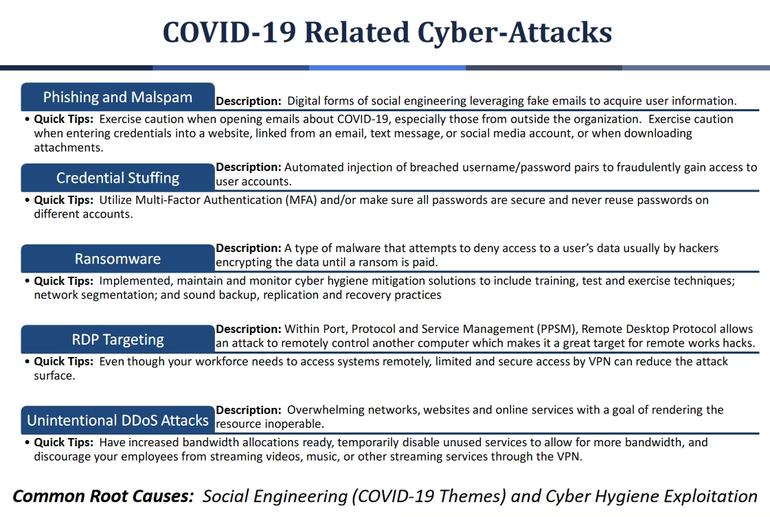
At the opening of the meeting the board received a briefing on cybersecurity considerations during the COVID-19 pandemic. Johnny Davis, special advisor to the chairman for cyber security and director of the Division of Critical Infrastructure, outlined how cyber-threats have only increased during the health crisis and detailed key threats facing credit unions today (see image below).

Johnny Davis
“To sum it up, the root cause for all of these attacks falls into two categories: social engineering and human behavior,” said Davis, who emphasized the need for credit unions to pay close attention to training new and existing staff on how to safely work with the CU’s systems remotely.
Hood also stressed NCUA is focused on gaining authority to oversee third-party vendors’ cyber-security processes and procedures, in an effort to further secure credit union system.
“Let me now be very clear, I deeply believe that Congress should consider providing NCUA with vendor authority to allow the agency to better supervise third-party cyber security risk,” said Hood. “But in my view, this should be done post pandemic recovery. I've made this request to members of the Senate Banking Committee through my recent letter and I do believe that providing vendor authority amid the pandemic will place additional burden on our staff as well as the industry at large. But I certainly would like to see us have this post recovery.”
Hood noted that prior to Thursday's meeting the board oted to remove a fourth item from its agenda—an RFI for supervisory guidance and potential improvements in future communications.