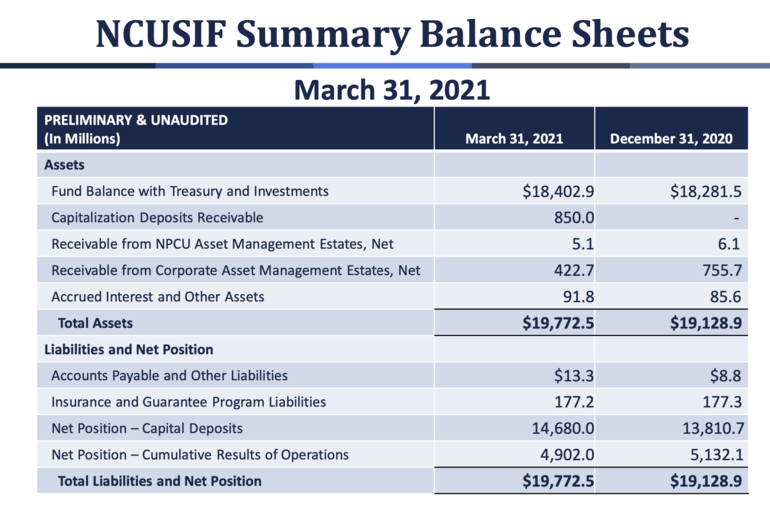
ALEXANDRIA, Va.–The NCUA board has put out for comment a request for input on the Normal Operating Level of the National Credit Union Share Insurance Fund (NCUSIF).
The comment period will run for 60 days.
Also known as the “NOL,” the operating level is critical to any premium assessment that might be charged credit unions in order to shore up the number, should it be necessary. Per the Federal Credit Union Act, the NOL must be set between 1.20% and 1.50%. It is currently set at the 1.30% level. The NCUA board has the authority to assess a premium to bring the equity ratio back to 1.30% but no higher.
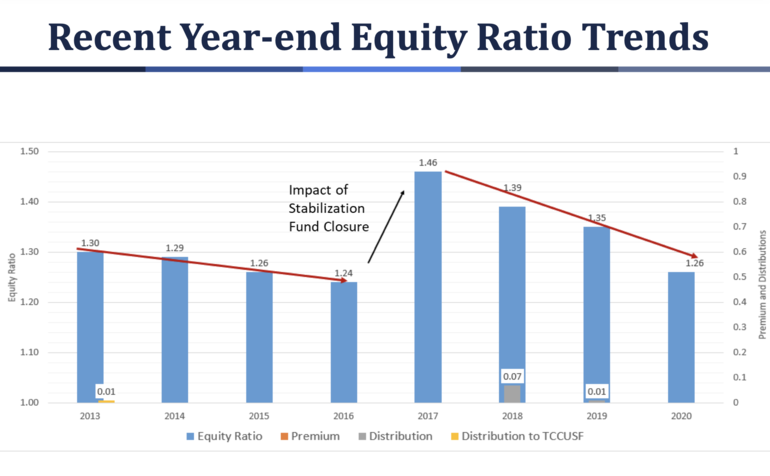
NCUA is projecting the equity ratio will be at 1.22% at mid-year 2021. If it falls below 1.20%, NCUA is required to create a net worth restoration plan.
The NCUA Board approved the current normal operating level methodology in September 2017, as part of the plan to close the Temporary Corporate Credit Union Stabilization Fund at an earlier date than required by law, noted NCUA Chairman Todd Harper.
“At that time, the methodology focused on ensuring the Share Insurance Fund could withstand a moderate recession and accounted for the changing values in the NCUA Guaranteed Notes program and associated legacy assets of the failed corporates,” Harper said.
“The policy also factored in the natural decline in the equity ratio because of continued growth in share deposits within the industry. However, much has changed since 2017. The economic impact of the COVID-19 pandemic and its associated fiscal responses has resulted in an unprecedented level of insured share growth over the last year. That share growth caused the Share Insurance Fund’s equity ratio to decline to 1.26% at the end of 2020. And, as we heard earlier this morning, the continued growth in share deposits resulted in a projected equity ratio of 1.22% for June 2021.”
A ‘Critical Step’
Noting credit unions also face a prolonged period of very low-interest rates for the foreseeable future, Harper called the request for public comment about setting the normal operating level is a “critical step in setting the board’s policy objectives for the Share Insurance Fund going forward.”
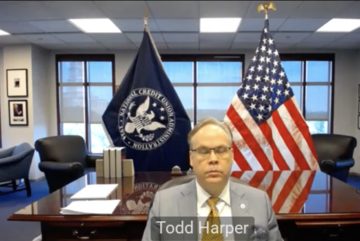
NCUA Chairman Todd Harper during hearing.
Harper outlined the four areas on which comment is being sought:
- Policy decisions for setting the normal operating level.
- Lessons that have been learned from the pandemic’s economic fallout.
- Potential economic scenarios NCUA staff may consider when determining a new operating level.
- The possible effects on the Share Insurance Fund’s performance of ending of the Guaranteed Notes program will have.
Hauptman: Discussion Can Sound Like ‘Divorce Debate’
“This request for comment is all about what happens between 1.2 and 1.5%,” said NCUA Vice Chairman Todd Hauptman. “We want to hear what folks think should occur at various points in between those two goalposts. When should distributions be required and when should there be some flexibility? What calculations should we use? We’re essentially seeking comment on who sends money to whom, how much they send and when they should send it.
“Let’s be clear that all of the money involved here belongs to credit union members,” continued Hauptman. “For those of us who are children of divorce, this debate can feel like a bit like custody arrangements. When does a dollar go live at the SIF and when does it go back to stay with the credit union?”
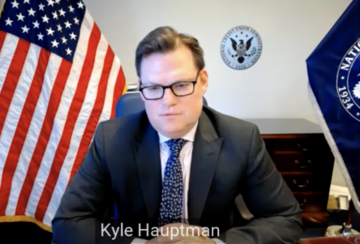
NCUA Vice Chairman Kyle Hauptman during meeting.
Hauptman said the central tension at work in the discussion involves two compelling yet opposing factors:
- If the agency makes the NOL too high, then "we’re parking money in the SIF that could be used to serve the needs of credit union members."
- On the other hand, if the agency decides to keep the equity ratio too low, then “we’d all constantly be in today’s situation. We’d always be one small move away from dipping below 1.2% and credit unions would always have a possible premium assessment hanging over their heads. That kind of uncertainty isn’t helpful for credit unions nor for NCUA as an insurer.”
‘Any’ Constructive Feedback Welcomed
“Balancing these tensions is what the request for comment is all about,” said Hauptman, saying he wanted to emphasize he would welcome “any constructive thoughts on our Net Operating Level. So please don’t feel bound by the way we may have framed the issued in the Request. NCUA staff has prepared a thoughtful, professional Request for Comment. But if you’re sitting out there with ideas that don’t fit our framework, I encourage you to send them anyway. If your suggestion is unfeasible, then ‘no harm, no foul.’ I only say this because the NOL is so important that we are obliged to listen to any quality feedback, regardless of how we’ve written the request.”
Hood: Learn From History and Look Forward
NCUA Board Member Rodney Hood said he believes the agency should be “very careful in changing the structure of the Normal Operating Level.”
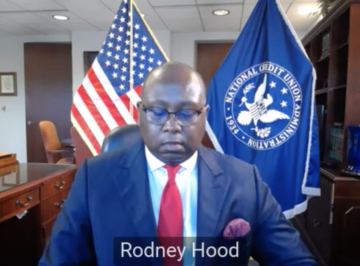
“That’s not to say that no changes are warranted. However, history is an important guidepost. As is the fact that our system is different than the FDIC’s. As it should be,” said Hood. “The risk profile is different between credit unions and banks. And we have a cooperative system in the way the NOL and NCUSIF is built--by design.”
Hood said he is open to NOL changes “based on the evidence” and he is not opposed to considering some of the tools the FDIC uses if those tools fit the cooperative system.
Hood further said credit unions should learn from history–pointing to losses the fund has seen in the past, including substantial losses related to loans made for taxi medallions—while also looking to risks that lie in the future.
Corporate Stabilization Fund
Hood also dedicated some of his remarks to the Corporate Stabilization Fund, which he suggested that since its transfer to the NCUSIF in 2017 means it should be considered in any comments filed related to its overall risk profile.
“Many of the legacy assets of the Corporates have significantly improved in value or are projected to continue to improve in value as we wind down the Corporate Resolution Program. This brings me to another point,” Hood said. “When my office asked BlackRock, who is supporting NCUA’s work on resolving the corporate estates for the agency, the most important take away for the agency as we wind down the Corporate crisis should we go through something similar in the future…. BlackRock’s answer, and I quote, ‘Patience.’ Patience. I am certainly taking this to heart.”
Moving forward, Hood said he’d like to see if the agency can better incentivize the loss reserves with actual losses incurred.
“Again, we can’t be clairvoyant, but we can better align incentives,” he said.