

ALEXANDRIA, Va.–The NCUA board has voted 3-0 to put out for 60-day comment updated hiring rules aimed at helping credit unions give “second chances” to people by hiring them.
In 2019, as CUToday.info reported here, the NCUA board voted 3-0 in favor of what is often referred to as the Second Chance IRPS”–officially known as Proposed Interpretive Rule and Policy Statement, Guidance Regarding Prohibitions Imposed by Section 205(d). That update reduced the number of individual cases the NCUA board must review and approve before someone can be hired.
The new proposal, which technically affects parts 701 741, 746, 752 of NCUA’s rules and regulations, is required by the Fair Hiring in Banking Act, which earlier passed Congress. Specifically, it makes changes to Section 205(d ) of the Federal Credit Union Act, which prohibits any person who has been convicted of dishonesty or breach of trust from participating in the affairs of an insured credit union. It applies to both employees and volunteers and includes language that addresses the writing of bad checks and drug-related convictions.
The Fair Hiring in Banking Act also directed the NCUA to consult with the Federal Deposit Insurance Corporation on implementation of the law, which the agency said it has done.
The Specifics
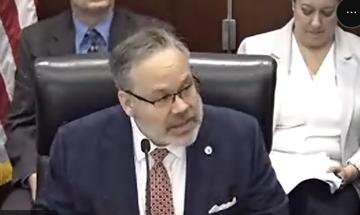
Todd Harper
The proposed rule would:
- Add a new part 752 to the NCUA’s regulations.
- Codify the agency’s policies and procedures related to consent applications.
- Define what criminal offenses are covered by the regulation, such as criminal offenses involving the simple possession of controlled substances or other minor offenses.
- Amend the NCUA’s rules governing the conditions under which newly chartered or troubled federally insured credit unions must notify the NCUA of proposed changes to their board of directors, committee members, or senior executive staff.
Harper: More Than 75-Million People Involved
NCUA Board Chairman Todd Harper, who praised Board Member Rodney Hood for taking the lead on the issue, noted that more than 77-million people in the U.S. have an arrest or conviction record that could appear in an employment background check, many of whom are not violent or career criminals.
He added that number includes a “disproportionate number” from communities of color. If we are to advance financial inclusion and equity within the credit union system, we must facilitate the access of all demographic groups to credit union employment opportunities.”
In response to a question from Harper on whether the change will increase costs for credit union insurance and fidelity bond coverage, staff said that in 2019 its discussions found no indications of any premium adjustments as a result.
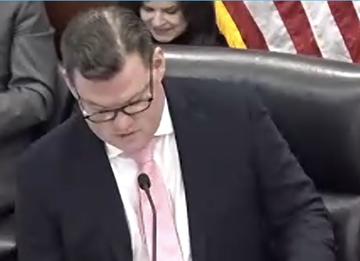
Kyle Hauptman
But staff said it welcomes comment on whether that remains true.
Hauptman: New Rule Expands Candidate Pool, Reduces Burden
Saying he is “pleased” to see the proposed rule and the coordination with the new rule, NCUA Vice Chairman Kyle Hauptman said “persons who have paid their debt to society, or whose offenses are relatively minor, represent a vast array of potential workers.
“The proposed rule gives greater latitude for a credit union to hire an individual with a record or allow them to serve on the board of directors,” Hauptman continued. “It carves out lesser offenses and expands on exceptions. It narrows the instances where a credit union needs to apply to the NCUA to hire a candidate.”
Hauptman said the changes also support credit unions in their role supporting financial inclusion and help to reduce regulatory burden.
“Further, the availability of forms and instructions related to consent applications on the agency’s website makes it easier for potential candidates to find out if they qualify for employment without the credit union having to submit an application,” Hauptman said. “However, applicants must still qualify for fidelity bond coverage.”
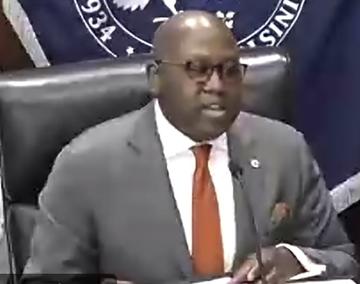
Rodney Hood
Hood: What Are the Main Differences?
NCUA Board Member Rodney Hood called it “essential” for regulators to better address the needs of credit unions and their communities, which is why he has championed the “second chance” IRPs and which he said will help credit unions reach “an untapped labor resource.”
He said the proposed rule also reinforces that “America offers a second chance…This is about more than regulatory relief, it embodies doing what is right.”
The Main Differences
In response to a question from Hood over the main differences between the NPR and the second chance IRPS we introduced in 2019, but NCUA Staff Attorney Pamela Wu said, “First, under the IRPS, an expunged criminal record that is still accessible to be used for subsequent purposes, like an evaluation of the person’s fitness or charter, requires a consent application. However, the proposed rule provides explicit relief with respect to expunged records that are still accessible, even for certain charter and fitness evaluation purposes.
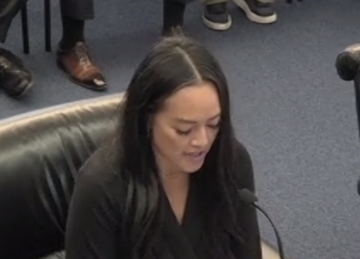
Pamela Wu
Two: Expansion of Criteria
“Second, the proposal would expand upon our current criteria for the de minimis bad check offenses, which under the IRPS is limited to an aggregate total face value of $1,000 or less,” Wu continued. “The proposal expands on this by allowing for the aggregate value of bad checks of $2,000 or less to qualify for relief. Also, our current IRPS already includes de minimis exceptions for certain small-dollar simple theft and the use of fake ID, but the proposal also extends relief to other designated “lesser offenses” like trespass, fare evasion, or driving with an expired license or tag. These types of low-risk offenses are now statutorily excluded from the scope of Section 205(d).
Three: Who’s Excluded
“Third, the proposal expressly excludes from the ‘criminal offense involving dishonesty’ definition, misdemeanor criminal offenses committed more than one year before the filing date of a consent application, and offenses involving the possession of controlled substances,” Wu continued. “The Second Chance IRPS already classifies as de minimis convictions for simple misdemeanor drug possession offenses, but with certain conditions, and only if the conviction did not involve distribution, sale, trafficking, or manufacture. The proposed rule should provide relief for more individuals with a record of drug possession.
Four: Foreign Convictions
“Finally, I would highlight that the proposal addresses foreign convictions, which our current IRPS is silent on. We have proposed an approach to foreign convictions that is consistent with the FDIC’s existing approach to these types of offenses, but the statute is silent on this, and we are specifically seeking public comment on this aspect of the rule.”