

ALEXANDRIA, Va.–The NCUA board and credit unions were offered an update on where things stand with the agency’s new examination solution, the Modern Examination and Risk Identification Tool, better known as MERIT, which is part of the agency's broader Enterprise Solution Modernization (ESM).
MERIT, which replaces the 25-year-old AIRES exam tool, has cost approximately $54 million to date to develop and implement, according to agency staff.
Kelly Lay, director, and Amber Gravius, supervisory special assistant, both in the Office of Business Innovation, told the board in offering their update that use of many of the new tools available is optional, but they believe credit unions will find “value” in MERIT, and they encouraged CUs during their first MERIT exam to work with their examiner to understand all the functionality, given that some CUs may feel uncomfortable with the “completely new” solution.
The rollout of MERIT comes in conjunction with several other new tools from NCUA, as well.
Lay and Gravius said the new tool is flexible, scalable, and user-friendly. NCUA staff added that among the objectives is to streamline the examination process and continue with the trend toward more off-site exams.
NCUA recently issued a Letter to Credit Unions on the new exam tools, and is offering a number of training programs on the MERIT web page on www.ncua.gov.
Staff said more than 3,000 people are currently signed up for the information portal NCUA Connect.
Harper: NCUA Has Adapted to Marketplace
“Since joining the NCUA board, I have often noted that three of the main tenets of my regulatory philosophy are that the NCUA should be innovative, forward-looking, and risk focused,” said NCUA Chairman Todd Harper. “Just as the world changes and the credit union industry evolves, the NCUA must also adapt to marketplace and technological developments. That is exactly what we are doing through the deployment of…MERIT and its associated systems, which together will modernize the agency’s examination, data collection, and reporting efforts.”
Harper noted the agency began transitioning to MERIT and its related applications in August of 2021 with an objective of enhancing safety and soundness and streamlining the process.
“…Sophisticated credit unions now provide remote deposit capture, online banking, and mobile apps to their members. And, some have even begun to deploy machine learning and other forms of artificial intelligence in their operations,” said Harper. “With so many changes in the way that credit unions and the NCUA operate taking place since 1995, it makes sense that MERIT is completely different than AIRES and that it will change everything we do in examinations, from how we manage workflow and request documents to how we evaluate a credit union’s performance and prepare and deliver exam reports. And, MERIT and its related systems will give us new analytical capabilities that both examiners and credit unions will appreciate.”
Hauptman: 3 Benefits Identified
NCUA Vice Chairman Kyle Hauptman said the new web-based tools represent a “significant advancement forward for NCUA” that will help it to “better fulfill its mission while at the same time improve efficiency for examiners and credit unions. “
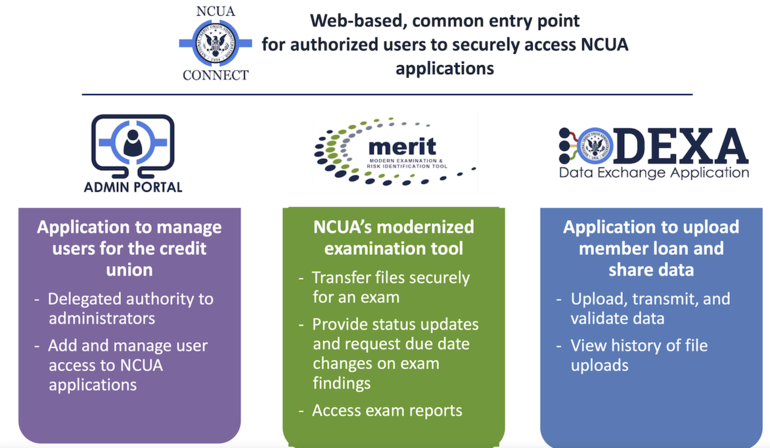
Specifically, Hauptman said MERIT offers credit unions the ability to securely:
- Transfer files within the context of an examination
- Provide status updates and request due date changes on examination findings and action items
- Retrieve completed examination reports
“The extensive pilots and resulting adjustments should help smooth the transition between AIRES and MERIT,” said Hauptman. “But we can’t forget that part of any transition process includes change management. I urge credit union and vendors to avail themselves of the many resources available to them.”
Hood: What Has it Cost?
In response to a question from NCUA Board Member Rodney Hood over how much the agency has spent to date on MERIT, the Office of Business Innovation’s Lay said total modernization costs through year-end 2020 was $39.7 million, while $14 million has been spent 2021 to date for a total of $54 million.
Lay said a budget request has been made for $12.4 million and $12.1-million for 2022 and 2023, respectively, related to the new system and its enhancements.
According to Lay, an outside firm’s review of MERIT and its costs were in line with the expected range, but the report has identified “opportunities for cost savings in future years.”