

ALEXANDRIA, Va.–The NCUA board has voted 3-0 to approve an update to rules governing participation loans, eligible obligations, and indirect lending, with a focus on making it easier for credit unions to engage with fintechs and to make loans.
Championed by NCUA Board Member Rodney Hood, the 113-page “Statement on Financial Innovation: Loan Participations, Eligible Obligations and Notes of Liquidating Credit Unions” technically involves updates to 701.23: Purchase, Sale and Pledge of Eligible Obligations; 701.22: Loan Participations, and 701.21: Loans and Lines of Credit to Members.
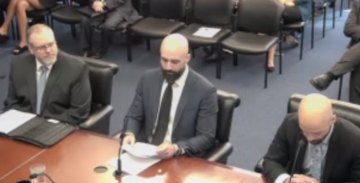
Agency staff presenting to NCUA board.
Throughout a presentation to the board by NCUA staff who included Naghi Khaled, director of credit Markets; Simon Hermann, senior credit specialist, both in the Office of Examination and Insurance, and John Brolin, senior staff attorney in the Office of General Counsel, it was stressed that the update is designed to provide greater flexibility, especially in lending, while it was also emphasized that credit unions will need to have effective policies in place to take advantage of the changes.
In all, NCUA said it received 42 comment letters since introducing the proposal earlier this year, nearly all of which were supportive.
Harper: A Principles-Based Structure
“With this final rule, the NCUA’s regulations related to loan participations and eligible obligations will shift from a prescriptive system to a principles-based structure,” said NCUA Chairman Todd Harper. “Specifically, the limits previously found in the NCUA’s regulations are replaced with policy, due diligence, and risk-management requirements that a credit union can tailor to match its risk levels and activities.”
Harper noted that with the removal of limits on the purchases of eligible obligations and with greater clarity on the qualifying criteria, federal credit unions can now purchase non-member loans from other credit unions.
“They also have more flexibility to transact with fintech companies and other institutions that offer services associated with the origination and sale of loans made to members of federal credit unions,” Harper said. “As such, this final rule allows credit unions to capitalize on the benefits and opportunities provided by fintech firms.”
‘Greater Responsibility’
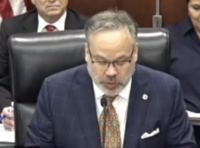
NCUA Chairman Todd Harper during board meeting.
Harper said those who pointed out in their comment letters that the changes will create new and additional revenue streams, as well as new sources of liquidity, were correct, “However, with greater freedom also comes greater responsibility. Conducting appropriate due diligence on third parties is a long-standing expectation for all financial institutions, including credit unions. A credit union cannot simply accept the information and assurances provided by a vendor without first kicking the tires, reading the warranty, looking under the hood, and checking the oil.”
Harper said managers and boards choosing to use the new rule must ensure their third-party due diligence and vendor management policies are updated, followed, and reflect the size and complexity of their activities and risk levels.
In response to a question from Harper, agency staff stressed the need for policies around safety and soundness standards. That includes knowing from whom the CU is purchasing loans, limiting concentrations, ensuring borrowers can repay debts, and ensuring legal interests are protected.
Harper, who praised Board Member Hood for taking leadership on the issue, said the rulemaking is designed to encourage CUs to “harness the promise of fintech to reach new communities, foster financial inclusion, and expand opportunities for credit union growth.”
Hauptman: ‘Not All Credit Unions are the Same’
Hauptman, who said the prior “lack of clarity made it very difficult for all but the most sophisticated institutions to utilize these tools,” spoke positively about the changes he said will provide more flexibility around loan participations and indirect lending, as well as the use of solutions from fintechs.

Kyle Hauptman
“Moving to a more principled based approach acknowledges that not all credit unions are the same,” said Hauptman. “Credit unions that may not have had the resources to manage the challenges around the old proscriptive rules will be able to tailor their programs to reflect their policies and goals.”
In response to a question from Hauptman, agency staff said the changes will not lead to any new call report categories, but instructions are being updated to provide further detail on how to report the transactions in current categories.
Hood: ‘Empowering’ Credit Unions
After long taking a lead on updating the rules, NCUA Board Member Rodney Hood said, “I believe this regulation will empower credit unions to thrive in an evolving financial landscape while safeguarding the safety and soundness of the system.
“Today's final rule addresses the growing presence of fintech companies in originating consumer loans and the need for credit unions to effectively leverage fintech solutions to reach borrowers digitally,” continued Hood. “The rule aims to enhance clarity and adaptability within the NCUA's regulatory framework.”
Substantial Growth
Hood pointed out the loan participation market for credit unions has experienced substantial growth in recent years, with total loan participations purchased across all credit unions increasing to $60 billion as of the most recent call report data, from $20 billion in December 2015.
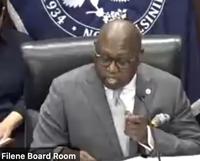
Rodney Hood during board meeting.
Investing and partnering with fintech, said Hood, “is no longer a luxury but a strategic imperative for credit unions to remain relevant, attract younger generations of members, and promote financial inclusion.”
Hood added credit unions have been losing market share to fintech companies, especially in unsecured personal loans.
Questions & Answers
In response to a question from Hood, agency staff said the primary risk management requirements are being added to new paragraph (b)(6) in section 701.23, which specifically address a federal credit union’s written purchase policies and cover due diligence, risk assessment and risk management processes, underwriting and monitoring standards, portfolio concentration limits, legal reviews, and administrative items in purchase agreements.
In response to a separate question over how CUs can ensure their policies allow for the flexibilities offered under today’s final rule before embarking on these new flexibilities, staff responded by saying it will “ultimately be up to the credit union to appropriately structure their policies to match the type of lending that they engage in, as well as the size, scope, and complexity of the transactions considered and the relationships with third parties.
“From a federal credit union’s perspective, this essentially boils down to understanding who you are purchasing loans from, assessing and managing your risk exposures, making sure that your borrowers can repay their loans, limiting the aggregate amount of credit risk in your portfolio, and making sure that your legal interests are protected,” staff said.
Virginia League Comment
“We appreciate the NCUA Board’s commitment to providing regulatory clarity and fostering opportunities for credit unions by allowing them to leverage partnerships and marketplace innovation,” said Virginia Credit Union League Chief Advocacy Officer JT Blau. “We are also supportive of NCUA’s approach in this rule of moving away from prescriptive regulation to a principles-based approach. This rule empowers credit union management and provides the flexibility they need to do what they do best -- manage their balance sheets and serve the needs of their members.”