

Editor’s Note: Due to technical issues, the livecast of the NCUA Board’s Feb. 15 meeting was incomplete. Coverage below is from the portions of the meeting that were available prior to the ending of the livecast.
ALEXANDRIA, Va.–Thanks to higher interest rates and lower-than-expected losses, the National Credit Union Share Insurance Fund enjoyed robust performance in the final quarter of 2023, but the agency is stressing concerns it has over the sharp increase in the deterioration of CAMELS codes.
Indeed, during the Q&A session at the agency’s board meeting some insights were offered around why CAMELS codes have changed so, including at some CUs that have seen their ratings drop quickly.
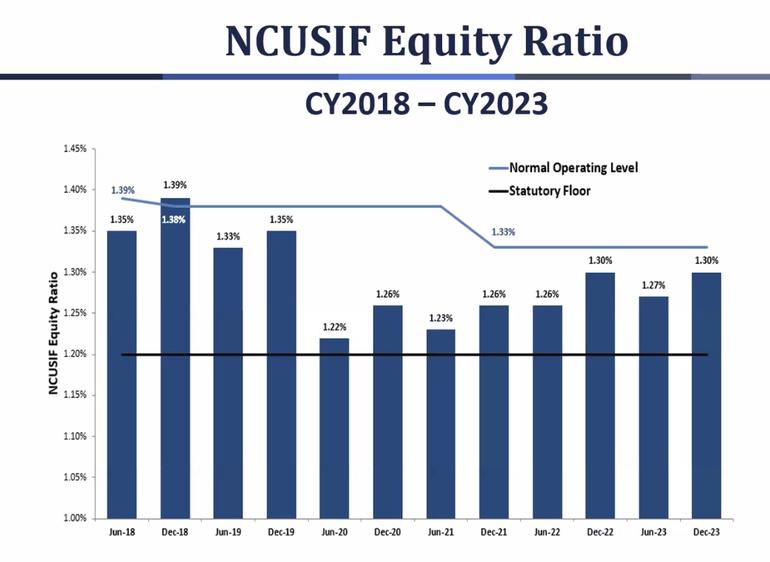
During its public meeting here, agency CFO Eugene Schied updated the board on the NCUSIF’s performance, and said the fund has enjoyed higher income from investments and a reduction in unrealized losses, as well as low losses from failed credit unions. As a result, the equity ratio of the fund has risen to 1.3%, which is above the earlier projected forecast of 1.27%. The target equity ratio is 1.33%.
Schied outlined the performance of the fund, which can be seen in the slides below.
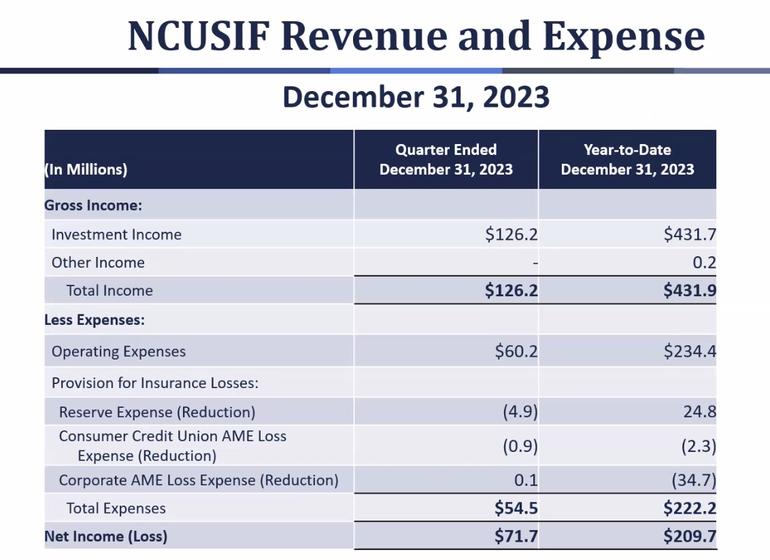
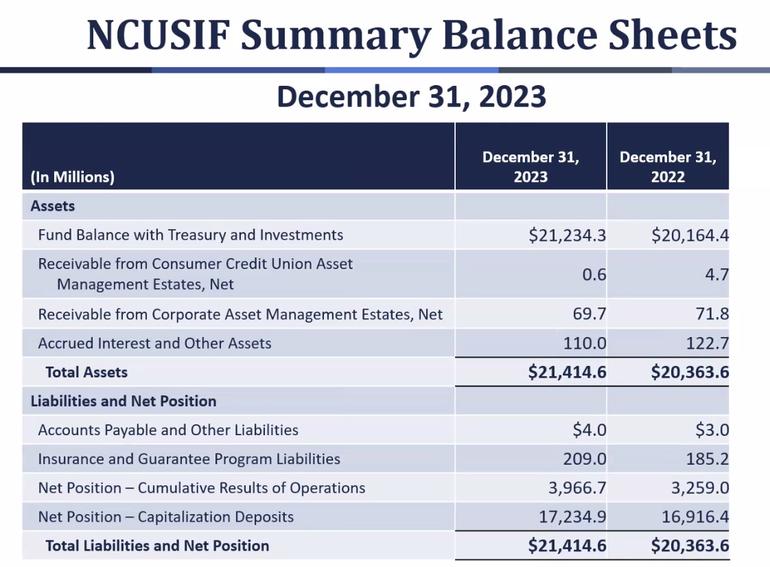
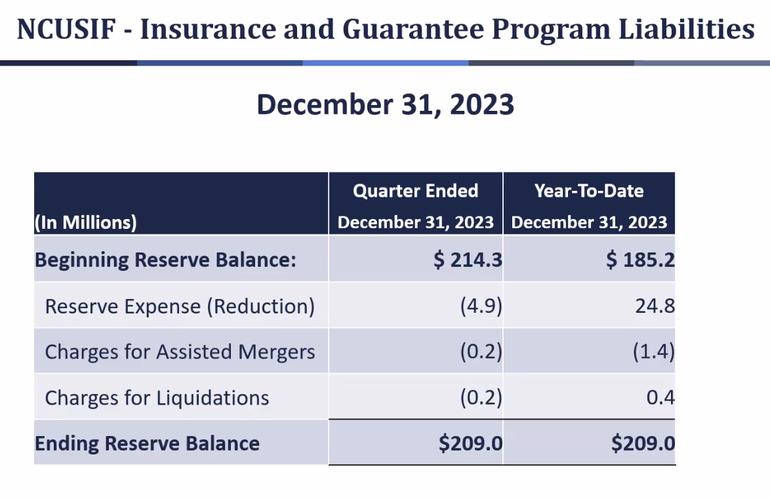
Low Number of Failures
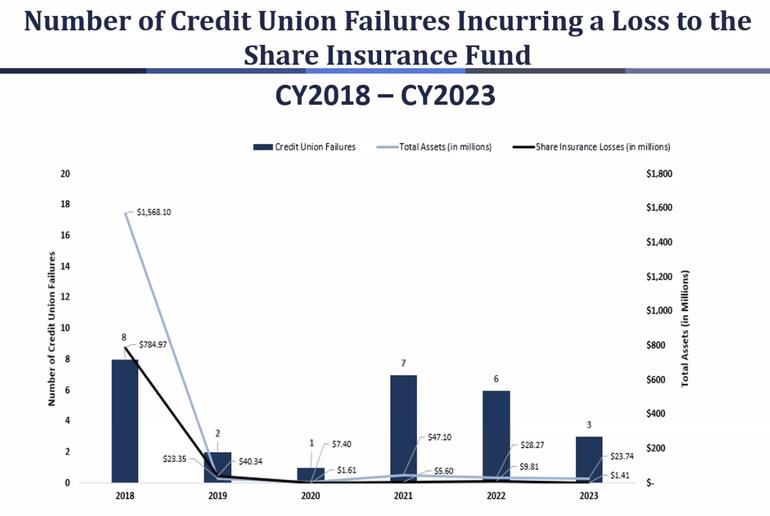
The number of CU failures—three—remained low, $1.41 million in losses to the funds with fraud paying no role, according to Schied.
Decline in CAMELS Ratings
Turning to changes in CAMELS ratings among credit unions, over which members of the NCUA board have been flagging concerns, Scheid shared the following
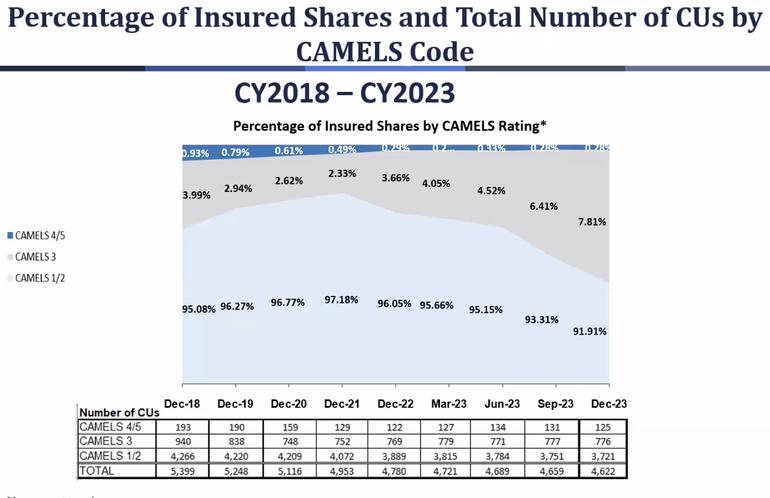
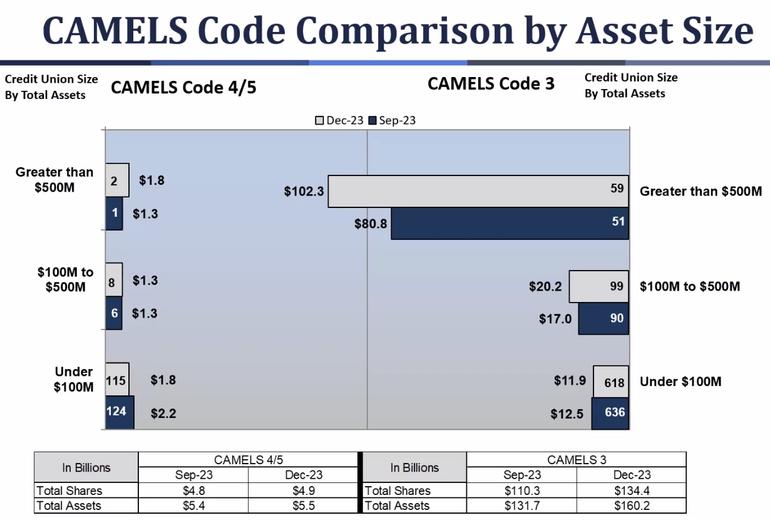
As of Q4, there were 776 CAMELS 3 credit unions, according to Schied.
Harper: ‘We Cannot Become Complacent’
After noting NCUA has achieved unmodified audit opinions for more than 40 years, NCUA Chairman Todd Harper cited the Share Insurance Fund’s strong performance in the fourth quarter of 2023, including “solid investment income growth,” with higher interest rates driving one-third of the year’s income in just one quarter.
That has raised the NCUSIF’s equity ratio to 1.3%, which is higher than the NCUA’s initial year-end projection of 1.27%, an increase also driven in part by declining share and deposit growth and low levels of insurance losses.
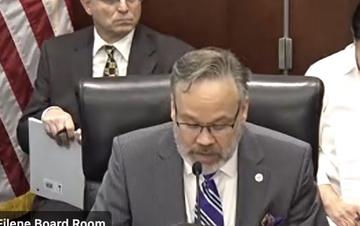
NCUA Chairman Todd Harper at meeting.
“While we should recognize those positive things, today’s presentation also illustrates why we cannot become complacent in the supervision of federally insured credit unions,” said Harper, before touching on a theme he has noted in other remarks. “In recent quarters, the NCUA has seen growing signs of financial strain on credit union balance sheets and consumer financial stress. And, we continue to see that financial stress manifest itself in the number of credit unions and the percentage of assets held by composite CAMELS code 3, 4, and 5 credit unions.”
Specific Concerns
Harper said “particular concerns” include:
The sizable increase in assets in composite CAMELS code 3 institutions, which now represent 7.81% of the system’s total assets.
The growth rate of those changes, especially among complex credit unions with more than $500 million in assets. Harper noted composite CAMELS code 3 group for credit unions of all sizes increased to $160.2 billion, just over a 20% increase for the quarter. “But, what really caught my attention is that total shares in CAMELS code 3 complex credit unions have more than tripled during the last year, growing from $32 billion at the end of 2022 to $102.3 billion at the end of 2023,” Harper said.
Why The Big Increase?
Following his prepared remarks, Harper pressed Schied for the reasons there has been a modest increase in assets for composite CAMELS code 4 and 5 CUs, and a “dramatic increases in assets for composite CAMELS code 3 credit unions?”

NCUA CFO Eugene Schied during meeting.
In response, Schied cited liquidity risk and interest rate risk, as well concerns over overall risk management at the credit unions as well as concentration risk, information technology, risk elevated expenses and commercial lending risk.
Harper said that as a result of the potential risks, he believes it’s “prudent” to keep the operating level at 1.33% and to “eventually reevaluate the methodology for calculating that metric to account for other factors beyond just credit risk.”
Why Not Go All In on Overnights?
Harper also questioned why the NCUSIF—which currently has $5.5-billion in overnights--doesn’t invest everything into higher yielding overnights.
“We would earn more if everything was invested in overnights, because yield term is inverted,” responded Schied. But he added longer-term investments are also seeing higher rates and the fund is seeking to lock in those longer-term rates before rates begin to come down.
As he has previously, Harper also said CUs should not be concerned about using the Central Liquidity Facility to address any liquidity issues out of “fear of negative consequences as part of an examination,” and he repeated his call for Congress to again expand the borrowing authorities of the CLF.
Hauptman: Benefitting from Overnights
In his remarks, NCUA Vice Chairman Kyle Hauptman noted that while the Fed appears to be done hiking interest rates and is now considering rate cuts, credit unions are still dealing with “balance sheet damage due to the last couple years of rate hikes.”
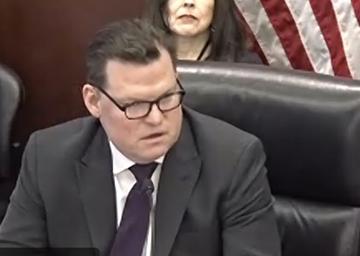
NCUA Vice Chairman Kyle Hauptman at meeting.
Nevertheless, he said, CU performance has been strong as has that of the insurance fund, with one of the “best operating results the NCUA has ever seen.”
“Overnight rates are projected to remain above 5% for the first half of 2024,” said Hauptman. “As of Dec. 31, 2023, the SIF’s investment portfolio contains almost $5.2 billion in overnight investments. In the current rate environment, NCUA plans to continue to keep a big share of the fund in overnights.”
In response to a question from Hauptman over what might be one driver of the big increase in CAMELS 3 credit unions, Schied cited two: liquidity risk and interest rate risk.
In response to another question from Hauptman, Schied said 107 CAMELS Code 1 and 2 CUs merged during 2023.
Why the Big Drops?
Hauptman said he was particularly struck by the number of CAMELs 1 and 2 credit unions that were downgraded to CAMELS Code 5 ratings. What causes those?
“One of the key themes to come from that was significant operational concerns due to the failure of management and the board,” said Schied. “So, it’s not just one problem but there's often multiple problems that led to that some other issues, from record keeping, internal controls, earnings, and poor asset quality.”