

ALEXANDRIA, Va.–The NCUA board has voted 3-0 in favor of a new member expulsion rule, but all three members of the board stressed they believe it should be used sparingly.
The updated rule follows the passage by Congress of the Credit Union Governance Modernization Act, which required NCUA to develop a policy by which a federal credit union member may be expelled for cause by a two-thirds vote of a quorum of the federal credit union’s board of directors.
The new rule also follows a number of anecdotes NCUA board members said they have heard from credit unions, including of members making physical threats to employees and families.
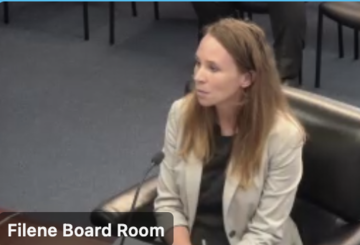
Rachel Ackman at NCUA board meeting.
The new NCUA rules—technically Part 701, Appendix A, Federal Credit Union Bylaws, Member Expulsion—were outlined to the board by Rachel Ackmann, senior staff attorney in the Office of General Counsel. Ackmann said NCUA received 26 comment letters on the earlier proposal and that it did make a number of material changes to the final rule in response.
A Clarification
The final rule clarifies what constitutes “a member not in good standing” to match the disorderly behaviors listed in the Credit Union Governance Modernization Act.
Under the final rule, a federal credit union has the option of adopting the new member expulsion rules, a copy of which must be provided to members. If an FCU seeks to expel a member it must provide a notice and the reasons for the expulsion must be specific. The member must also have a reasonable opportunity to present their position at a hearing. Members have 60 days to request such a hearing or the member is expelled. After the hearing, the FCU board has 30 days to vote on the expulsion.
Expelled members may request reinstatement. The FCU is required to maintain records related to the expulsion for six years.
Harper: ‘Must be Used Sparingly’
Noting he had voted in favor of the rule even though he believes “credit unions should use these new powers sparingly,” NCUA Chairman Todd Harper said he believes it is important that credit union boards balance this expulsion power with the member’s rights.
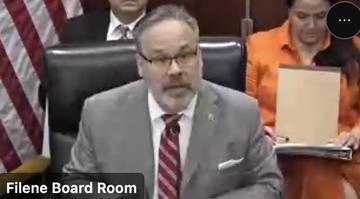
NCUA Chairman Todd Harper during board meeting.
“That’s because credit unions must remain true to their mission of promoting access to safe, fair, and affordable financial services — especially to those of modest means,” Harper said. “The final rule we are considering today strikes a balance between addressing the legitimate concerns over providing services to violent and disorderly members and providing due process rights to credit union member-owners. These rights include proper disclosures, hearings, and appeals processes.”
Not a Tool for Exclusion
Several times in his comments Harper stressed that the powers granted in the Credit Union Governance Modernization Act must not be used as a tool to facilitate financial exclusion.
“This final rule and the Credit Union Governance Modernization Act are not pathways to remove potential problems,” said Harper. “Both the statute and this final rule clearly state that credit union members cannot be expelled due to or in retaliation for their complaints filed with the NCUA, or another regulatory agency, like the Consumer Financial Protection Bureau or the Federal Trade Commission, or law enforcement.”
Hauptman: What About Immediate Expulsions?

NCUA Vice Chairman Kyle Hauptman during board meeting.
Like Harper, NCUA Vice Chairman Kyle Hauptman, appearing at the board meeting virtually from Albuquerque, N.M., spoke in favor of a rule he noted considers the significance of member-owners, but it also gives credit unions the same flexibility as any other business to address threats to the safety of staff and the public.
In response to a question from Hauptman over questions from FCUs over whether they can immediately expel a member who has made threats, Ackman said no, but those CUs do have the option to contact contact local law enforcement and can seek a restraining order. They can also immediately use the limitations of service policy to restrict access to credit union facilities, call centers or any credit union locations.
Hood: Some ‘Troubling’ Stories
NCUA Board Member Rodney Hood said there are good reasons for a credit union to expel certain members.
“I have to tell you all, some of the stories I’ve heard, although rare, are very troubling when it comes to violent and aggressive behaviors,” said Hood. “I’m reminded of one credit union CEO in Tennessee who had some very disturbing experiences with one of the members. So, the fact that we’re even having to have a rule of this making just really is troubling just because, again, some of the stories.”
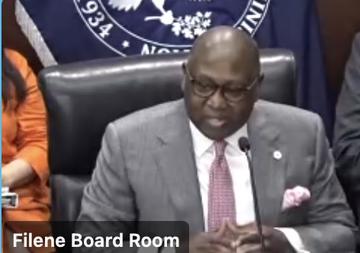
NCUA Board Member Rodney Hood at board meeting.
Hood noted the final rulemakingis focused on improving access to financial services, in part, through its Advancing Communities through Credit, Education, Stability and Support (ACCESS) initiative, including helping CUs meet the statutory mission of meeting the credit and savings needs of people, especially those of modest means.
Only For ‘Egregious’ Behavior
“Let me be clear, the expulsion of members is an extreme remedy that may have the effect of denying individuals access to financial services,” said Hood. “In addition, as financial cooperatives, a credit union’s expulsion of a member-owner is a particularly significant action resulting in financial exclusion. Therefore, consistent with certain statements in the legislative history, use of the authority under the Governance Modernization Act should be rare and used only for egregious member behavior.”