

ALEXANDRIA, Va.–The NCUA board has approved by a 3-0 vote an operating budget of $344.1 million for 2023 (and a total budget of $360 million) and $387.5 million for 2024.
The 2023 and 2024 figures are both below what had been included in the proposed staff draft operating budgets for those two years. For example, the proposed 2023 budget had called for $367.0 million, an 8.1% increase over 2022.
Overall the approved budget is 6.2% higher than the 2022 budget, but 1.9% lower than what had been proposed for 2023.
In addition, the board approved a 2023 capital budget of $11.276 million and a 2024 capital budget of $11.234 million, in addition to a 2023 Share Insurance Fund administrative budget of $4.956 million and a 2024 Share Insurance Fund administrative budget of $4.354 million. That brings to $360 million the total budget for 2023.
The budget provides for 1,213 full-time positions at the agency in 2023 and 1,214 in 2024. Those numbers reflect the elimination of seven positions from what was proposed.

'Egregious' Decision
Following the budget approval, NAFCU President and CEO Dan Berger criticized the decision.
"NAFCU has consistently advocated against egregious increases to the NCUA’s operating budget," Berger said. "An increase of 7.5% for 2023, even within an inflationary environment, is simply not justifiable to credit unions and their 134 million members across the country who will have to bear this burden. While NAFCU supports an engaged and supportive NCUA, we do not support undefined cyber security expenses, nor do we support examiner staffing increases without adequate justification. We also request increased oversight throughout the year to prevent cost overruns like we experienced with the agency’s uncontrolled management of MERIT funding. NAFCU looks forward to evaluating the agency’s actual budgetary needs throughout 2023 to encourage a re-evaluation and reduction of the currently projected 12% operating budget increase for 2024."
Key Points
Other key points from the budget:
- NCUA said $23,225,000 from unspent prior-year operating budgets is available for expenditure in 2023 from the Operating Fund
- $1 million from unspent prior-year capital budgets is available for expenditure in 2023 from the Operating Fund for expenses related to capital projects
- $3.9 million from unspent 2020 operating budget balances and previously made available to pay for rehired credit union examiner annuitants and associated support remains available for expenditure for the same purposes in 2023 and 2024
- $15 million of cash in the Operating Fund will be returned to federal credit unions in the form of a credit to the 2023 Operating Fee schedule
The Overhead Transfer Rate
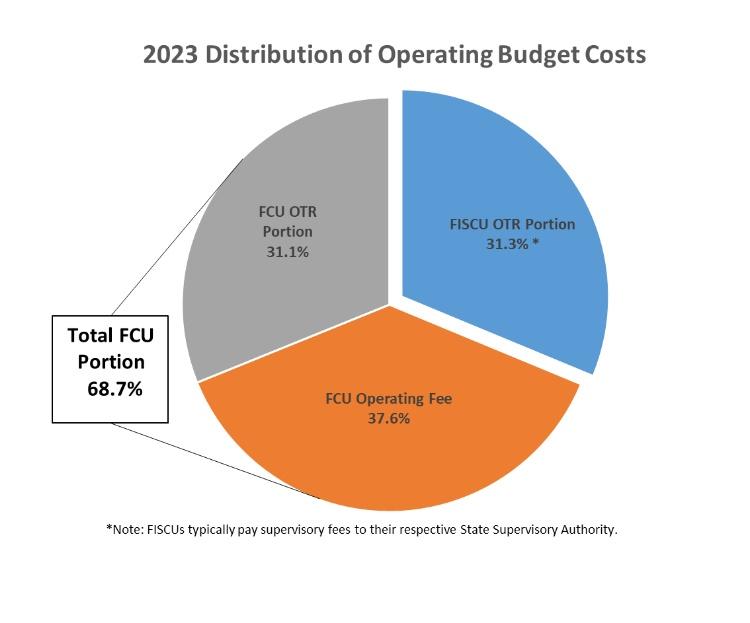
Jim Holm, supervisory budget analyst in the agency’s Office of the Chief Financial Officer, said the Overhead Transfer Rate (OTR), or the funds transferred from the NCUSIF to the agency for overseeing state-chartered, federally insured credit unions, will be set at 62.4% for 2023, a decrease of 30 basis points from the rate calculated for the 2022 budget.
“The residual 37.6% of the 2023 budget will be collected through the operating fee,” said Holm. “Federal credit unions will cover approximately 68.7% of the costs of the NCAA's operations…”
Carryovers & Travel
According to CFO Eugene Schied, $24.2 million in unspent prior year budget funds for both the operating and capital budgets is factored into the 2023 budget. Because those funds will not be available to carry over into 2024, that explains the large budget increase in 2024 over 2023, Schied said.
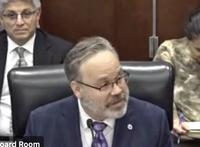
Todd Harper
The agency’s travel budget, most of which is represented by examiners traveling for on-site visits to credit unions, is $1 million below what was proposed and for 2023-24, and is approximately 70% of what the agency was spending on travel prior to the pandemic, Schied told the board.
The credit union trade groups have called on NCUA to stick with the virtual exams it conducted during the pandemic, which led to sharp decreases in travel costs. The agency, however, has returned to physical visits.
Schied said $547,000 has been budgeted for performance enhancements to the new MERIT exam system (more on that below), and another half-million for relocating its disaster recovery back-up site.
Harper: Budget Represents a ‘Consensus’
Harper, who said the agency heard and acted upon feedback from outside stakeholders on its budget in both comment letters and during its public budget hearing, said in response, “The total budget we are considering today is also almost two percentage points lower than the staff draft budget released in October. The number of new employees has also decreased from 25 to 18 positions, notwithstanding the inclusion of two additional positions in the new Office of Financial Technology and Access.”
Harper said the $15 million credit being applied to FCUs against the 2023 operating fee will result in a decline in the fee charged FCUs in 2023 of approximately 1.8%, the third consecutive year of declining fees.
“As I noted earlier, the recommended budget before us today represents a consensus. It includes compromises by all of us at this table,” said Harper. “Compared to the overall funding and staffing levels shown in the staff draft budget, this budget is now smaller in terms of dollars and staff. However, it is still a step in the direction of achieving the NCUA’s mission of protecting credit union members and consumers, maintaining the safety and soundness credit unions, and safeguarding the credit union system and the National Credit Union Share Insurance Fund.”
‘Great Interest to Me’
Saying it is a matter of “greatest importance to me,” Harper said the final budget includes two new fair lending specialist positions designed to ensure credit unions are providing members with “safe, fair, and affordable financial products and services — free of discrimination.”
He said the investment will lead to more wealth-building in the communities that need it the most.
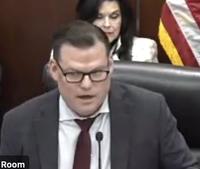
Kyle Hauptman
Harper said he further supports the creation of two new types of specialists, one for Bank Secrecy Act supervision and one for consumer compliance.
Hauptman: The ‘Mindset’ to Remember
As he often does, NCUA Vice Chairman Kyle Hauptman reminded that every dollar in the agency’s “universe” comes from credit union members.
“That’s the only source of cash there is. There are only three places a dollar can reside,” Harper said. “
“Most of the money is at credit unions helping America’s credit union families. The second most common thing to happen to a credit union dollar is that it’s sent to NCUA and goes into our Share Insurance Fund, where it at least still belongs to the credit unions and is sitting there, available for use, invested in U.S. Treasuries.
“But the third thing that can happen to a dollar is that it’s sent to NCUA and winds up being spent by NCUA in our budget. Those dollars are gone forever. Thus, our budget should always be created with the mindset that there are two other, great uses for any given dollar.”
Speaking specifically to the newly approved budget, Hauptman said he appreciated that the amount being spent is below what was originally proposed, and that while staff argues the 6.2% increase is on the “low side,” he added, “Perhaps. But in any discussion of the price of anything, you can be that those receiving the cash think it’s a more reasonable price than those paying it. It’s human nature.”
What About NCUA’s ‘Big Dig?’
Hauptman noted cybersecurity is a high priority and costly, before pointing out the agency’s MERIT exam system—which has been in the works for nearly a decade—is over budget.
“We’ve paid a fortune, it’s way over budget, it was proposed before any of the board members were on the board--is it ever going to be like Boston’s Big Dig? Is it ever going to be done and is it going to be great?” Hauptman asked.
In response, Harper said he met with a state regulator that oversees both credit unions and banks and whose examiners use both the FDIC’s exam software as well as the new MERIT software.
“One thing that was very striking for me to hear was I was told the bank regulators and examiners were looking over the shoulders of the credit union examiners and they were jealous of the analytics and the tools that we were building into that system,” said Harper. “We're going to continue to improve MERIT and I'm certainly conscious of the cost as we go ahead, but I think that is an illustration that we're leapfrogging above where our fellow regulators have been and we're developing the state-of-the-art tool along the way.”
The Agency’s Ferrari
Responded Hauptman, “When you spend money on a Ferrari, you expect it to be cool.”
The vice chairman then added, “I realize the MERIT system began development before this board was in place, but this board is responsible for MERIT and the technological investments in this budget. We cannot abdicate our responsibility to ensure accountability for the money we are spending going forward and for the results used to justify it.”
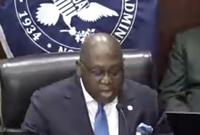
Rodney Hood
Hauptman said he wants to see a bi-annual or quarterly update on the justification, money spent, and results — including the timing of results — for investments in technology.
Hood: Remembering the Primary ‘Mission’
Noting some “signs of stress” in the future of credit unions that include liquidations and conservatorships, which are up, rising liquidity risk and uncertain economic headwinds, Hood said he believes it’s important to emphasize the mission of the agency with the 2023 budget: protecting the share insurance fund.
In response to a question from Hood, NCUA staff said about $240 million of the $360-million NCUA budget is allocated to that mission.