

ALEXANDRIA, Va.–The NCUA board has voted 3-0 to approve operating budgets for 2024 and 2025 that are smaller than proposed earlier this year, but are still up--including a 7% increase for next year and a $48-million hike for 2025's proposed budget.
The reductions also follow a November budget briefing at which representatives of five trade groups raised objection’s to the size of the proposed staff draft budgets. The agency typically ends up approving a smaller budget every year than that it had earlier proposed.
The board approved a combined operating budget, capital budget and share insurance fund administrative budget of $385.7 million for 2024, an increase of 7% over 2024. It had proposed a 9.5% increase. The 2024 budget covers 1,247 full-time employees.
The 2024 budget includes $23.3 million of funding being carried-forward from 2023. It also represents a $2 million reduction in the travel budget.
The largest piece of the 2024 capital budget, $45 million, is for technology related investments.
For 2025, the proposed budget rises considerably to $433.3 million, with plans to employ 1,251 full timers.
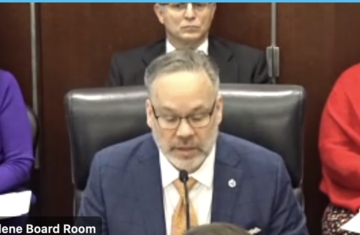
NCUA Chairman Todd Harper at board meeting.
Additional details on the budget were provided to the board by CFO Eugene Schied and are included in a separate story in CUToday.info.
Harper: A ‘Consensus’ That Reflects ‘Compromises’
NCUA Chairman Todd Harper called the budget approved by the board a “consensus” that reflects compromises by each of the board members.
“With these compromises the NCUA is making critical investments in its field examination program to protect the system’s safety and soundness as credit unions respond to growing liquidity, interest rate, credit and cyber security risks,” said Harper. “Notably, field staff and the examination program within the regions and ONES will increase by a net total of 13 staff positions. These final staff numbers reflect the latest updates to the NCUA 's anticipated examination and supervision program needs for 2024.”
Harper said the final budget also includes support for both small and MDI credit unions, as well as investments he said will improve the automation and processing of field of membership applications.
“Additionally, there are investments to further protect credit union members’ rights, prepare large credit unions for the transition to oversight by the Consumer Financial Protection Bureau, and to strengthen the system and the share insurance fund against emerging risks.”
Harper said pay and benefits increases for NCUA staff will also allow it to remain a “competitive employer.”
Hauptman: ‘Common Ground Found’
NCUA Vice Chairman Kyle Hauptman said the earlier budget briefing provided input that helped to shape the budget.
“While we cannot give everyone all that they want, we found enough common ground for the board offices to work together to achieve today’s budget,” he said. “The give-and-take between board offices was healthy, and I believe it produced a better work product.”
Hauptman said in his three years on the NCUA board he has consistently stressed he understands the budget dollars come from the wallets of CU members, “many of whom are under greater financial stress.” The same holds true for many credit unions themselves, he said.
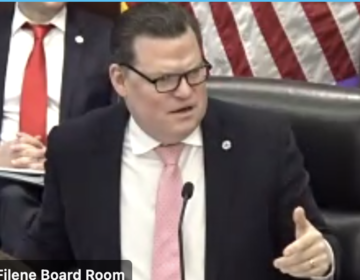
NCUA Chairman Kyle Hauptman at board meeting.
“…While the NCUA board are fiduciaries of the Share Insurance Fund, we don’t control some of the bad things that wind up hurting the fund, like mortgage delinquencies, and spikes in interest rates,” he said. “But we do have control over how much we take from the Fund. So that’s my general view on budgetary matters.””
As for the 2024 combined budget, he said he is glad to see it has been trimmed below two earlier proposals, and that the major focus is on deploying resources where they will do the most good – in the field.
Flexibility in the Regions
“In this budget, regional directors have the flexibility to deploy their resources where and how they are needed,” he said. “After some give-and-take, hiring in the field is being managed to ensure we have the generalists in place to address the myriad of challenges credit unions are facing.”
He said the $2 million reduction in the travel budget reflects calls by CUs and other stakeholders for more off-site examinations. In addition, he said he is pleased NCUA will be increasing the time between examinations for well-run credit unions.
‘They Essentially are the Industry’
Hauptman said he was also happy to see funds budgeted to assist small, low-income, and MDI credit unions, noting that of 4,712 credit unions, roughly 2,900 are under $100 million in assets. “Small credit unions aren’t a niche in the industry, they essentially are the industry. It has been a priority for the NCUA in past budget cycles and will continue to be a focus of the agency,” he said.
Hauptman said he would also like to see more regular meetings and discussion around NCUA’s technology spending.
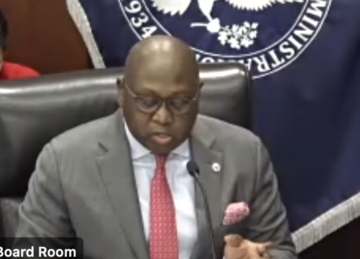
NCUA Chairman Rodney Hood at board meeting.
Hood: ‘Cost-Effective Efficiencies’ in Budget
NCUA Board Member Rodney Hood said he believes the final version of the budget is “efficient, transparent, and appropriately reflects our needs to effectively perform our mission, and fulfill our responsibility to protect the Share Insurance Fund.”
However, he added, stresses in the market, coupled with rising delinquencies and losses, and an increase in the number of CMAELS code 3, 4, and 5 credit unions only serve to highlight the importance of NCUA making certain it has the appropriate resources to ensure a safe and sound credit union system.
“The final budget before us today incorporates adjustments that reflect our commitment to those responsibilities, and to realizing effective efficiencies in our spending, and I believe will position the agency well to respond to the challenges before us,” Hood said.
Virginia League Responds
In response to the budget approval, Virginia CU League President Carrie Hunt said, "It’s vitally important the industry remains engaged with NCUA on its budget priorities, with the goal of striking a balance between protecting against risk, while also fostering an environment of innovation that best positions credit unions to succeed. Being a good steward of the funds entrusted to the agency by credit unions is important, but equally important is recognizing every dollar the agency requires from credit unions is a dollar not deployed for the benefit of members or our communities."