ALEXANDRIA, Va.–The NCUA board was given an update on the state of the National CU Share Insurance Fund, with the data showing a big increase in investment income but also a projected overall decline in the normal operating level at by mid-year.
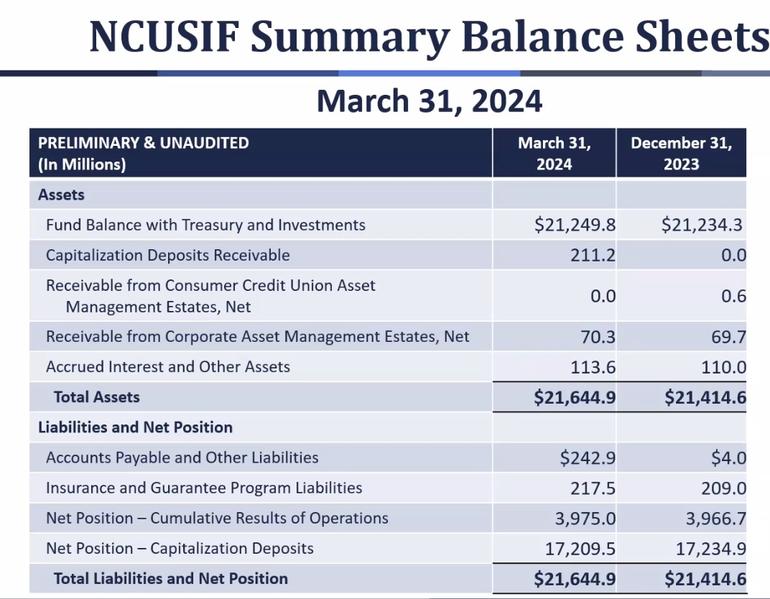
The fund is currently at a 1.30 reserve ratio, but Melissa Lowden, deputy chief financial officer with NCUA, told the board it is projected to decline to 1.24 at June 30 as credit union shares and loans are adjusted.
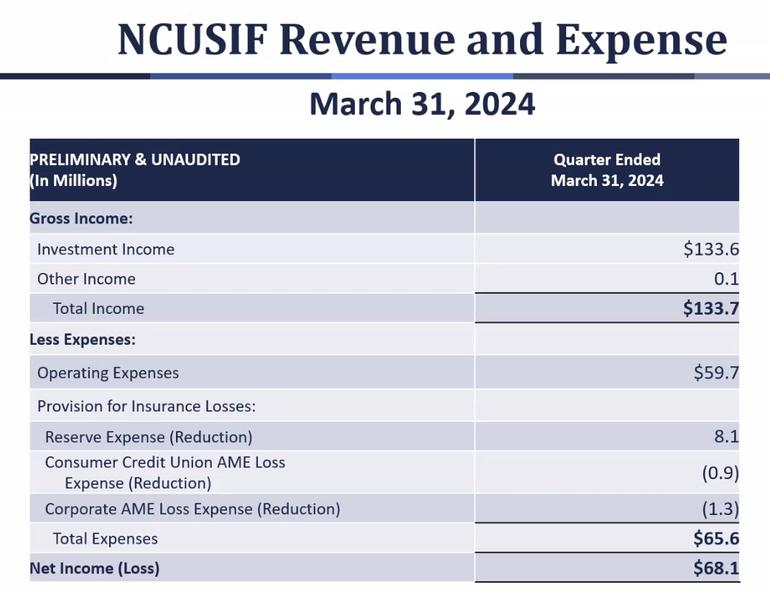
Overall, the fund had net income of $68 million in Q1, with investment income up by 6% compared to the prior quarter by 47% compared to the first quarter of 2023.
As has been the case in prior quarters, Lowden highlighted the ongoing challenges to federally insured CUs that can be seen in CAMELS code ratings.
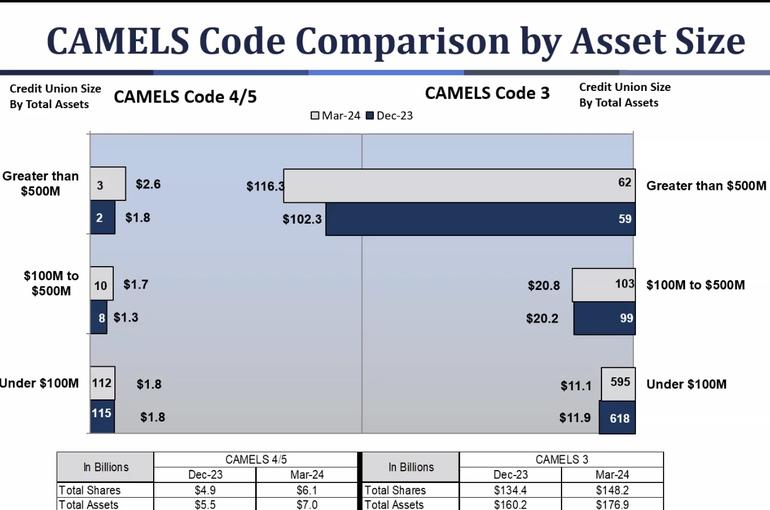
Most of the credit unions rated as CAMELS 4 or 5 have $100 million or less in assets, Lowden said.
There are 760 credit unions CAMELS Code 3, 92% of which have assets of less than $500 million.
‘Balance Sheet Challenges’
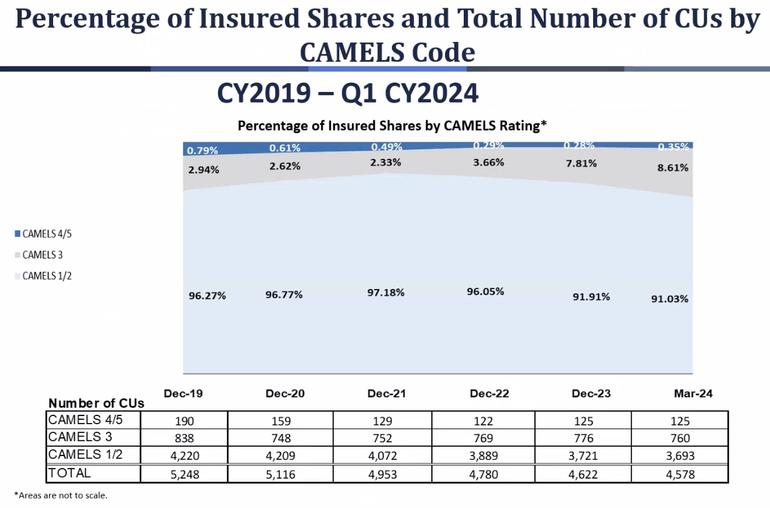
“While the Fed seems to be done hiking interest rates, credit unions continue to deal with balance sheet challenges due to the last few years of rate hikes,” said NCUA Vice Chairman Kyle Hauptman, who led the meeting in the absence of Chairman Todd Harper, who is out with back surgery. “The percentage of insured shares in credit unions with CAMELS ratings 4 and 5 inched higher this quarter to 0.35% from 0.28%. Insured shares in credit unions with CAMELS ratings of 3 moved up to 8.6% from 7.8%.”
Liquidity Concerns
Hauptman further noted credit union liquidity continues to be an issue.
“I would like to remind everyone that credit unions can, and should, have access to a range of liquidity sources, including the NCUA’s Central Liquidity Facility,” said Hauptman. “To the small credit unions out there that may not have liquidity options set up, I strongly encourage those institutions to do so. Talk to your examiner, talk to your league, talk to your corporate credit union. There are ways to handle a short-term liquidity challenge and survive to fight another day.”
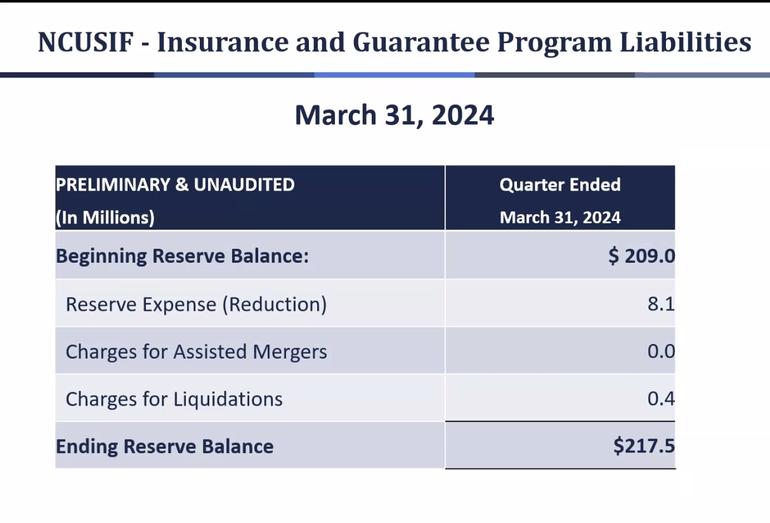
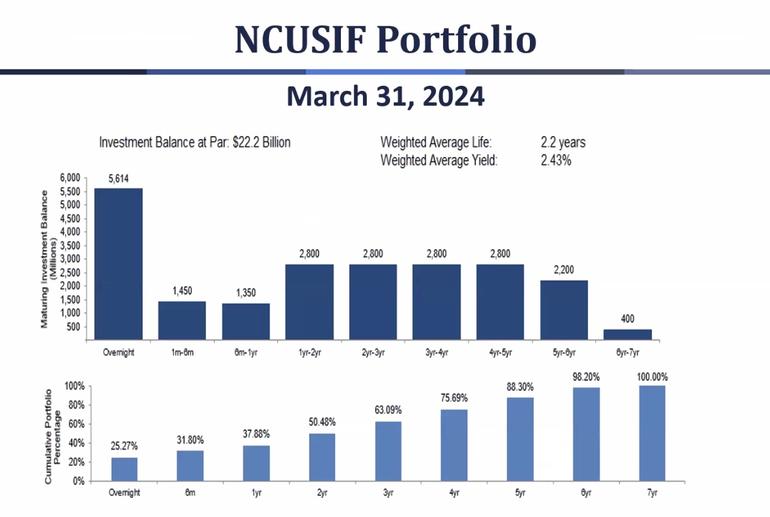
The NCUSIF’s latest performance data can be seen in the charts below.