ALEXANDRIA, Va.–The NCUA board, serving in its capacity as the board of the agency’s Central Liquidity Fund, has approved the CLF’s 2024 budget.
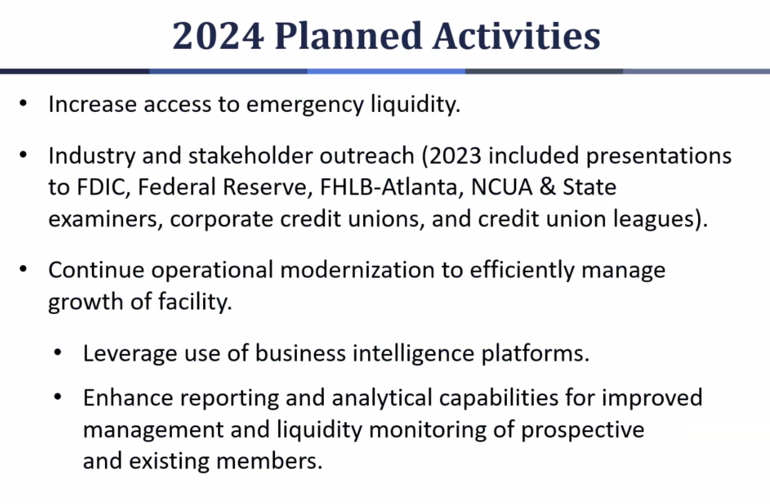
According to agency staff, the budget considers the potential for increases in membership applications and the processing of liquidity advances.
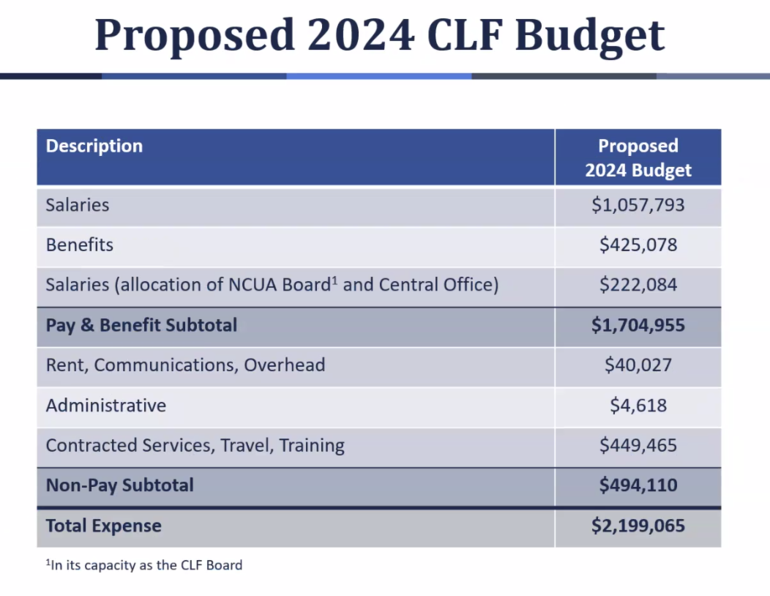
The 2024 budget is $2.2 million and reflects a decrease of 2% from the 2023 budget.
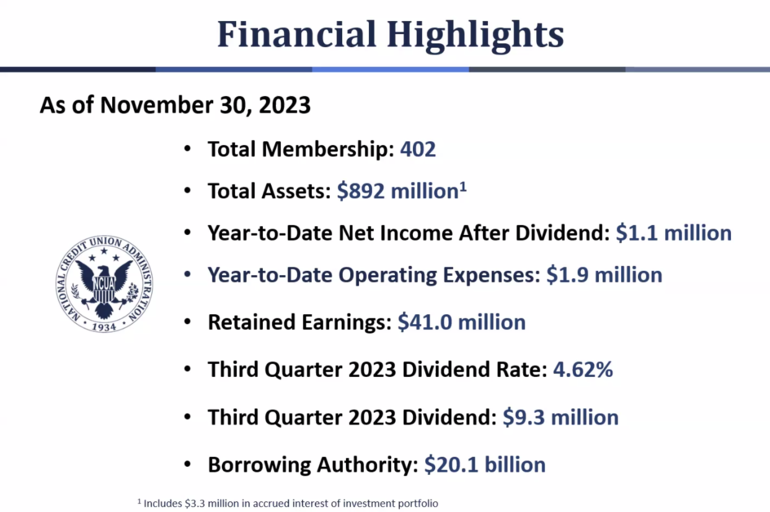
The CLF currently has 402 regular members and 11 corporate correspondents, with total assets of $892 million. It has added 52 new members, according to NCUA, and the total capacity of the fund has increased to $20.1 billion.
The budget for the CLF was previously swept into the larger NCUA budget, but it was changed under then chairman Rodney Hood as part of an effort to establish greater independence and accountability around the liquidity source for credit unions.
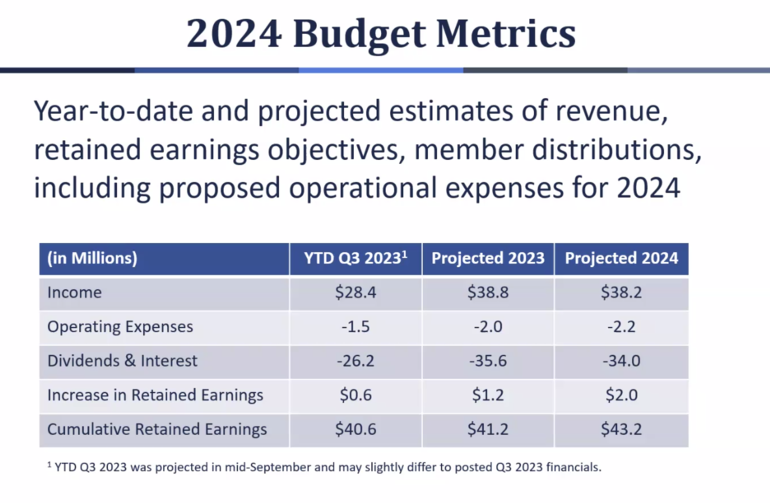
The CLF’s performance and projections for 2024 can be seen in the charts below. More than three-quarters of the CLF’s budget is represented by salary and benefits-related expenses.
Harper: A Liquidity Back-up of ‘Greater Importance’
“The CLF pays for itself, it does not impact the agency’s combined budget,” said NCUA Chairman Todd Harper. “The proposed budget is additionally reasonable and proportional to the needs of the CLF. Moreover, the financial spending plan prepares for potential contingencies should demand for liquidity advances rapidly rise in the next 12 months…The central liquidity facility as a liquidity back-up has assumed even greater importance. There's an age-old axiom ‘There's strength in numbers,’ and that's especially true here, because the more members the CLF has, the more effective it becomes.”
Harper noted the CLF recently made an advance to a member credit union to address liquidity needs, and added the fund exists to address the seasonal short term and the projected long term needs of credit unions that are members.
“We will emphasize with our examiners that the use of the CLF is not necessarily a problematic issue,” Harper said. “It means the credit union is working to manage its equity while the facility is growing and its capacity and is achieving its intended purpose.”
Harper repeated his call for Congress to restore the statutory enhancements given the CLF during the pandemic that have since expired, saying it represents “no cost to the taxpayer.”
Hauptman: ‘There Will Come a Day…’
NCUA Vice Chairman Kyle Hauptman also credited Hood for suggesting a greater focus on and commitment to the CLF, saying, “There will come a day when the CLF is essential to credit unions’ survival, much as it was 15 years ago in the financial crisis.”
“Today’s discussion reflects the recent board decision to elevate the importance and awareness of the CLF by fully separating it into a distinct entity with its own president and staff,” Hauptman said. “Prior to this, the CLF had a part-time president with other responsibilities within the agency.”
Hauptman also urged Congress to restore the powers granted the CLF under the CARES Act.
“Prior to the CARES Act, the CLF had just 270 members,” he said. “Through the enhanced provisions in the CARES Act, this grew to 3,990 credit unions, thus allowing the vast majority of credit unions to access emergency liquidity. Following the expiration of the provisions, membership fell dramatically to just 350 credit unions. Just over 905 of credit unions that had assets less than $250 million lost access to the CLF.”
Hood: An ‘Important Tool’
Like his fellow board members, Hood called the CLF an “important tool for credit unions to use strategically,” saying it helps to support the industry’s financial stability by providing member credit unions with a balance sheet management tool that helps them meet their liquidity needs.
“This means that it can serve as a resource to allow member credit unions the ability to continue focusing on what they do best, and that is supporting their members by providing consumer and mortgage loans, encouraging savings, and providing financial services and access to their communities,” Hood said.