

ALEXANDRIA, Va.–The NCUA board has approved by a 3-0 vote its 2024 Annual Performance Plan, which places greater emphasis on measuring outcomes.
The plan, as agency staff told the board, is the “foundational document that charts the course for the agency's actions and goals” and includes greater specificity around the metrics and milestones being used to track the agency’s efforts.
Agency staff said the 2024 performance plan has been streamlined compared to the prior year and includes improved indicators in support of “outcome-oriented” measures where possible. Overall, staff said, the plan reflects improved efforts at coordinating with NCUA’s budgeting process and reflects a requirement that its offices justify how funding and staffing for new and ongoing projects would help achieve strategic goals and objectives.
Areas of Improvement
Staff said the plan will help the agency to, among other things, better:
- Address undue risk and violations in NCUA-insured credit unions, including through the timeliness of examinations and follow up examinations
- Analyze barriers to financial technology adoption
- Address violations of Consumer Financial Protection laws through fair lending examinations
- Resolve complaints received in the Consumer Assistance Center
- Close gaps in pursuing opportunities to foster financial inclusion
- Deliver best in class information technology management, human capital management and financial management
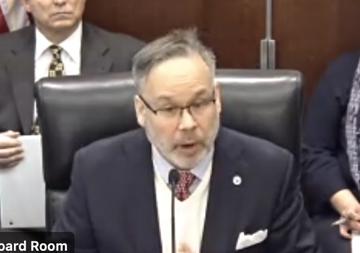
Todd Harper
Harper: Measurement Matters
Saying he’s a firm believer in the mantra of “If you don’t measure it, you can’t manage it,” Chairman Todd Harper said that is the reason the agency’s 2024 Annual Performance Plan includes specific performance measures and targets in support of the goals in the agency’s 2022–2026 Strategic Plan.
“The performance plan before us today describes the means, strategies, and specific actions the agency has resourced and intends to undertake in 2024 to achieve each strategic objective,” Harper said. “It also outlines how the agency will measure its performance and continue to effectively supervise and insure a growing and evolving credit union system, including during times of economic uncertainty.”
Harper noted the plan includes three strategic goals supported by 10 strategic objectives and 16 performance goals with 27 performance indicators.
Also Worth Noting
“It’s worth noting that the number of
performance indicators is down considerably from past plans,” he said. “This certainly doesn’t mean that the NCUA will perform less. Rather, the goals were developed to define a more specific outcome, and they enable a more focused approach to expected performance. Additionally, a more streamlined approach is a management best practice.”
Moving into 2024, Harper said the agency will continue to address consumer financial protection on equal footing with safety and soundness.
“In support of this goal, the NCUA will increase the target for fair lending exams by 10, moving from 50 to 60, to ensure credit unions are complying with the laws established to protect consumers against discrimination,” Harper said.
“By increasing the number of fair lending examinations, the NCUA will help to ensure credit unions comply with the laws to protect credit union members against discrimination,” Harper said.
He said NCUA will also continue to focus on rising and continuing challenges within the credit union system, including liquidity, interest rate, credit, compliance risk, and cybersecurity risk.
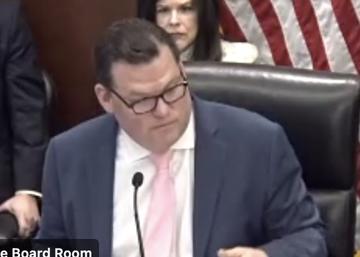
Kyle Hauptman
Hauptman: More Attention to ‘Output’
“This document sets the NCUA’s 2024 priorities supporting the agency’s mission to protect the system of cooperative credit and its member-owners,” said Hauptman. “It also supports the agency’s vision to strengthen communities and protect consumers by ensuring financial inclusion. These are impressive ideals, but no less so than the ideals of the credit union movement itself.”
Hauptman reminded those ideals are pursued through the agency’s over-arching goals to:
- Ensure a safe, sound, and viable system
- Improve the financial well-being of individuals and communities
- Maximize the NCUA’s organizational performance
‘Taking it a Step Further’
“Overall, I am pleased to see the 2024 Plan continues to put greater focus on output and outcome-oriented results,” said Hauptman. “I am grateful for the inclusion of performance indicator 1.2.2 regarding the post examination survey. Safety and soundness is improved by open and transparent communication with credit unions.”
Hauptman said that by further anonymizing the post-exam survey responses in 2023, NCUA continued to normalize the use of the post exam survey.
“The hope was simply to improve the survey response rate, but performance indicator 1.2.2 takes it a step further,” he said. “It sets the standard for outcomes of 90% or greater on collaboration, narrative, and timely delivery of the exam report. What gets measured gets done.”
Hauptman also repeated his call for federal credit unions to record their exit meetings and joint exam conferences, saying doing so improves the process for both parties.
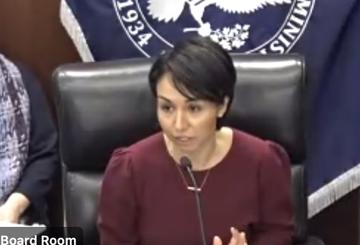
Tonya Otsuka
Otsuka: The Importance of Ensuring Things are ‘Actually Getting Done’
New NCUA Board Member Tonya Otsuka said she is also pleased to see more measurements taking place and the outcome-oriented approach to ensure things are “actually getting done.”
“I think it's important for (NCUA) to understand how credit unions are using technology to enhance member services and approve their operations,” she said. “I want to point out technology is important in our changing financial system, but it is critical for us to make sure that technology is used and safe and sound way and that it does not harm members or result in the violation of consumer protection laws.”
Otsuka said she believes it’s important NCUA ensure CUs are appropriately addressing risk presented by third party vendors, an issue she said she will be focused on.
Support for CDFIs, Consumer Compliance
She further expressed support for work done by NCUA in assisting CDFI credit unions and their “unique characteristics” as they in turn work to support underserved markets.
Like Harper, Otsuka said she also believes in a strong consumer compliance program at the agency, something that previously, CUNA and NAFCU, and now, America’s Credit Unions and state associations, have pushed back against.