

ALEXANDRIA, Va.–Members of the NCUA board are urging more credit unions and corporates to join the Central Liquidity Facility (CLF) “for the good of the cause,” with its members noting doing so “increases exponentially” the ability of CUs to respond to the coronavirus pandemic.
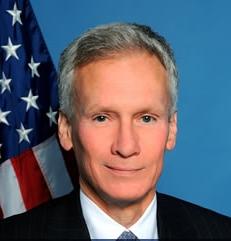
Mark McWatters
During its first-ever meeting conducted via teleconference due to stay-at-home orders, agency staff offered the board an update on the CLF and responded to questions.
As CUTodayinfo earlier reported here, in a notation vote he NCUA board approved an interim final rule it said enhances the ability of the Central Liquidity Facility to serve as a liquidity backstop to the nation’s credit union system.
What CARES Act Has Done
Justin Anderson, a senior staff attorney with the agency, noted the CARES Act includes amendments that:
- Removes a reference that the CLF primarily serves natural-person CUs so corporates can join
- Amends membership requirements and provides flexibility around the amount a corporate would need to pay to subscribe to capital stock on behalf of natural-person CUs.
- Removes references to the NCUA board needing to act regarding applications for extension of credit
- Increases the borrowing authority of the board on behalf of the CLF to 16 times the subscribed capital stock, up from 12. As a result, during the temporary period the CLF has one-third more borrowing for every dollar of capital it can raise than it does under its normal authority, Anderson said
The interim final rule earlier OK'd by NCUA also:
- Eliminates the six-month waiting period for a new member to receive a loan
- Makes temporary amendments to the waiting period for a credit union to terminate its membership
- Eases collateral requirements on some assets
- Allows, temporarily, for an agent member to borrow for its own liquidity needs
Lessons From the Past
“We need to prepare for the possibility the CLF will once again prove vital,” said Hood. “We know from the last financial crisis the importance of aggressively addressing threats to liquidity and capital.”
Board Member Todd Harper urged all CUs and corporates to join the CLF as it creates an exponential effect on borrowing authority. Harper said he is hopeful that in one of the bills before Congress language will be added that either lifts NCUA’s borrowing authority or eliminates the sunset on its expanded powers.
Similarly, NCUA Board Member J. Mark McWatters said more credit unions and corporates joining the CLF will increase the “multiplier effect.” Without such an increase, he said the CLF could potentially prove to be inadequate to meet “any type of liquidity crisis that we could face.”
‘Awkward Way to Do Business’
“This is an awkward way to do business as far as I’m concerned,” said McWatters. “Here we are trying to address the COVID-19 pandemic and we are trying to cobble together a liquidity facility for a regulator that oversees $1.5 trillion of assets. The NCUA as an agency should have its own robust liquidity facility that we can depend on so that the credit union community can depend on it when there is a next crisis, and a next crisis always comes along. We have a lot of work to do on the Hill to get this implemented
“We don’t know what the future holds, but we do know credit unions are going to have to pay out principal and interest obligations and that they may have to pay out property tax obligations at the same times many members” are going to be in difficult financial condition. “So, I urge credit unions to join the CLF for the good of the cause.”
NASCUS Response
In response to the NCUA action, NASCUS CEO Lucy Ito said, "NASCUS has long held that liquidity is essential to preserving the credit union system and safeguarding members. Early on, we encouraged NCUA to take swift action to enable the Central Liquidity Facility to meet credit union system liquidity needs as the effects of the COVID-19 pandemic unfolded. We commend the board for heeding our call. We share the opinions of Board Members Harper and McWatters that due to the unknown liquidity needs of credit unions and the likelihood of an extended economic recovery, the sunset date of the CLF provisions in the CARES Act should be extended beyond December 31, 2020. At a minimum the provisions should be extended to Dec. 31, 2022. In fact, we would argue that because of the vital nature of liquidity, there is a need for a robust liquidity facility in non-crisis times, as well, and thus the CLF provisions should not sunset.”