

ALEXANDRIA, Va.—Noting existing NCUA records retention rules may make it harder for credit unions—especially smaller ones—to run their operations, the NCUA board Thursday voted 3-0 to approve an advanced notice of proposed rulemaking (ANPR) on its records preservation program.
It was the only item on the meeting's agenda.
During the meeting, all three members of the board stressed the current rules need to be clarified, updated and improved. Vice Chairman Kyle Hauptman explained the review of the records rules stemmed from conversations the agency had with a group of small CUs that reached out to the agency.
Hauptman shared photos (see image below) of one small credit union’s storage area that is cluttered with old records, which Hauptman said may not even been needed anymore.
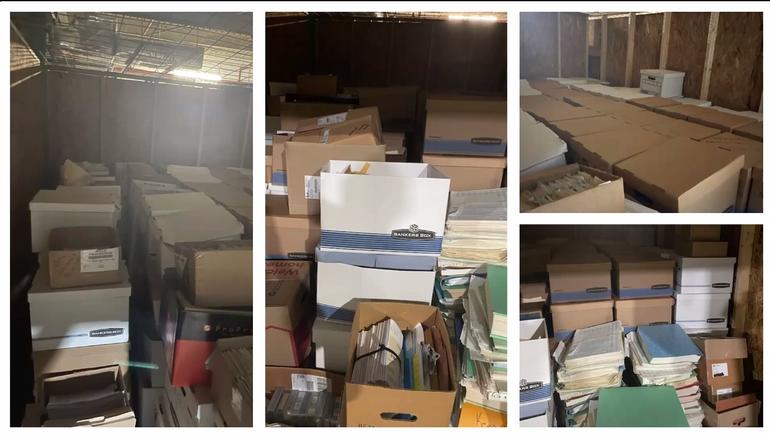
Board Chairman Todd Harper commented that having to store and manage too many records, and CUs not knowing what records to keep, can make the records preservation job very difficult for credit unions, and can even affect their viability. He pointed to one small credit union that in the wake of Hurricane Katrina had to close its doors for good because it could not reconstruct its records.

Todd Harper
Robust Records
Harper, who participated virtually in the meeting, said it’s important federally insured credit unions maintain a robust records preservation program whereby vital records can be readily reconstructed.
“Maintaining vital records is central to a credit union’s ability to properly serve its members and to the NCUA’s ability to fulfill its supervisory, enforcement, and liquidation functions,” Harper said. “It’s also important for credit unions to understand the necessary legal requirements and the agency’s guidance about records preservation.”
Harper noted that Part 749 of the program was last updated 15 years ago.
“Times change. Technology changes. There are modern needs and best practices that should be incorporated in policies for records retention and preservation,” he concluded.
Removing a 'Tedious' Challenge
Hauptman said NCUA recognizes the difficulty small credit unions may have with succession planning, and that having a more clear, streamlined and easier to work with records preservation program could help with that issue.
“A more appealing records preservation program could help with that,” Hauptman said, adding a burdensome records retention program could be the “straw that breaks the camel’s back” regarding a small CU CEO’s decision to continue on. “Tedious requirements can make running a small credit union less attractive…NCUA can't control what records the credit union is required to hold for their state or other agencies, but we can reduce unnecessary burden by ensuring our rules are clear and do not require more that is needed. The next step here is we're going to look for ideas from the public on what should we actually write and what will actually help.”
CU Feedback Needed
In remarks duringthe meeting, NCUA Policy Officer Matt Houston agreed that feedback from credit unions on the ANPR is critical.
“We would like input from stakeholders on whether specific document retention requirements and other regulations should be included as a vital record in Part 749,” he said, adding the agency understands credit unions may be confused about the current records preservation rules. “In conclusion our primary goal with this APR is to collect information from stakeholders…This feedback would be used to enhance any potential future Part 749 rulemaking efforts.”
Board Member Tanya Otsuka said sound records retention practices are “critical to ensuring the continuity and longevity of credit unions and the credit union system as a whole. The purpose of these important rules and guidance is to make sure that credit unions, especially smaller ones, can continue running in the event of a natural disaster or some other catastrophic or unforeseeable event.”