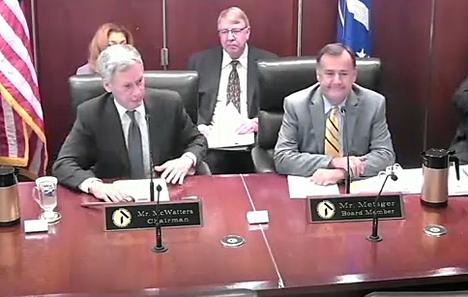
L-R: Mark McWatters, Rick Metsger
ALEXANDRIA, Va.—NCUA Thursday approved a new appeals process that would—under certain circumstances—allow credit unions face time with the agency’s board, and also proposed new stress testing rules that would reduce regulatory burden for CUs under $20 billion in assets.
Under the Capital Planning and Supervisory Stress Testing proposal outlined today, certain credit unions would not have to have their capital plans approved by NCUA and also would be permitted to conduct their own stress testing.
The NCUA board unanimously (2-0) approved two final rules regarding credit union processes for appealing exams. One of the proposals (Final Rule, Part 746 Subpart B, Appeals Procedures) standardizes the appeals process for regulations that currently have their own review and appeals procedures. The other proposal (Final Rule, Part 746 Subpart A, Supervisory Review Committee) expands the number of supervisory determinations appealable to the agency's Supervisory Review Committee and provides credit unions the opportunity for additional review by the director of the Office of Examination and Insurance.
Board Chairman Mark McWatters emphasized the importance of the changes to the appeals process.
“You can imagine, being a lawyer for 35 years, the idea of transparency and due process means a lot to me,” he said. “(These rules) hit to the core of the integrity of any regulator, financial or otherwise. When people have a complaint, a gripe or a disagreement with a regulator, to be able to come to a forum in a transparent way with suitable due process is critical. Without that people can be intimidated, fear retaliation and the like, and that is something—I assure you—I don’t want to be party to.”
Rule Differences
NCUA staff addressed the key differences in the two final rules approved Thursday.
The appeals process to the board (Final Rule, Part 746 Subpart B, Appeals Procedures) will largely handle appeals such as credit claims or share insurance appeals—often non-credit union parties making the appeals. The SRC rule (Final Rule, Part 746 Subpart A, Supervisory Review Committee) addresses appeals to the Supervisory Review Committee for material supervisory determinations--exam findings, largely, as those will be appealed by the credit union through the Supervisory Review Committee, NCUA stated.
The latter rule would allow for credit unions under certain circumstances to meet with the NCUA board.
McWatters suggested that is a “trailblazing” move by NCUA.
NCUA staff agreed, noting that banks do not get face time with the FDIC board, and that the Federal Reserve and the OCC largely rely on written records regarding appeals.
“So I think we are trailblazing here because we now allow credit unions the opportunity to not only sit down with the SRC and present their arguments orally, but with the approval of one board member, present their complaints in person at NCUA headquarters, or via teleconference, where appropriate,” NCUA staff stated.
Stress Testing
Rendell Jones
Under today’s proposal, NCUA’s capital planning and stress testing requirements would become more tailored to the size, complexity, and financial condition of the CU, the agency said.
“In brief, the tier comprised of the smallest covered credit unions would have the least regulatory requirements, with a concomitant increase in requirements for each tier as the size and complexity of those covered credit unions increases,” the agency stated.
The proposed rule would break covered credit unions into three tiers, with tailored requirements:
- Tier 1—Credit unions with assets greater than $10 billion in their first three capital planning cycles. Stress testing would not be required.
- Tier 2—Credit unions with three or more capital planning cycles, but with less than $20 billion in assets. These credit unions would run stress tests under the NCUA’s scenarios and guidance, but they would not be subject to the 5% minimum stress-test ratio.
- Tier 3—Credit unions with $20 billion or more in total assets. These credit unions would run stress tests under the NCUA’s scenarios and guidance and be subject to the 5% minimum stress-test ratio.
NCUA added that it reserves the right to conduct stress tests on covered credit unions if it deems such action necessary.
Under the proposal, the level of the NCUA’s capital planning requirements for Tier I and Tier II credit unions would generally decrease from the current regulatory requirements, but would generally remain the same for tier III credit unions, the agency stated.
“This proposed approach would reduce regulatory burdens on Tier I and Tier II credit unions while allowing them to focus on establishing sound capital planning and capital adequacy assessment processes. The Tier III credit unions, on the other hand, which may pose the greatest systemic risk to the NCUSIF and which are most capable of complying with the current requirements, would remain subject to most of the current requirements,” NCUA said.
Both McWatters and Board Member Rick Metsger said the proposal aims to balance providing regulatory relief for covered credit unions with managing risk to the NCUSIF.
Metsger emphasized that all credit unions need to comment, regardless of the fact the real impact of the proposal will be felt by only the largest credit unions.
“Only a handful of credit unions are impacted by this, and we will hear from them,” said Metsger. “But I want to hear from you all, as you will ultimately be affected (if a large credit union fails). This will have an impact on you, as you will be the ones who end up paying.”
Other Business:
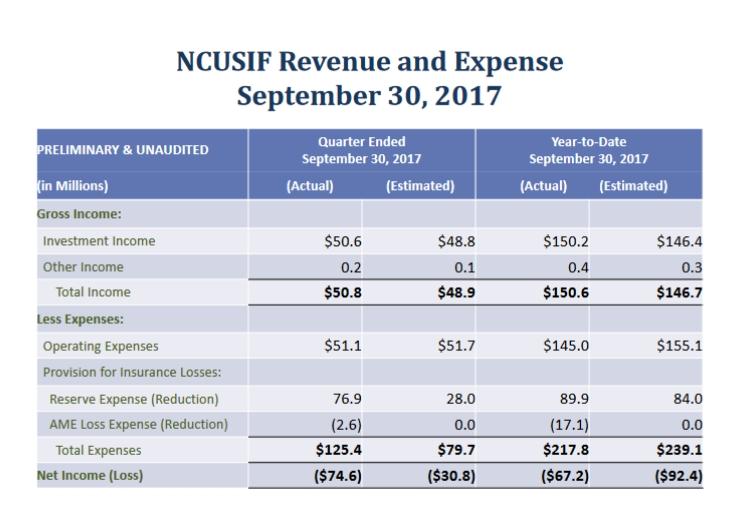
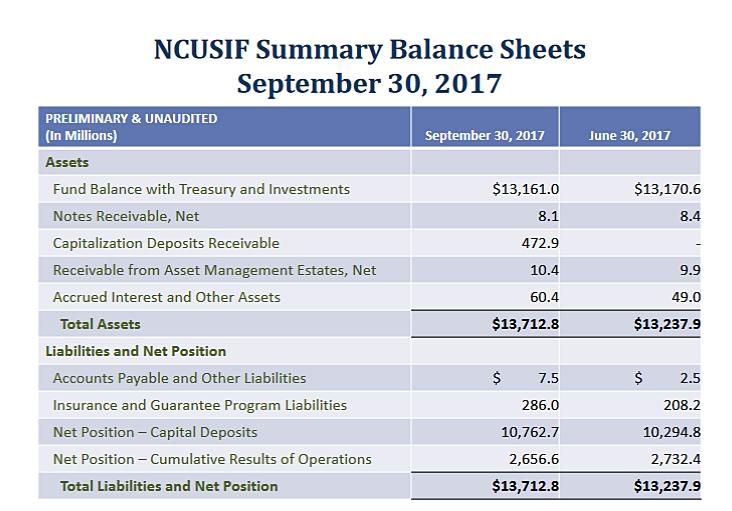
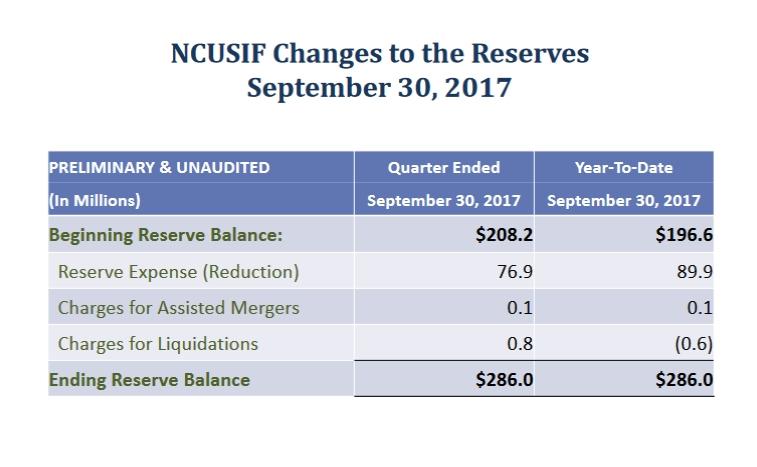
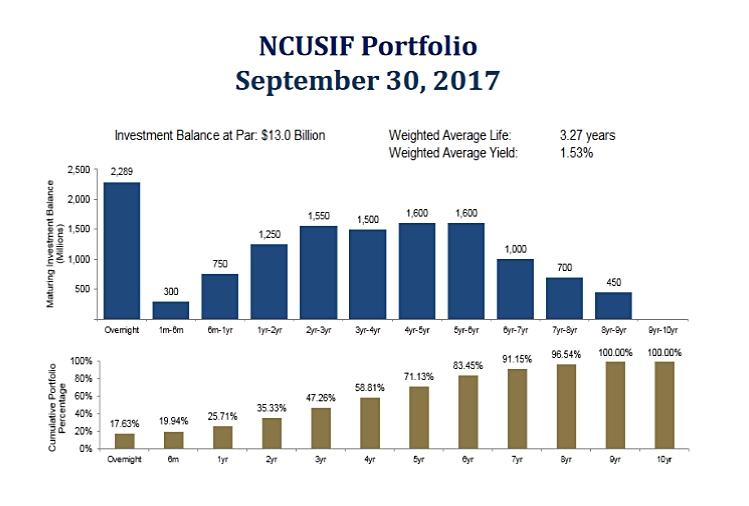
- NCUA reported that the National Credit Union Share Insurance Fund posted a $74.6-million loss in the third quarter. Operating expenses came in at $51.1 million, 1.2% less than estimated for the quarter. The number of CAMEL Code 4-5 credit unions dropped by a net of six in Q3, totaling 204. NCUA said that 88% of CAMEL 4-5 CUs have less than $100 million in total shares.
- The board, by a 2-0 vote, approved a request for information on electronic loan, deposit and investment data collection.