

ORLANDO—Pricing advantages won’t cut it anymore and credit unions must get much better at delivering a superior member experience, says one analyst.
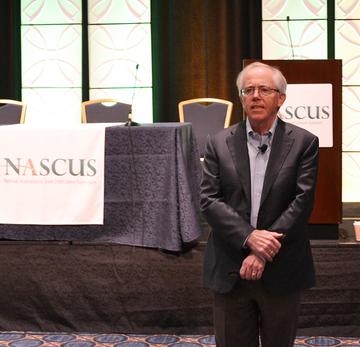
John Lass
Speaking at the NASCUSs 2018 Summit, John Lass, president of Lass Advisory Services, painted a picture of a not-too-distant future in which differentiating via price and product won’t be easy, especially for FIs without tremendous scale.
Referring to The Discipline of Market Leaders, a 1995 book written by Michael Treacy and Fred Wiersema, Lass said that successful organizations excel in one of three categories—product leader, efficiency and therefore price leader, and customer intimacy.
Lass said that assertion has held true over the years, emphasizing that the leading organizations do not try to be the best in all three disciplines.
“They choose one category and excel at that, but they do not ignore the other two,” said Lass. “Those that excel in customer intimacy don’t try to deliver the best product for the lowest price, but they do seek to deliver the best overall solution for their particular customers. They are willing to charge higher prices—trying to be the price leader and customer intimacy leader does not work.”
What’s Holding CUs Back?
What has held many financial institutions back from excelling in customer intimacy, said Lass, is a “product mentality.”
“Financial institutions are built around product silos,” he said. “This is due in part to how banks and credit unions are regulated.”
Lass also said that it’s too easy to rely on price, asking attendees how often they have increased their competitive position by simply cutting loan rates.
“Price cutting is always an easy way to gain market share,” he said. “A lot of financial institutions talk about wanting to be customer intimate, but when they want to increase lending they cut price—it’s the fastest way to flip the switch.”
Lass said the customer intimacy game is getting much more difficult for credit unions to win, as they move away from close SEG relationships to community charters.
“Today the credit union system needs to focus on member intimacy more than ever before because they are losing their natural, close relationship with members as they move away from primarily serving SEGs,” he said.
Evolving Delivery Channels
Improving on customer intimacy is also getting more important due to rapidly changing digital delivery channels. Lass explained that it is too easy for credit union members to compare price, often nationally, via the Internet, making member intimacy the best means for CUs to compete.
But credit unions, and all FIs, will be competing for close relationships with consumers in a marketplace that is changing rapidly due to the emergence of artificial intelligence and the game-changing speed of 5G, as well as greater reliance on the cloud. The way consumers will relate to their FI in the coming years will be dramatically different than it is today due to new technology and delivery channels, he said.
And Lass did not overlook competition from fintechs.
“We are now in the second and third wave of fintechs, and the big stuff is still coming. These firms have a lot of money invested in them, $1.1 trillion has been committed,” said Lass, emphasizing the real spending to drive fintech products and expansion has yet to arrive. “We ain’t seen anything yet.”
ORLANDO—Pricing advantages won’t cut it anymore and credit unions must get much better at delivering a superior member experience, says one analyst.
Speaking at the NASCUSs 2018 Summit, John Lass, president of Lass Advisory Services, painted a picture of a not-too-distant future in which differentiating via price and product won’t be easy, especially for FIs without tremendous scale.
Referring to The Discipline of Market Leaders, a 1995 book written by Michael Treacy and Fred Wiersema, Lass said that successful organizations excel in one of three categories—product leader, efficiency and therefore price leader, and customer intimacy.
Lass said that assertion has held true over the years, emphasizing that the leading organizations do not try to be the best in all three disciplines.
“They choose one category and excel at that, but they do not ignore the other two,” said Lass. “Those that excel in customer intimacy don’t try to deliver the best product for the lowest price, but they do seek to deliver the best overall solution for their particular customers. They are willing to charge higher prices—trying to be the price leader and customer intimacy leader does not work.”
What’s Holding CUs Back?
What has held many financial institutions back from excelling in customer intimacy, said Lass, is a “product mentality.”
“Financial institutions are built around product silos,” he said. “This is due in part to how banks and credit unions are regulated.”
Lass also said that it’s too easy to rely on price, asking attendees how often they have increased their competitive position by simply cutting loan rates.
“Price cutting is always an easy way to gain market share,” he said. “A lot of financial institutions talk about wanting to be customer intimate, but when they want to increase lending they cut price—it’s the fastest way to flip the switch.”
Lass said the customer intimacy game is getting much more difficult for credit unions to win, as they move away from close SEG relationships to community charters.
“Today the credit union system needs to focus on member intimacy more than ever before because they are losing their natural, close relationship with members as they move away from primarily serving SEGs,” he said.
Evolving Delivery Channels
Improving on customer intimacy is also getting more important due to rapidly changing digital delivery channels. Lass explained that it is too easy for credit union members to compare price, often nationally, via the Internet, making member intimacy the best means for CUs to compete.
But credit unions, and all FIs, will be competing for close relationships with consumers in a marketplace that is changing rapidly due to the emergence of artificial intelligence and the game-changing speed of 5G, as well as greater reliance on the cloud. The way consumers will relate to their FI in the coming years will be dramatically different than it is today due to new technology and delivery channels, he said.
And Lass did not overlook competition from fintechs.
“We are now in the second and third wave of fintechs, and the big stuff is still coming. These firms have a lot of money invested in them, $1.1 trillion has been committed,” said Lass, emphasizing the real spending to drive fintech products and expansion has yet to arrive. “We ain’t seen anything yet.”