

ARLINGTON, Va.—From ways the NCUA is helping credit unions navigate through pandemic-driven uncertainty to steps the agency is taking to ease the CECL burden on credit unions, Rodney Hood has offered some thoughts what the movement can expect from the regulator in the coming year.
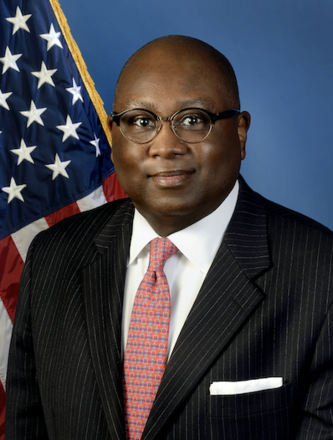
Rodney Hood
Speaking with NAFCU CEO Dan Berger during the association’s Virtual Congressional Caucus, Hood responded to the following questions:
Berger: The past few months have been difficult for credit unions. They are working hard under unprecedented circumstances. What is NCUA considering, such as reform that might be necessary, to assist credit unions with these pandemic challenges?
Hood: When I became chairman I said regulation needs to be effective and not excessive, and that philosophy has not changed. NCUA is committed to giving credit unions the flexibly they need to serve their members. We have helped credit unions participate in the Central Liquidity Facility. We have established a zero net worth rating for PPP loans. We have raised the appraisal threshold from $250,000 to $400,000…We have allowed military personnel to be included for a credit union’s low income status…And those are just a handful of things we are doing to help credit unions in the current environment.
Berger: What circumstances must be in place for NCUA to function best?
Hood: The main thing we need to do to be successful is to have an open line of communication with credit unions. I fervently support opportunities like this to get in front of credit unions. We want to be engaged. But that also means hearing from credit unions. We need your input. We need your comment letters—and I read all of them. In addition, as part of my role as chairman, I call credit union leaders each week asking them how they are faring in this storm and what we can do to help.
Berger: Given the uncertainty around the timing and shape of an economic recovery, what is NCUA’s position on liquidity and capital reform?
Hood: Liquidity and capital are the two pillars of credit union strength. Coming into the COVID crisis these were strong for credit unions. The most recent Call Report data show liquidity is strong in the system—it had increased by $32 billion by year’s end to $163 billion in short-term cash equivalents, instruments three months and under. In addition, the Central Liquidity Facility has grown to now $25 billion, through the CARES Act and other efforts, including corporate credit unions acting as Central Liquidity Facility agents. I am very pleased with that. In addition we have a well-capitalized Share Insurance Fund of over $16 billion. We have the tools in place to help credit unions endure any headwinds.
Berger: You have spoken with FASB. Why do you think credit unions should be exempt from CECL? And, if FASB refuses to exempt credit unions, what can NCUA do to help credit unions implement CECL?
Hood: I have been outspoken about CECL since I became chairman. I believe credit unions’ compliance costs to implement CECL overwhelmingly exceed the benefit of CECL. Credit unions will see a negative impact on their net worth. And FASB can’t ignore the current data challenges facing many credit unions from CECL. It will also have a chilling effect on lending. I have written to the former FASB chairman that credit unions need a permanent exemption from CECL. I have also spoken with the new chairman, Richard Jones, proposing we work together to find solutions to make it less arduous for credit unions to implement CECL. And we will be diligently pursing an exemption for credit unions.
Berger: COVID showed us technology is very necessary today—it allows us to work from home and access financial services wherever we are. But not all Americans enjoy the same access. How can technology be used to promote financial inclusion?
Hood: Fintech can be that great equalizer to providing people with access to affordable financial services. Individuals in underserved areas—many have access to a cell phone. At NCUA we want to create the Office of Innovation and Access. We will learn from industry experts on way to give lower-income individuals access to affordable financial services. For example, we will also look at new ways for current bill payments to be used to provide an alternative credit for credit score for those who don’t have a traditional credit score. In the days ahead I look forward to doing more around this office.