

ARLINGTON, Va.—One member of the NCUA board is not ruling out a potential NCUSIF premium as a result of the coronavirus.
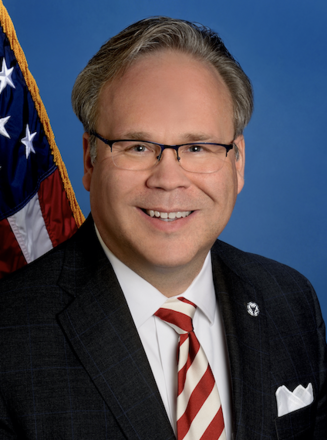
Todd Harper
NCUA Board Member Todd Harper told NAFCU’s Virtual Congressional Caucus the COVID-19 crisis and the economic toll on credit unions could potentially mean the deposit insurance fund needs a booster shot.
“With respect to the Share Insurance Fund, the NCUA is actively modeling the effects of the dramatic rise in assets, falling loan demand, compressed earnings and subdued consumer confidence,” Harper said. “While there is great uncertainty about how the economic effects of the pandemic will unfold over the long term, we must all prepare for increased member delinquencies, loan defaults, consumer and business bankruptcies and even credit union failures.”
Harper said in the short term, the NCUA board must be prepared to charge a Share Insurance Fund premium “should events warrant it.”
“Although the Federal Credit Union Act requires board action when the equity ratio falls below 1.2%, charging premiums for share insurance during the midst of an economic downturn is less than optimal,” he said. “Accordingly, I believe the NCUA should work with Congress after this crisis to modify the Share Insurance Fund’s operations. Doing so would create a countercyclical stance to allow for the accumulation of reserves during good times to cover losses in bad times without falling below the minimum statutory equity ratio.”
Monitoring Certain Sectors
Harper said NCUA is also carefully monitoring certain sectors of the system closely tied to sectors more deeply affected by the current economic headwinds, such as those credit unions connected to the oil and gas industry, the agricultural sector, state and local governments, and travel and hospitality companies.
“Additionally, we are focusing our supervisory efforts on credit unions with higher risk concentrations, such as those with investments in commercial real estate, so that we can proactively take steps to prevent losses to the Share Insurance Fund,” he said.
Harper added that Central Liquidity Facility Liquidity risk is another issue he is monitoring, especially what may happen after the federal government’s stimulus efforts subside.
Liquidity is Critical
“Through my experiences working on Capitol Hill during the last financial crisis, I knew disruption in the financial markets could quickly turn into liquidity shortfalls,” stated Harper. “Because credit unions must have access to liquidity when other parts of our economy freeze up, in mid-March, I called upon the NCUA to seek legislation to enhance the capacity and powers of the Central Liquidity Facility. At the end of March, Congress acted quickly to adopt those temporary enhancements as part of the CARES Act, and the NCUA board approved a rule to implement these changes in April. The CARES Act and these rules temporarily make it easier for credit unions to join the CLF, including allowing corporate credit unions to again act as agents for consumer credit unions as they did prior to the 2008 financial crisis.”
Harper noted the law also eased some restrictions around getting a liquidity loan and temporarily increased the capacity of the facility.
“Ultimately, we have a vital opportunity to bolster the entire credit union system’s access to external liquidity for the remainder of the year, and Congress may act to extend these temporary powers into 2021,” he said. “We must, however, move quickly to capitalize on our newly expanded flexibilities, and position ourselves ahead of emerging needs. For these reasons, I strongly encourage all consumer credit unions that do not already belong to, or have access to, an agent for the Central Liquidity Facility to join as soon as possible. By joining the CLF, you will be demonstrating the best of the cooperative nature of the credit union movement. That is because every member who joins the CLF will exponentially increase the capacity of the CLF to provide liquidity to others within the system.”
Other Priorities
Separately, Harper also addressed the agency’s key priorities during the health crisis:
- “Our first priority is to protect the health and safety of NCUA staff and contractors, so that we can maintain our ability to perform the agency’s mission and complete its essential functions.”
- “Our second priority is assessing the impact of COVID-19 on credit union members and operations. The NCUA has a dedicated webpage at ncua.gov/coronavirus that provides guidance on dealing with a pandemic, answers your frequently asked questions, and offers information on working with members.” Harper said that in the agency’s ongoing assessments of the operational needs and performance of credit unions, it has generally found federally insured credit unions are open, lending and serving their members’ needs, “albeit with some adjustments in branch access.”
- “Our third priority is to assess how COVID-19 will affect the financial condition of credit unions going forward,” he said. “Accordingly, we are already actively monitoring certain sectors of the credit union system and focusing on credit unions with elevated risks to protect the Share Insurance Fund from losses. In doing so, we can safeguard member deposits and their financial providers of choice.”