

ARLINGTON, Va.–NAFCU said it isn’t concerned ongoing support for efforts to make PPP loan forgiveness easier will contribute to fraud in the program.
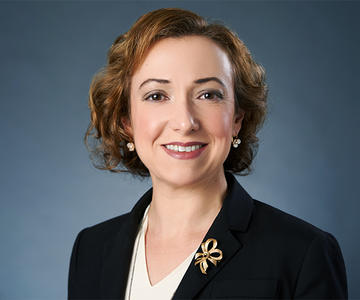
Carrie Hunt
While increased fraud “could” happen, SVP and General Counsel Carrie Hunt told CUToday.info that the closeness of credit unions to their members will be a strong factor in limiting any fraud.
As CUToday.info reported here, NAFCU and CUNA have joined with 140 other groups representing various industries and businesses – to urge Congress to pass bipartisan legislation that would ease the forgiveness process for Paycheck Protection Program (PPP) loans under $150,000.
The overall objective, said Hunt, is to reduce compliance demands on credit unions as they have to process the applications for loan forgiveness. She called it a “win-win” approach that is “very good for members.”
Hunt said NAFCU has heard from its member credit unions that while demand for PPP loans has cooled off, there continues to be demand in certain “hot spots” as a result of the evolving coronavirus pandemic, especially in certain regions and within certain economic categories that affect some CUs due to their fields of membership.
Working in Congress
Meanwhile, Hunt said NAFCU continues to advocate for BSA/AML relief in Congress, saying the issue remains “very important” to the trade group’s members, and it is also pushing for Member Business Loan cap relief.
New Biden Plan
In addition, as CUToday.info reported here, a “Unity Task Force” created by Democratic presidential candidate Joe Biden and former candidate and Sen. Bernie Sanders (I-VT) has put forth a list of recommendations for the Democratic Party platform that includes a new type of credit reporting platform.
Hunt said any position put forth by any presidential candidate deserves attention, and while the Unity Task Force is rather broad based she noted NAFCU is monitoring it. Among the planks in the plan is a renewed push for postal banking, which NAFCU opposes.
Hunt said the trade group believes there are “better ways” of providing “cradle to grave financial services,” including to the underserved, than using the U.S. Postal Service.