

KEY WEST, Fla.–Credit unions are accustomed to talking about risk, but seldom consider the growing risk to be found in “human capital” related to everything from the #MeToo movement to transgender employees to new physical workplaces and even from employees labeled as “404s.”
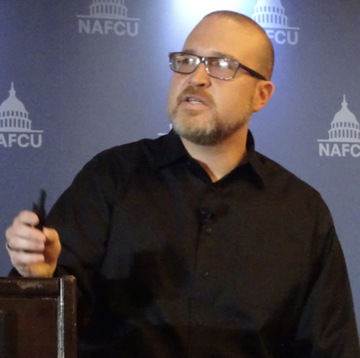
Carlos Molina
But all those risks and more must be analyzed and wherever possible mitigated, according to one person speaking to NAFCU’s CEOs and Senior Executives Conference here.
“Traditionally, credit unions pride themselves on being really good at managing risk, and I agree, but when we think of human capital risk it’s an area where we have lagged a bit,” said Carlos Molina, a risk manager with CUNA Mutual Group who specializes in personnel-related issues. “No employer runs their business in a way that they think will land them in court. But employment practices liability represent 47% of claims dollars paid over the last five years.”
Such claims are easy to file, hard to get dismissed, give the plaintiff opportunity to recover attorneys’ fees (while the CU must defend itself) and consume significant time, he cautioned.
Molina said claims and litigation related to age discrimination, disability discrimination and race discrimination are the three growing allegations against credit unions, in addition to wrongful termination and retaliation.
For instance, Molina asked how many credit unions conduct technological assessments for applicants, especially after spending a lot of money for a new system. “Who do you think doesn’t generally fare as well? Your more mature, more experienced workers, and that leads to claims of age discrimination. We had a job posting that said it wanted someone with no fewer than three and no more than seven years management experience. Does that expose them to age discrimination suit? Yes.”
The Changing Workplace
Molina said the #MeToo movement is also changing the ways people interact in the workplace and with it raising the risk of sexual harassment and discrimination. He said he fields calls from CUs at least once a month in which an applicant has asked their own questions about the CU’s policies. “You should be looking at this. It should be a priority,” said XYZ.
He added sexual misconduct and harassment can have nothing to do with physical act of sex, wanting to have sex or being physically attracted to the other person.
According to Molina, 32 states have now introduced more than 125 pieces of legislation related to sexual harassment, with New York, California leading the way. The sample New York policy on sexual harassment is seven pages long. “This is an area where I don’t think a lot of credit unions recognize the time, effort and budget dollars they are going to have to put into this,” said Molina.
Credit unions need to get policies in place related to workplace civility even about the types of discussion that can occur within the credit union about issues outside the credit union, such as Supreme Court decisions or the Black Lives Matter movement, he said.
Another shift credit unions need to adjust to: dealing with transgender employees. When Molina asked the session how many in the room have had to deal with transgender issues in their credit unions, at least five hands were raised.
Guidelines for Managing Gender Transition
Among the guidelines credit unions need to establish with transgender-related issues, according to Molina, are:
- Who in the credit union is charged with helping a transitioning employee manage his/her workplace transition?
- What can a transitioning employee expect from management?
- What are management’s expectations for staff, transitioning employees, and any existing LGBTQ employee group in facilitating a successful workplace transition?
- What is general procedure for implementing transition-oriented workplace changes?
The number-one question Molina said he gets related to gender transitions are all about bathroom usage, which he said can be appropriately dealt with.
Other Issues Raised
Molina touched on a number of other issues related to the workplace, including:
Perks
He noted 57% of people report benefits are of primary importance when choosing a job, and rank ahead of salary. He said CUs should look to the market to see what other companies are offering, such as Netflix, which offers unlimited employee maternity and paternity leave for the first year after a child’s birth or adoption; Airbnb, which gives employees an annual stipend of $2,000 a year to travel anywhere in the world, and Asana, which provides employees with access to executive and life coaching services outside of the company.
“As a credit union you might say you can’t afford these sorts of things, but it is a conversation you need to have,” he said. “When you think about perks beyond insurance benefits, flexibility in hours is one of those perks. If you’re really having a problem in retention, explore this,” he said.
Culture Management
When it comes to culture management, Molina said employee engagement surveys are one tool. Questions to ask, he said, include:
- How are you managing your credit union culture?
- Do you know and understand your employees; behaviors?
- Do your employees; behaviors align with your credit union culture?
- How are you addressing red flags?
Physical Workspaces
Molina said a number of changes are taking place in office design, such as an increase in semi-enclosed and small focus rooms for one-to-three occupants. Other changes include:
- Fewer executive suites
- In increase in usable square footage per work seat in activity-based working environments
- Increases in amenities spaces
- More hot desking
There are pros and cons to each, he said, with pro’s including lower costs and solutions for remote workers, and cons including missing having personalized space, lack of cleanliness and generational conflicts.
“You can now have anywhere from five to seven different generations working at a credit union at any one time,” observed Molina. “It means integrating work styles and habits. You must create an environment that effectively fits each generation.”
Terms to Know
Molina also shared with his audience a variety of new workplace and employment words and terms to know, including:
- Inboarding: It’s the process of identifying your current talent and strategically deciding whether that individual has an aptitude or desire to move onto another position in the organization.
- Ghosting: This is scheduling an interview with an applicant, and they don’t show, or they are hired, given a start date, and don’t show up because they’ve “accepted three or four other positions.”
- Hot desking and hoteling: This is a shared workplace or open floor plan office when at any given moment or any given day a worker can jump to another location in the credit union. “Do you think that causes conflict? You bet,” said Molina.
- 404. This is a reference to the message typically gotten when one clicks on a broken link, a 404 message. Molina said it has been used by some managers to refer to applicants or employees, as “404s.” He said he has seen lawsuits related to 404 references, as well as lawsuits and employment issues around emojis in messages. “One person sent a coworker a fist. It can mean different things.”
- Sit-in interviews. This is when an applicant wants to bring a parent or a significant other to an interview.
- Seagull. This is a term for a manager who flies around the organization a lot and craps on everybody.