

SEATTLE–It’s one of the greatest strengths credit unions have, a key to defending the tax exemption and creating institutional differentiation—but it’s also time for some new blood.
“It” is the volunteer directors at credit unions whose profile may have faded as credit unions have grown in size and scope, but whose function and roles remain critical and now require some new attention, according to Dennis Dollar.
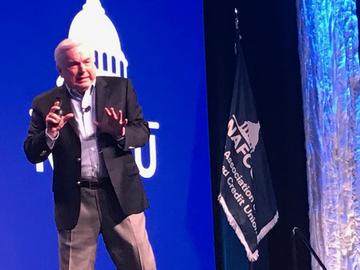
Dennis Dollar
“One thing we have to recognize is that in many cases the first generation of credit union pioneers is still around, but there is a graying of the credit union movement,” said Dollar in remarks to NAFCU’s annual conference here. “They probably don’t have another 30 years to give us. So, we need to be looking at the generational challenge with directors and volunteers,” said Dollar, the former NCUA chairman who now leads Alabama-based Dollar & Associates. “We do a great job of hiring CEOs and working to retain the greatest and the brightest in executive ranks.”
Now it’s time for boards to do the same things with themselves, he said.
What Needs to Be Recognized
Board members must recognize that among their fiduciary duties is finding replacements and developing that next generation he said. At too many credit unions, he said, especially those that have merged, “Many board members would rather give up than keep up.”
Credit union board members are as important as ever, according to Dollar.
“Nothing carries more weight with congressmen than the volunteer directors,” he said. “If we are not generating some interest, some incentive for that next generation, I think we are going to suffer as an industry.”
What must be ingrained in that next generation, said Dollar, is an understanding of CU philosophy as not-for-profit, member-owned cooperatives.
According to Dollars, board members:
- Must be committed to taking liability to further the institution over self.
- Must be able to defend the tax exemption. “The fact there was no tax bill in the Congress is because credit union directors were engaged. We all have a responsibility to understand why we have that tax exemption. It’s not about our size, or offering fewer products than banks. It’s our structure. The next generation needs to understand that structurally we are different than banks. There are for-profit and not-for-profit hospitals. They all have CAT scan machines. But the not-for-profits don’t pay taxes because they are structurally different.”
How to Function Better
To function better as boards, Dollar said his firm has had good luck and success working with CUs to create Branch Advisory Councils, Branch Leadership Surveys, Board Advisory Councils, establish board member emeritus members, and Supervisory Committee alternatives.
To strengthen current board members, Dollar said credit unions need to explore:
- Continuing education policy upgrades (beyond just what is required by NCUA)
- Fiduciary-specific training
- Board member evaluation (without creating a fissure on the board between those being evaluated and those doing the evaluating)
- Self-evaluation advantages
“You don’t need 60 volunteers in reserve,” said Dollar. “You need about four, five or six folks who understand what you are, why you do it, and who want to come and do it with you.”