

LONG BEACH, Calif.–Financial wellness is increasingly getting attention as a core focus for credit unions, and two CUs that are serious about it shared what they are doing, what they have learned and what they have planned.
Participating in the discussion on the issue during NAFCU’s annual conference were Nav Khanna, CEO of the $900-million First City Credit Union in Pasadena, Calif., and Marci Francisco, SVP-chief experience officer with the $3.8-billion Premier America Credit Union in Chatsworth, Calif. The discussion was moderated by Alix Patterson, chief experience officer with Callahan & Associates.
Here is a look at some of what was discussed.
Patterson: Everyone is talking about financial wellness. How did you make this central to your credit union and make a differentiator?
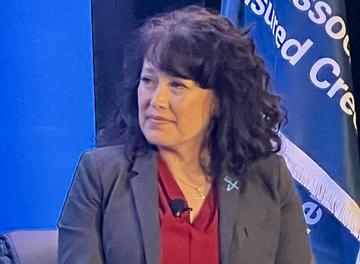
Marci Francisco
Francisco: It starts with community. Our organization has been successful for a long time, but when we looked at the communities we serve--Los Angeles County, Ventura County, and Harris County (Texas) and the median incomes--we saw that in Harris County it’s about $66,000 or so, and in Los Angeles County it's about $77,000. It's really difficult to live and to have breathing room at $77,000 in Los Angeles County. We also took a look at some of the transactions and how our members were behaving and what type of services they're using. We actually saw a lot of members leveraging payday-type lenders just trying to make ends meet.
So, we said if we're really going to be a community based financial institution that’s serving people of modest needs, we've got to make sure people are financially healthy. It starts with our team members, too. Everyone's got a story and everyone's struggled at some point…There is a need in our community, there's a need within our own households and it's not just people that are starting out, it's professionals.
Khanna: We really must understand why we are different than a bank and why we're maybe different than some of the other neo-banks and some of the challenger banks and others that we compete with. This is an authentic mission of our industry. The question is how do you execute on that? How do you really make it into something that is a differentiator that we can use as a value proposition?
I believe it begins with our employees. There's a lot of talk out there about scaling up with data and with technology, but if our team on the front lines really aren't the most empathetic people helping people, if they aren’t people that love people, it's really, really difficult to execute this.
So, I've been spending a lot of time trying to really make sure the organization's culture and the skillsets are there. We are starting with our own team, because we actually have employees that are on payday lender programs. We have employees that can't qualify for a credit card. We have an employee loan discount program that has a couple of benefits, but it also gets them into your product set so that they can have that conversation with their members.
It’s really tough. We put our youngest and brightest and, sometimes, least-paid folks on the front lines and those are our brand ambassadors, those are our financial advisors. So, without starting there, for us I feel it would be very difficult to authentically lean into that mission. It's about authenticity. We believe that this is the right thing to do, that it's a differentiator for our industry, for our organization. This aligns with our values and beliefs as well.
We did a survey and 70% of members said they are afraid they will outlive their money.
Patterson: Financial wellness is sensitive and emotional and often embarrassing. How are you identifying the members in need when they often don’t want to talk about it and how are you equipping front line employees?
Francisco: We want to normalize talking about our fears with money so it's not scary for our team members to approach that subject, it's not scary for us as executives to talk about it. On day one in our training class we spend a couple of hours with new hires and talk about the journey, and it's amazing how many of the team members are like, ‘Wow,’ and then they'll start to talk about it. It makes it easier, reduces the stress.
We want to make sure we're bringing in tools that can help our team members understand how to open those conversations. We've got platforms that are available with wonderful tools that can help provide bite-size learning. We've got our team members that go through that bite-size learning who want to understand what members are going through. We want to arm them and prepare them to ask questions and we're working on bringing the conversation more to the forefront.
We would love to get to the point where we have certified financial counselors in each branch. We're not quite there yet, but we're on that journey. We have made information and tools available in multiple different ways.
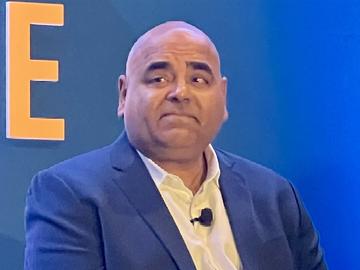
Nav Khanna
Khanna: Our credit union is going through (CUNA’s) FICEP program as we speak, and we’re making a big deal of it. It’s something you can put on your resume, it's something that helps you personally, and it's something that can help you to have those tough conversations, those emotional, those sensitive, those embarrassing conversations.
The next step is to really make sure we can get the digitization of these programs without ever leaving the humanity of these programs, because nobody does it better than a human listening to you and being empathetic and helping you and really truly wanting to help you.
We have found when we send our members off to the blogs and the vlogs they struggle with that; nobody wants to take the time to go look at these videos or be told what they're doing wrong. I think there's a challenge for all of us.
Patterson: Who is accountable for this in your organizations?
Francisco: I am. But everyone is responsible from the member experience side of the house, because we're all in the member experience division, whether you're the CEO or on the board or a frontline team member.
But when it comes right down to it I am responsible for it. We lead it within the marketing division. We’re adding a financial inclusion officer, but we want to make sure that we have a discrete focus on it because we are making this a pillar of Premier America and who we are. We have to have ownership, we have to have oversight and we have to have accountability.
We also partnered closely with everyone on our retail team…to be able to leverage it in the branches. And then we're also pushing it out through our nonprofit foundation. It's focused on fighting hunger and building financial help and so it sits side by side with the organization.
Within the credit union we're working with our members and our branches providing help and support. Through the foundation we're focused on the Boys and Girls clubs. We've got a network of relationships that we built where we're promoting financial education and health in the clubs. It’s collaborative with other credit unions. We also bring the youth into our branches (to help) normalize walking into a branch and asking the question and understanding it's not frightening to go up to speak with someone about money or to make a deposit.
We're hoping to reduce the barriers and reduce the fear for people that just are starting out.
Khanna: The good news is that I have 116 employees, so I can almost get to them individually. For me, it's much more grassroots and it starts from the top. It has to start from the board of directors and the C-Suite that this is important, that this is a value proposition, that this is a differentiating, that this is necessary.
We do talk about it a lot, we communicate about it a lot, we celebrate stories about it a lot. We are bringing it into our recognition programs, the living-the-mission stories of how we are helping members to get into their home of their dreams or the car they've been wanting or how we helped someone save money.
I believe there's a triangle of wellness. You've got physical wellness, mental wellness and financial wellness. We've got a lot of smart practitioners out there helping us through the physical and the mental part, but who's helping us with the financial performance part authentically? It's not the banks. It really goes all the way back to purpose and mission for me. If we can't do it, who will?
Patterson: What metrics are you using to measure your success?
Khanna: There is a scorecard element to this, but right now we use a very traditional method measuring balance sheet growth, walletshare growth, etc. If we are doing this right we are growing more brand evangelists and greater market share.
I would love to morph our scorecard over time to something that's a little more expansive versus being inward-focused. For instance, how many members do we help with FICO migration? How many members did we get into an emergency savings program that didn't have one before? How many members did we help achieve their financial goals? If we can figure out a way to define and track and manage we can incentivize the organization from that outward-in perspective.
Ultimately, we're the relevancy business and I want to be relevant for the next 85 years.
Francisco: Our measurement also includes our Net Promoter Score; we're really focused on that…with every single person in the organization. We talk about it every Tuesday morning; we review our feedback. It is an all-hands-on-deck approach to making sure that we're taking care of our members and iterating.
In terms of the metrics we're really still working to define those.
Right now, it is somewhat traditional: how many people have we reached how many folks have engaged with us, etc.
I would love to get to the place where we could really measure the true impact, even if that’s an emotional impact that someone has--they're happier and healthier with their money.
Make Sure You’re Receiving CUToday.info’s Free Daily Newsletter Headlines
Are you missing out on the latest news in credit unions? Missing the trends and developments you need to be aware of? We can help. Each morning CUToday.info delivers its daily Fresh Today news update offering the latest headlines and breaking news right to your email, with the easy-to-read headlines format allowing you to click on the stories that interest you most in order to learn more.
And it’s free!
If you haven’t yet signed up for the new email solution on which CUToday.info has partnered with ResponseGenius, you can do so here. Signing up requires less than one minute of your time—and it’s free!
Please note that after signing up you may need to go to your Spam/Junk folder and mark the morning headlines email as safe. CUToday.info does not provide its list of readers and emails to outside parties, and we will not be contacting you to sell you an extended warranty or sending you any links so you may cash in on an inheritance you didn’t know was coming.
And did we mention it’s free?
Please note and/or make your IT department or email administrator aware the emails will be coming from the domains CUTodayinfo.com and CUTodayinfoReply.com