

LAS VEGAS–There are numerous lessons credit unions can learn from Disney, and they are anything but Mickey Mouse, according to one expert on sales and training.
Adam Pickett, founder and president of Accelergy, shared with the NACUSO Network meeting here how credit unions can vastly improve their sales and service processes and he used Disney—at which he formerly worked in a number of roles—as his model.
Pickett worked in a Disney Store, spent a year in the company’s college program, was a front-line worker at the Big Thunder Railroad attraction in Orlando’s Magic Kingdom, and worked in marketing. Over seven years with the company Pickett said he was able to touch most of the Disney experience brands.
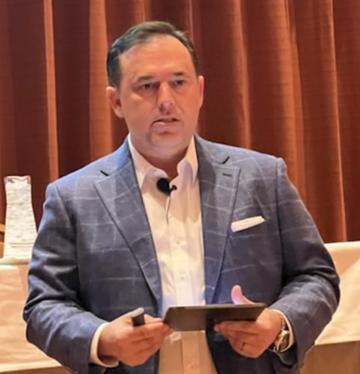
Adam Pickett
“I want you to understand how focusing on sales and providing a great member experience do not have to be mutually exclusive,” he said. Any credit union leader, said Pickett, can learn how to identify the critical elements to driving exceptional service at a credit unio; can learn how to build a sales and service culture that consistently delivers on excellent member experience while driving growth.
Why Disney?
But why has Disney become the benchmark?
“One of the key elements is the employees,” said Pickett. “They are such an important part. They are cast members because they are entertainment focused. As a former front line cast member, I can tell you Disney does an amazing job of training people and getting them acclimated to that service culture. Cast members understand purpose, what exceptional service looks like and are held accountable on a regular basis.”
Pickett said the idea of providing exceptional service seems really simple, and yet so many organizations—including credit unions—fail at it regularly. In the case of CUs, he said that means missing opportunities to affect members’ financial lives.
Changing the Mindset
“Many credit unions have a mindset that sales are a dirty word even as they know they need to grow,” said Pickett. “Changing the mindset of your team when it comes to sales, having a positive connotation and tying it to service are key to credit union culture. As credit union leaders, your job is to enhance your members’ lives. The only way to do that is through sales. If not, you’re missing the opportunity to impact their lives. Service without sales can result in a negative member experience.”
According to Pickett, the elements critical to driving sales and service really come down to first documenting what that ideal state looks like and what those specific behaviors are.
“When someone comes into your branch, are they greeted immediately? If so, do you have that documented in your service expectations?” asked Pickett. “Do you train that behavior during your onboarding. Really great service is not dependent upon which team member you interact with at Disney. They set clear expectations to drive consistency and it’s reinforced by leadership.”
Other Critical Elements Internal Handoffs
Among the most critical elements in effective sales and service are what Pickett called internal soft handoffs between departments.
“When your team passes a member among departments, is it a smooth hand-off? At Disney, a cast member who is a greeter who gets a question they can’t answer will walk that person to a concierge cast member and soft transfer that guest. What does that look like at your credit union? What happens when hand off to one of your commercial partners? Is it smooth for the member? Can you ensure 100% of those members are followed up with?”
Onstage Behaviors
When a cast member is within reach of a guest, Disney called that being “onstage.” When away from a guest, that’s off-stage. Disney had strict rules around how to behave when onstage. It includes making sure all onstage conversations are appropriate and that cast members aren’t talking about a party they went to or where they are going to lunch.
“Are your conversations always focused on the members?” asked Pickett.
Product Knowledge
Pickett said when he was in a frontline role, he got product training on the merchandise for sale, but also training on other aspects about Disney World.
“I couldn’t know everything about every detail, but I was expected to know about everything in my product area. Where is the closest restroom? When is the parade?” he explained. “Your branch team can’t know absolutely everything you offer, but they should have a good understanding of the products and services your members are asking about on a regular basis.”
Tools
At Disney, Pickett said cast members were given a pocket tool that had all the vital information that was needed for basic guest questions.
“One client we worked with had a tool we called the Cheesecake Factory menu. It listed every single product and every single detail about each product. Instead of being a great resource for team members, it overwhelmed them. They stopped talking about certain products because they didn’t understand them,” he said. “If your information is available online, does your search engine work effectively?”
Importance of Follow Up
According to Pickett, Disney employees were told if they don’t know the answer they should do everything they can to find out for the guest. And if can’t find out immediately, they are trained to get the answer and follow up.
“Think about how it makes you feel when an organization doesn’t follow up,” he said. “Your trust with them is different. With a sales process that reminds staff to follow up, you can ensure members getting exceptional service all the time.”
The Infrastructure
All of the processes listed above must be part of a sales infrastructure, Pickett told the meeting.
“This ensures that no member request falls through the cracks. I say that all the time. That’s really how you can impact your organization,” Picket said.
To support sales efforts, Picket recommended credit unions:
- Document all sales processes
- Align the processes to tracking tools and sales technology
- Implement strategic tactics that are woven into the culture
- Sustain through continuous development and leadership support
‘Sometimes’ Doesn’t Cut It
Pickett said in his meetings with credit unions he found CUs say they “sometimes” follow up with members using any number of informal processes. “The harsh reality is that they often don’t follow up with that member, and it’s because they don’t have that sales and service process,” said Pickett. “Think about the impact on your organization if every team member misses one or two opportunities every month.”
When a tracking tool is being used, he said team members know each step of every opportunity. The framework also promotes a proactive vs. reactive approach, makes it easier for leaders to hold team members accountable, and allows new team members to become productive quicker, he added.
“Too many organizations focus on specific technical skills after being hired, rather than giving attention to sales and service,” Pickett said.
Also Worth Considering
There are other points to consider when building a sales culture, said Pickett, who recommended:
- Establishing a reviewing sales goals
- Implementing mandatory weekly pipeline meetings
- Hosting developmental one-on-ones
- Ensuring sales and service training