

SAN DIEGO–If a person doesn’t have their health, it doesn’t matter how much money they have. And even if they have the financial resources, they may be completely unprepared for dealing with health-related issues.
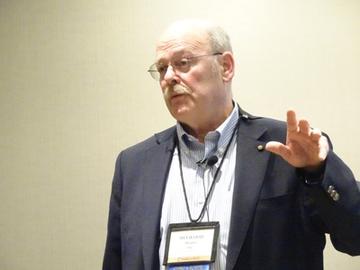
Heywood Sloane speaks to NACUSO meeting
What does that mean? A big opportunity for credit unions and CUSOs, according to one person.
How big is the opportunity? According to Heywood Sloane, research shows $470 billion in economic value is provided each year by caregivers, with some 43.5 million Americans currently active adult caregivers.
That opportunity lies in providing investment services to higher-wealth members that is focused on health and care funding, an increasingly common challenge facing members, according to Heywood Sloan of Diversified Services Group.
Speaking to NACUSO’s annual meeting, Sloan said at CUs that offer investment services, many advisors find themselves thrust into a role of how to best counsel a member or client on questions for which they may not be prepared, as the task often has to do with not just financials but also taking care of a person’s health and well-being.
Sloane pointed to significant research that has found a common fear of most people is running out of money near the end of their lives and encountering health issues. Other research has found more than 60% of members do not understand what should be done about issues surrounding their finances and health. The result? According to Sloane, high demand for a service that speaks to both.
Disruption: Threat, or Opportunity?
“We all now financial services being disrupted, but you may not know is medical services are being disrupted in much the same way,” said Sloane. “There is an Amazonization of information. People are overwhelmed. There is a massive increase in knowledge.”
Among the questions on the minds of members/consumers when it comes to healthcare, said Sloane: Who, exactly is on my team? Why do I need them? How do I use them? Should I trust them? What are the ripple effects? What am I missing?
“What we have is an intersection of two things: financial services and medical healthcare,” said Sloane. “Is it an opportunity or a threat? If you stay in the old model, it’s a threat. If you are in a new model, it’s an opportunity. And that opportunity is healthcare funding.”
Sloane said the three pieces of the equation are medical (doctors, acute situation, surgeries), health (eating right, exercising, etc.), and then the big unknown: being able to pay for it. More specifically, the concern among consumers is financing healthcare expenses, not the healthcare itself, Sloan said. Sixty-four percent of employees believe healthcare costs will impact the timing of their retirement, he said.
Rethinking Economies of Scale
CUs are handicapped by lack of scale, said Sloane, who noted platform referrals and staff are shrinking as the retail models shift away from branches; commissions and AUM revenue models are volatile and subject to ongoing compression, and within the CU there are siloed and often competing disciplines.”
“What we’re looking at as opportunities is changing how these economies of scale work,” Sloane said. “We want to accelerate the adoption of holistic, client-centric technology that alters the retail members’ “experience.”
The goal under the investments-management umbrella is to incorporate care management, elder protection and healthcare funding services to support a stable, recurring revenue stream, explained Sloane. It’s part of an effort to provide insights and support for clients that empower them to create “health/wealth” connections across silos to mitigate fiduciary risks, he added.
“You cannot assess the risk of an individual’s portfolio if you don’t have some sort of idea about their healthcare contingencies,” said Sloane.
A Differentiating Member Experience
Helping members understand and address healthcare and funding needs is relevant, empowering, engaging and simple, said Sloane.
“A key is to be digestible. If you try to put all this across at one time, they won’t absorb it. Everyone is having this experience as either a caretaker or caregiver. The question is can you help them to get ready for this experience so they can help their clients.”
Getting Started
The things to think about when getting started include member acquisition issues, member loyalty and retention and increased share.
The key questions a credit union must ask itself, according to Sloane, are:
- Are CU advisors and members getting the personal experiences and outcomes they want?
- Are your products and services positioned to cover all the links in the chain in the future?
- Are your distribution teams and channels ready and able to tap key market opportunities with agility and confidence?
- How can you leverage existing capabilities to generate additional revenue effectively? Do you have the tools you need to maintain the quality and stability of your revenue basis?
The Need For Clarity
“You need to have an idea of where you are, and how you are going to get to where you want to be,” explained Sloane. “If you’re not clear, you will lose your way along the path. Not everyone understands the path, but when they do. they become advocates.”
Sloane said it’s important to look at the scenario through a holistic lens and across lifestyles.
“You must focus on your markets, current capabilities and results,” he said. “You want it to be implementable and achievable based on your situation. You want clear direction, appropriate steps and checkpoints to navigate and stay on the best path.”
How Can It Work?
When someone becomes a caregiver for a loved one, they soon face heightened stress levels, decreased productivity and financial strains.
“The key piece in the elements of caregiving is the family,” said Sloane. “A lot of this is information, and if you can help people get to the right information when they need it, you are helping them and creating client trust. It’s not expensive; technology makes it available. You can create a valuable program for retail bank investment clients in order to enhance relationships and engagement, support additional sales and enhance integration with the credit union.”
A Different Conversation
Identifying and fulfilling caregiving needs is a different “planning” conversation,” said Sloane.
“It is about helping the client and their family, not about their money. It’s about engaging clients to prepare them for better conversations with advisors, and on education on the ‘health-wealth’ connections for families and lifetimes. All components offer opportunities to deepen the planning conversation.”
Sloane said among the components that can be delivered are web- and mobile-based access to personal advocacy, a cloud-based learning and sharing platform, a comprehensive video library, as well as a customizable resource center; for internal and/or external support.”
“This has the capability to align interests like nothing else the credit union does, from the credit union to the advisor to the member to the member’s family,” said Sloane.