

ANAHEIM, Calif.–Four different attorneys here offered updates on a host of legal and regulatory issues and challenges in front of credit unions and CUSOs here.
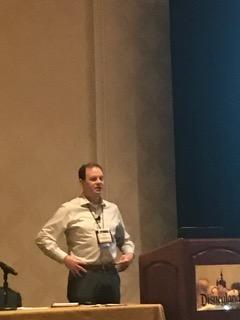
Brian Lauer
Attorneys Brian Lauer, Amanda Smith, Michael Heller and Jennifer Winston of the Pennsylvania-based firm Messick, Lauer & Smith, which represents the National Association of CUSOs, offered their insights on everything from lawsuits over field of membership and ADA to doing business internationally to risks related to social media.
Here’s an overview of what they shared.
Lawsuits and NCUA
Attorney Brian Lauer offered an overview of a number of issues, including:
- ABA Lawsuit. Lauer noted the American Bankers Association’s lawsuit against NCUA over field of membership was a split victory, with ABA winning on half of the ruling and credit unions winning on the other half. “It’s sort of unclear at this point whether the NCUA is going to appeal that. I would assume that they would. They also published a letter on associational common bonds in which NCUA came out pretty clearly along the lines that if a core group with a core system of beliefs is an associational common bond.”
- NACUSO Advocacy. “NACUSO’s advocacy has been pushing hard for CUSOs to be able to originate all types of loans under the permissible services aspect of the CUSO rules,” said Lauer. “Right now, CUSOs only originate business, mortgage, student and credit card loans. So, we have spent the last year and a half lobbying for that rule to be changed, which we think would be very beneficial for the industry. It’s not clear why certain types of loans are excluded from that authority. NCUA has been receptive to that.”
- Full Review of Agency Regulations. “When Trump came into office he asked all agencies under his authority to review all regulations and determine regulations that could be removed. NCUA is not required to do it anyway, but they decided to do it anyway. CUSOs in the scheme of that regulatory review saw a real opportunity for high reward and low risk.”
- Loan Participation Letter. “NCUA doesn’t issue a lot of letters anymore under their new general counsel, Mike McKenna,” said Lauer. “One letter is a bit perplexing, their loan participation letter that essentially says what we all already knew, which is that credit unions are not allowed to participate in pools of loans. Credit unions must participate in each individual loan separately, which is essentially what that letter says. Their definition of a pool is a pool where a group of loans can flow in and out of that pool.”
- Fidelity Bond Letter. “A lot of credit unions will include CUSOs in their fidelity bond. But in the past, there was a letter that said that was not permissible. The new letter reversed that and says a CUSO can be included so long as the credit union whose fidelity bond it is being included under owns 50% or more of the CUSO. If you have a CUSO with no one majority owner, you have to have a separate fidelity bond.”
- Other Similar Escrow Accounts Letter. “What might have passed you by is the letter has essentially clarified (rules around) IOLTA accounts that credit unions previously could not hold, because they are technically titled to the lawyers. Congress passed a statute that implemented regulations allowing for IOLTA accounts at the credit union if the attorney was a member of the credit union. The interesting thing was this regulation when it came out said IOLTAs and other similar escrow accounts. What they meant is if you are holding funds for a member or even for a CUSO, and those CUSO’s funds are actually escrow funds, in the past you couldn’t hold those funds unless everyone was a member of the credit union. They have expanded the IOLTA regulation to include other funds to be held in an FBO account so long as the account is titled in the name of a member.”
International Agreements and Contracts
Michael Heller touched on issues to be considered before dealing with any international parties or contracts, including language to be included in contracts.
Among the points touched on by Heller:
- Both parties should have common strategic goals and needs
- Both parties should have common operating philosophies
- There needs to be trust, including understanding what effect other laws might have
- Cultural considerations need to be taken into considerations, including language and time zones
- Due diligence. Heller said it’s critical to understand the legal climate in the country with which the CU/CUSO has a relationship
Legal Barriers That May Be Encountered
- Intellectual property registrations. “You really want to make sure everything is registered in every country you want to do business in.”
- Export Laws in the U.S. and Foreign Import Laws. “In the U.S. in particular, you may need to apply for a special export license, but usually only if there is some sort of military application. There is also a list of countries you can’t export too without government authorization.
- Dispute Resolution. “You want to know how you are going to resolve disputes if or when they arise, and what laws will apply. I think most important is where are those disputes going to be resolved.”
- Due Diligence. Heller said credit unions need to review foreign legal compliance with privacy and data security regulations, and also understand what tax laws might apply. Finally, he reminded credit unions would need to also comply with the Foreign Corrupt Practices Act, which prohibits offering anything of value.
Written Agreements
In written agreements, especially international contracts, Heller said language should address:
- Intended scope of relationship, including territory and products/services
- IP protections
- Confidentiality
- Non-solicitation/non-compete/exclusivity
- Exit strategy, including term length and termination provisions
- Boiler plate terms governing law, notice and language
Monitoring
Heller also reminded credit unions to ensure their partner company is complying with all the aspects of the contract and agreement.
Advertising: Social Media and Website Compliance
Attorney Jennifer Winston addressed a growing issue of compliance in credit unions, the use of social media and website compliance, including in NCUA reviews. Among the issues NCUA will be reviewing, including every page of the website, said Winston, include:
- Use of official NCUA sign and advertising statement
- Accuracy of advertising
- Deposit accounts and TIS
- Reg Z
- Equal Housing Lender logo
- Account opening disclosures available online
- Web links
What is social media? It’s websites, multimedia, blogs, email, texts, Facebook, Twitter, Instagram, Linked In, Pinterest and even Google searches, said Winston.
With all of that comes risks, especially reputational risks, and Winston pointed credit unions to FFIEC social media supervisory guidance that NCUA and other agencies follows. It defines social media as a “form of interactive online communication in which users can generate and share content through text, images, audio and/or video.”
According to Winston, credit unions will want to:
- Have a program in place to allow you to ID, measure, monitor and control risks related to social media
- Size and complexity commensurate with your involvement in social media
- Include compliance, IT/security, legal, HR, and marketing in developing the program
Social Media Policy
When it comes to social media, Winston said:
- Overly broad policies may violate National Labor Relations Act: cannot prohibit certain types of discussions by employees
- Make sure you have reviewed policies and terms and conditions on social media sites where you are posting
- Copyright considerations must always be taken into account
Winston reminded credit unions they must comply with UDAAP, which she called the “big stick” penalty. To comply,
- Always be accurate
- No misleading content (the four P’s): prominence, presentation, placement and proximity
- Don’t misrepresent products and leave out critical terms and conditions that could affect the consumer’s decision
Reputational Risks
Reputational risks arise from negative public opinion and can occur even if the organization has not violated any federal law, said Winston. Risks can include:
- Fraud and brand identity (comments made by social media users and spoofs of communications/account takeovers)
- Third party concerns, including failure to monitor what is placed on social media, failure to have controls over third-party run site. That includes knowing where a credit union’s advertising might appear, she said
- Privacy concerns
Winston urged creating very clear channels and directions and posting them online to provide direction to members/consumers when it comes to publishing any information, and reminded that a credit union must be aware of certain disclosures any time an employee communicates on behalf of the credit union.
ADA Compliance
As CUToday.info has reported extensively, the issue of whether websites fall under ADA rules for public accommodations has been the subject of much litigation and threats, and Winston acknowledged it remains unclear whether the ADA rules apply to websites. The Department of Justice has not provided much direction and has not indicated whether it will be doing so, in part because of an order from the Trump Administration requiring two rules to be eliminated for every one that is enacted.
Is a website a public place? To date, courts have been split, noted Winston.
“This issue will likely make it to the Supreme Court sooner rather than later,” predicted Winston.
The TCPA, the Fiduciary Rule and the CFPB
Attorney Amanda Smith spoke to the issue of courts v. regulators. She said it makes for good headlines, but those same headlines are often “confusing” and give the wrong impression.
Smith cited ACA International v. FCC over the TCPA, argued in the U.S. Court of Appeals for the D.C. Circuit. It vacated the FCC’s 2015 Omnibus Declaratory Ruling and Order in part and restores the definition of auto-dialer to what was in place before the 2015 Order.
“It put us back to where we were before the ruling was put in place and added maybe a little bit more color,” said Smith. “In short, the original order defined just about anything but a rotary phone and auto-dialer. Unfortunately, the only concrete thing we got out of (Appeals Court) is that we also know smartphones are not auto-dialers, either.”
The court did uphold the FCC’s interpretation of revocation of consent and noted parties can contract for revocation procedures.
What does it all mean?
“In my humble opinion, it’s unlikely to lead to a significant decrease in litigation in the short term,” said Smith, noting the court also failed to define “one call safe harbor.”
DOL Fiduciary Rule
“This rule is being attacked everywhere,” said Smith, “and not just from the courts.”
It was originally scheduled to be phased in from April 10, 2017, through Jan. 1 of 2017, but President Trump asked for a review that pushed implementation back to July 1 of 2018. House GOP leaders have repeatedly sponsored legislation to block the rule, but not successfully.
In the meantime, there have been numerous hearings around the rule in multiple courts, said Smith.
Where does rule stand? The rule is supposed to be effective May 7 nationwide, but even that is up for some debate, said Smith.
The CFPB
“Every year I talk about the CFPB and every year I say it’s not going away. But it looks like a cluster this year. It’s not going away—it may not do much this year—but it’s not going away. It’s going through some changes.”