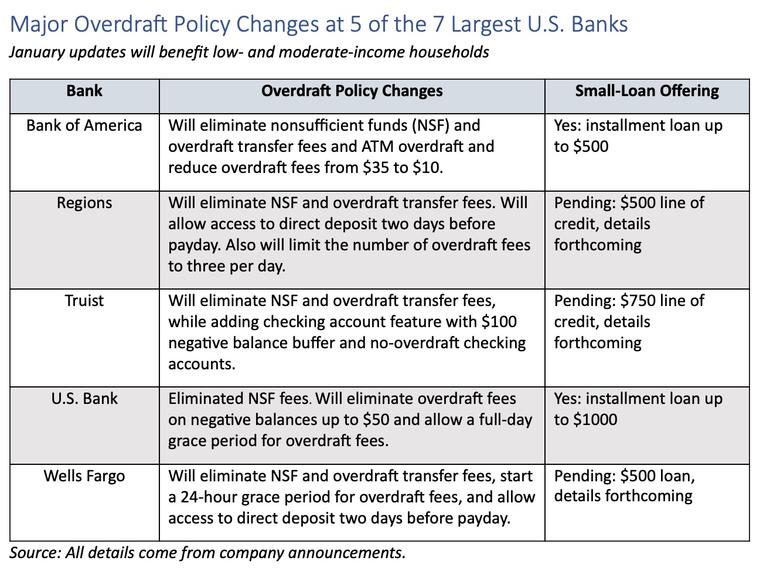
PHILADELPHIA– A new analysis by The Pew Charitable Trusts has found consumers could save more than $2 billion a year as a result of five of the country’s largest banks—Bank of America, Wells Fargo, U.S. Bank, Truist, and Regions Bank—announcing they are eliminating nonsufficient funds (NSF) fees and making major changes to their overdraft programs.
As CUToday.info has extensively reported, the moves by the big banks come as numerous other banks and some credit unions have announced changes to their NSF fees, in some cases eliminating them altogether and in others sharply lowering those fees.
Pew Charitable Trusts called the announcements during January by the five banks a “watershed month.”
“Historically, overdraft programs were marketed as helping people who live paycheck to paycheck prevent important transactions from being declined, but this high-cost option does not effectively address the needs of most consumers who need time to repay in installments,” Pew said. “This is especially true for the millions who turn to overdraft as a way to borrow small amounts of money.”
In addition to the estimated $2 billion in overdraft charges that will be saved by customers of those institutions, Pew said their annual savings from gaining access to affordable small loans—compared with the payday and other high-cost loans they often use today—could exceed that amount.
‘Harmful Effects’
Pew noted that its earlier research has detailed the harmful effects of overdraft and nonsufficient funds fees, which have an outsize impact on low- and moderate-income Black and Hispanic customers.
“The moves by these five banks could spur other large banks, community banks, and credit unions to revisit their overdraft policies and reduce or eliminate fees,” Pew said in releasing its findings. “Other banks should follow the lead of these five and Huntington to offer small-installment loans or lines of credit to their checking account customers.”
While the banks’ recent actions on overdraft and small loans better align their interests with their consumers’ financial needs, Pew added that federal overdraft regulations would be beneficial, “especially because most banks and credit unions have not yet taken these steps.”
‘Important Ancillary Steps’
According to Pew Charitable Trusts, the shift away from reliance on overdraft, especially if it spreads to more banks, is likely to have important ancillary benefits. Pew noted the Federal Deposit Insurance Corp. (FDIC) has found that about half of unbanked households had been banked previously; many had left or had their accounts closed because of high or unpredictable fees, such as those for overdrafts.
“Eliminating or reducing such fees is likely to end up increasing the share of Americans who are banked,” Pew stated. “And increasing the number of Americans who have access to affordable financial services through banks and credit unions is good for customers’ financial health, their communities, and the banking system.”
Give Us Less Than 1 Minute & We’ll Give You Good News!
The ongoing popularity of CUToday.info’s daily Fresh Today newsletter has led to a need to move to a new server in order to provide improved service to our readers. In order to continue to receive the daily email, you must register by March 7. To register, just click here. The daily Fresh Today news headlines email remains FREE!