CAMBRIDGE, Mass.–Nearly nine-in-10 businesses said they plan to make additional investments in identity verification (IDV) and authentication solutions, according to a new survey conducted by LexisNexis Risk Solutions for Forrester Consulting.
The technologies, the organizations said, have become critical in a post-pandemic world, with the research highlighting how businesses can manage these activities in a way that produces benefits for both the business and consumer.
The report, the organizations said, found companies rank identity verification as highly important for maintaining customer relationships, security practices, fraud prevention and brand reputation with businesses seeking more accurate and holistic IDV coverage to improve process accuracy and achieve optimal fraud control across channels.
“Organizations are eager to confidently manage and support consumers while decreasing security threats and building trust, particularly during a time of digital transformation accelerated by the pandemic,” LexisNexis and Forrester said. “IDV processes are essential in creating a strong, low friction customer experience. Sixty four percent of respondents said the pandemic increased or significantly increased the importance of their IDV and authentication processes and 71% increased prioritization of customer experience.”
Awareness of Potential Fraud
The research confirms that organizations are aware of the increase in potential fraud caused by the expansion of online consumer activity and in response are prioritizing the importance of identity management, the organizations said.
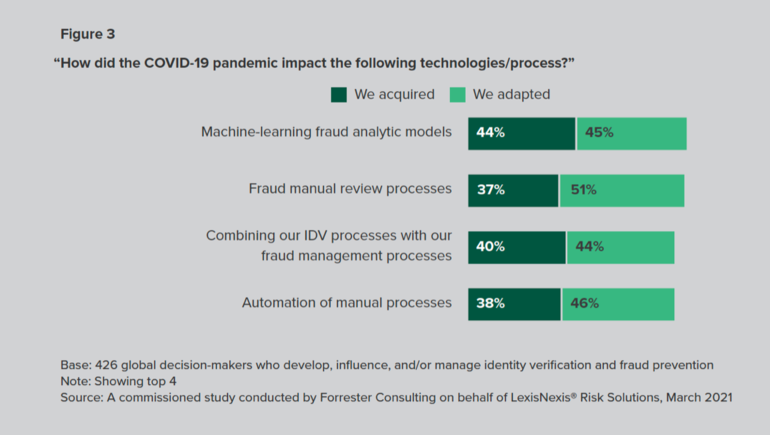
Eighty six percent of survey respondents said their organization plans to evolve their IDV processes within the next 12 months by making investments to increase the “number of risk signals, be better prepared for emerging fraud threats and improve customer experience.”
Forrester's Key Recommendations
Among the recommendations from Forrester:
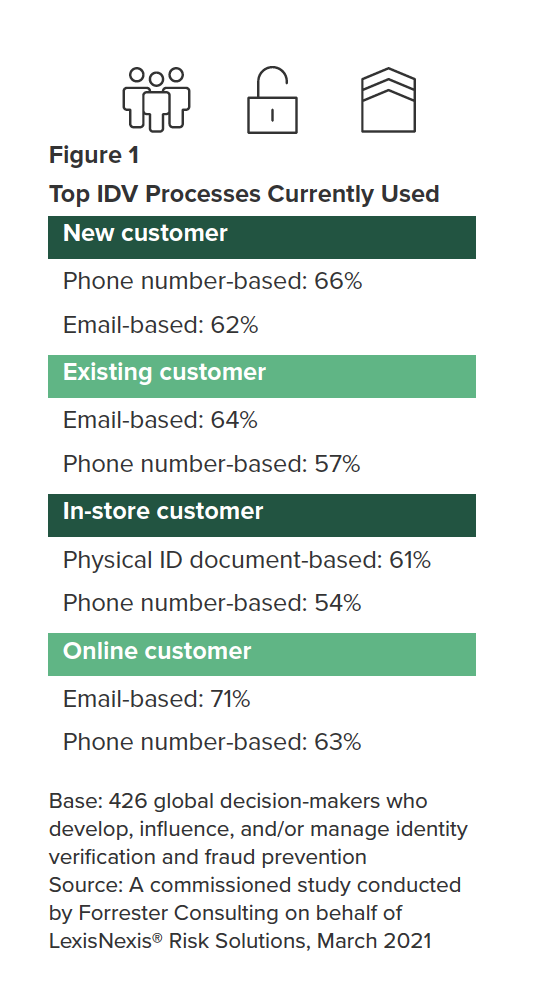
- · Use a combination of technologies for additional risk signals and more accurate results. “No single technology will typically provide total protection against all types of fraud. Organizations report that they often procure and use multiple verification methods for a more enjoyable customer experience and greater fraud protection. Greater market consolidation has now made it easier for organizations to source multiple IDV technologies from fewer vendors.”
- Deploy IDV methods to protect all channels. “Respondents say that IDV during customer onboarding must uniformly cover all major channels, including online desktop and mobile web, native mobile applications, interactions with chatbot/intelligent agents and contact centers.”
- Ensure teams actively monitor emerging threats and fraud typologies. “Firms must proactively update fraud detection models and actively research new fraud patterns such as synthetic identity fraud, bots, account takeover, etc., to react quickly to emerging threats. The use of cloud-based fraud management and IDV services can help as it greatly reduces the need to constantly update the IDV solution's threats and fraud insights.”
- Constantly measure the effectiveness of machine learning models. “The survey shows that successful IDV solutions increasingly use machine learning models. Risk scoring models should consistently maintain and improve key performance indicators (KPIs) to stop fraud and perform IDV processes more cost effectively and in a way that is least disruptive to the customer experience.”
Basis For Findings
The research surveyed 426 global fraud and identity professionals in the U.K., Brazil, Canada, China, France, Germany, Mexico and the U.S. in sectors such as technology, retail, manufacturing, financial services and telecommunications.