

WASHINGTON–Mortgage rates were flat last week, remaining below 3%, but some analysts are again forecasting rates will begin ticking up this year and consumers should act if they can.
The 30-year mortgage saw interest rates decrease, but only by one basis point from 2.87% to 2.86% for the week ending Aug. 19, according to Freddie Mac’s Primary Mortgage Market Survey.
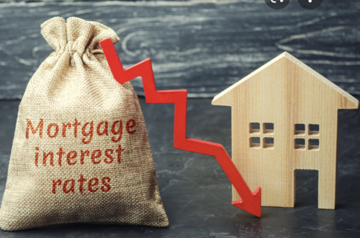
"Mortgage rates stayed relatively flat this week," Freddie Mac Chief Economist Sam Khater said in a statement. "Housing is in a similar phase of the economic cycle as many other consumer goods. While there is strong latent demand, low supply has caused prices to rise as shortages restrict the amount of sales activity that otherwise would occur.”
The one-basis-point decrease in the 30-year mortgage is also down from 2.99% at this time last year. On the other hand, the 15-year fixed-rate increased slightly to 2.16% from 2.15%. The 15-year mortgage was also down compared to last year, when it averaged 2.54%.’The five-year Treasury indexed hybrid adjustable-rate mortgage (ARM) declined by a similarly thin margin, a basis point, to 2.44% from 2.43%. The same rate was 2.91% on the same date in 2020.
Across the mortgage spectrum all mortgage rates are down from one year ago.
Watching the Fed
Mortgage analysts, like much of the market, are watching the Fed meeting this week in Jackson Hole, Wyo., for signals the Fed will begin tapering its asset purchases this year, which would lead to an increase in interest rates.
"The Freddie Mac fixed rate for a 30-year loan dropped one basis point to 2.86%," Realtor.com Senior Economist George Ratiu said in a statement. "The 10-year Treasury was flat early in the week due to weaker-than-expected retail sales, and mortgage rates responded to subsequent investor concerns about declining consumer sentiment and rising delta variant COVID cases.
"In addition, yesterday’s Federal Reserve minutes showed the central bank is considering tapering its asset purchases toward the end of 2021, because of concerns about inflation in light of the economic recovery," Ratiu added. "However, tapering Treasury purchases will be a likely first step, before cutting back on mortgage-backed securities. This means that we can expect rates to resume their mid-March climb above 3.0% closer to the end of the year, and into 2022."