

WASHINGTON–House Democrats have introduced a massive $3 trillion piece of stimulus legislation, the HEROES Act, that includes $1 billion for the CDFI fund, additional direct payments to Americans of up to $6,000 per household, and broad mortgage forbearance requirements.
In response, CUNA said many of the beneficial provisions are offset by other provisions that are a “step backwards,” while NAFCU expressed concerns the bill lacks language allowing credit unions to do more for small businesses, as well as worries over the forbearance provisions.
In introducing the legislation the bill’s sponsors said it will help “meet the challenge this pandemic poses to our nation.”
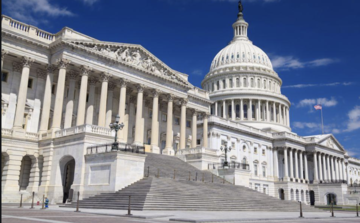
The House is to vote on the bill, which would be the largest piece of stimulus legislation in U.S. history, on Friday. The $3 trillion in proposed spending would be in addition to the more than $2 trillion in stimulus legislation Congress has already enacted. The full bill, which can be found here, is 1,815 pages long. A section-by-section summary is here.
The bill includes:
- Nearly $1 trillion to state, local, territorial and tribal governments who desperately need funds to pay “vital” workers like first responders, health workers, and teachers
- $200 billion to establish a “Heroes’ Fund” for essential workers in order to provide hazard pay
- $75 billion for coronavirus testing, contact tracing and isolation measures, “ensuring every American can access free coronavirus treatment, and supporting hospitals and providers”
- Direct payments of $1,200 per family member, up to $6,000 per household
- An employee retention tax credit that encourages employers to keep employees on payroll, “allowing 60 million Americans to remain connected to their paychecks and benefits”
- A requirement that OSHA issue a strong, enforceable standard within seven days to require all workplaces to develop and implement infection control plans based on CDC expertise, as well as protection for employees from retaliation against workers who report infection control problems
- An additional $10 billion for underserved communities, nonprofits of all sizes and types and small businesses for COVID-19 emergency grants through the Economic Injury Disaster Loan program
- Provisions aimed at preserving health coverage for Americans losing their employer-provided health insurance by providing COBRA subsidies to maintain coverage and creating a special enrollment period in the Affordable Care Act exchanges for uninsured Americans
- An extension of unemployment benefits, including weekly $600 federal unemployment payments through January 2021
- $175 billion in housing assistance to help renters and homeowners make monthly rent, mortgage and utility payments and other housing-related costs
- A 15% increase to the maximum SNAP benefit and additional funding for nutrition programs
- Funding for what proponents said would be new resources to ensure safe elections, an accurate Census, and preservation of the Postal Service
CUNA Response
In response to the bill, CUNA’s chief advocacy officer, Ryan Donovan, said, “This draft legislation makes it clear that there is a lot more work for Congress to do to ensure that as the economy reopens, consumers and small businesses have what they need to recover. The good news is that this is the first step, not the last word.
“There are a number of provisions that will help in the recovery, like the $1 billion appropriations for the Community Development Financial Institution Fund,” Donovan continued. “However, those provisions are offset by ones that are steps backwards, not to mention the beneficial policy proposals left on the table robbing small businesses of critical access to credit. We look forward to working with Congress to enact a bill that will do what needs to be done to help consumers, small business and the economy recover.”
NAFCU Response
“We appreciate the efforts of House Democratic leadership to continue to advance pandemic relief efforts,” said NAFCU President and CEO Dan Berger. “The HEROES Act provides important support for the CDFI Fund and the PPP for smaller lenders. However, the bill released today fails to contain key provisions that will allow credit unions to do even more for small businesses and consumers. We would also caution that efforts to require broad mortgage forbearances under the HEROES Act could have negative impacts on the mortgage industry and the economy as a whole. We look forward to continuing to work with the House, Senate and Administration on these concerns as the next phase of COVID-19 relief moves forward.”
Bill’s Sponsors
The Heroes Act was introduced by Appropriations Committee Chairwoman Nita M. Lowey (D-NY) and co-sponsored by Education and Labor Committee Chairman Robert C. “Bobby” Scott (D-VA), Energy and Commerce Committee Chairman Frank Pallone, Jr. (D-NJ), Financial Services Committee Chairwoman Maxine Waters (D-CA), Foreign Affairs Committee Chairman Eliot L. Engel (D-NY), Judiciary Committee Chairman Jerrold Nadler (D-NY), Natural Resources Committee Chairman Raúl M. Grijalva (D-AZ), Oversight and Reform Committee Chairwoman Carolyn B. Maloney (D-NY), Small Business Committee Chairwoman Nydia M. Velázquez (D-NY), Veterans Affairs Committee Chairman Mark Takano (D-CA) and Ways and Means Committee Chairman Richard E. Neal (D-MA).