

MIAMI–Executives at a number of Paycheck Protection Program (PPP) lenders obtained millions in PPP loans for themselves using means that might have been fraudulent in their own right, according to a new congressional investigation.
These same companies, which were among the most prolific online lenders in the federal program, also had “remarkably lax fraud protection controls even as they approved billions of dollars worth of loans in the COVID-19 small business relief program,” according to the report compiled by the House Select Subcommittee on the Coronavirus Crisis.
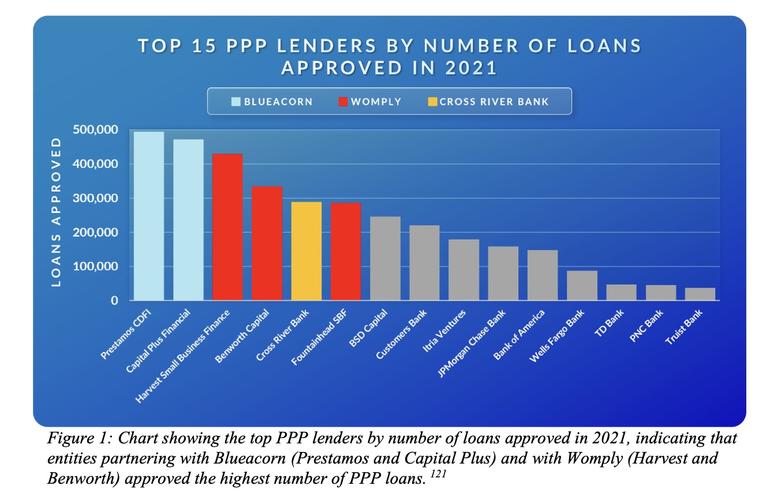
“Much like the dozens of PPP borrowers who have been arrested so far for defrauding the program, these executives appear to have used the proceeds from the loans and the millions they reaped in fees from their work in the program to make all-cash purchases of luxury properties and buy flashy sports cars,” states the report, titled “We Are Not the Fraud Police: How Fintechs Facilitated Fraud in the Paycheck Protection Program.”
Taking Borrowers ‘At Their Word’
“The U.S. Small Business Administration, which administered the program, advised lenders to effectively take borrowers at their word, which experts said from the beginning would likely lead to rampant fraud in the program,” noted the Miami Herald in its analysis. The congressional investigation followed reporting by the Herald and other news outlets early in the PPP’s life. As the Herald noted, many of the PPP loan applications were processed by fintechs, which aren’t subject to the same regulations as traditional banks.
“One estimate pegged the overall amount of potentially fraudulent loans at more than $64 billion and said that fintech lenders, which had more lax approval standards, bore much of the blame,” the Herald said.
‘Accrued Massive Profits’
Rep. James Clyburn, the South Carolina Democrat who chairs the committee, pointed to the companies highlighted in the report for failing to take adequate steps to prevent fraud while enriching themselves.
“Even as these companies failed in their administration of the program, they nonetheless accrued massive profits from program administration fees, much of which was pocketed by the companies’ owners and executives,” Clyburn said in a statement. “On top of the windfall obtained by enabling others to engage in PPP fraud, some of these individuals may have augmented their ill-gotten gains by engaging in PPP fraud themselves.”
‘Potential Criminal Violations’
According to the Herald analysis, the House report stops short of recommending criminal charges against any of the companies reviewed but encourages the SBA’s inspector general to conduct a comprehensive review of the lenders and several executives referenced in the report and “refer any potential criminal violations to appropriate law enforcement agencies.”
Clyburn said he has “informed [the Justice Department] that some of our findings may warrant its attention.”
The Allegations
Among some of the issues raised and allegations by the report:
- Blueacorn, one of the fintechs reviewed in the report, charged PPP borrowers fees for processing PPP loans, which was forbidden by the program rules.
- Many fintech companies partnered with traditional banks and other lenders to process loans in the program, relying more on algorithms than people to do the work of speedily approving applications. The fintechs and lenders split the fees generated from approving the loans, which amounted to billions of dollars. Despite the cash windfall from these fees, the report found that many of the fintechs spent little on fraud protection “and in some cases even downsized their fraud protection teams, ignoring early indications that many of the PPP applications they had already approved were fraudulent,” the Herald reported.
- Online lender Kabbage reduced its full-time fraud prevention staff by nearly half during the peak time it was processing PPP loans, according to the report. And at one point a manager supervising fraud specialists advised them to be less diligent in reviewing PPP loans as opposed to normal Kabbage loans because “the risk here is not ours — it is SBA’s risk.”
- Blueacorn, the Arizona fintech created in April 2020 solely for the purpose of processing PPP applications, earned more than $1 billion in fees from its work on the program, but spent less than 1% of that money on fraud prevention and had only one direct employee responsible for processing the 1.7 million loans the company reviewed, the investigation found. “Instead, Blueacorn outsourced much of the vetting to another Arizona company called Elev8 Advisors. The owners of Elev8 saw their work as an opportunity to cash in, and hired more than 30 close friends and family to vet PPP loans for Blueacorn, even though few had any experience doing so,” the report found, according to the Herald.
- The report added that former employees at both Blueacorn and Kabbage raised concerns about the high level of fraud they suspected in loans their companies had approved, “but those concerns were brushed aside, according to records obtained by the congressional committee and interviews it conducted with former employees.”
- The report added that one of Elev8 Advisors’ founders, Kristen Spencer, laid bare her intentions in a text message obtained by the committee. “We are doing this for the people we hired to make money. Our friends and family,” Spencer wrote. “That is where the money is going. And it will be life changing money for anyone who does it.” According to the report, Spencer, and her husband, Adam Spencer, the company’s co-founder, used proceeds to purchase a nearly $8 million home and a Porsche Taycan Turbo for $150,000.
- The fintech firm Womply obtained even more in PPP loans, receiving upward of $5 million in 2020 and 2021 from the partner bank it did the most business with. It asked for the loans to be forgiven in 2021, despite Womply reportedly taking in more than $2 billion in revenue in 2021, largely due to fees it earned by approving PPP loans. The SBA ultimately determined that Womply was ineligible for the loans and required them to be repaid, according to the report, which questioned whether Womply should have been allowed to participate in the program in the first place.
Just in Time for the Holidays, CUToday’s Free Morning Headline Email is Now Double-Free!
Don’t forget to check your Spam/Junk email folder if you haven’t been receiving your free, popular and daily CUToday.info news headlines.
And if you haven’t yet signed up for the new email solution on which CUToday.info has partnered with ResponseGenius, you can do so here. Signing up requires less than one minute of your time.
CUToday.info has received very positive response from readers following the move to an improved provider of the daily headlines, but many also noted they did need to go to their Spam/Junk folder and mark it as safe.
The new email solution has not only improved every reader’s delivery experience, but it also features a fresh, new format that is easy to read, especially on mobile devices.
Please note and/or make your IT department or email administrator aware the emails will be coming from the domains CUTodayinfo.com and CUTodayinfoReply.com.