

WASHINGTON— Many consumers are still being hit with unexpected overdraft and nonsufficient fund (NSF) fees-with nearly half saying they were “surprised”–despite recent changes implemented by banks and credit unions that have eliminated billions of dollars in fees charged each year, according to a new report from the CFPB.
The findings were released as part of the Bureau’s “Making Ends Meet” survey, which found more than a quarter of consumers responded that someone in their household was charged an overdraft fee or NSF fee within the past year, and that only 22% of households expected their most recent overdraft.
Many consumers who were charged overdraft fees had access to a cheaper alternative, such as available credit on a credit card, according to the Bureau.
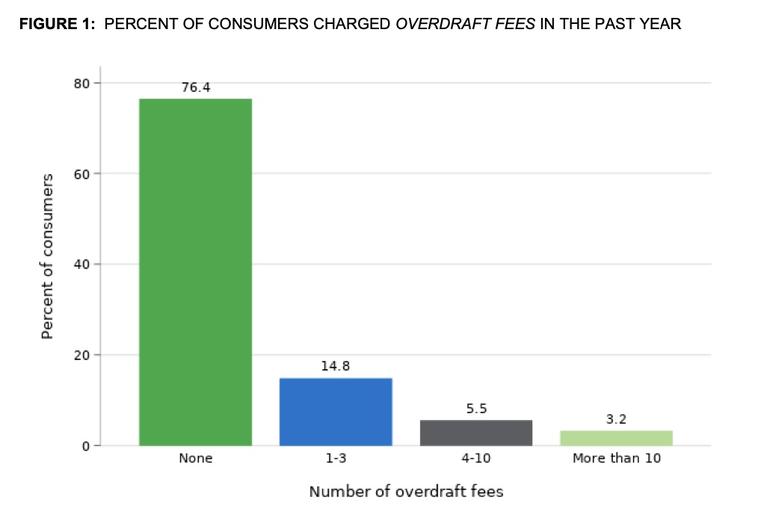
The report, “Overdraft and Nonsufficient Fund Fees,” explores consumers’ experiences with overdraft and NSF fees, the CFPB said.
Alternatives Were Available
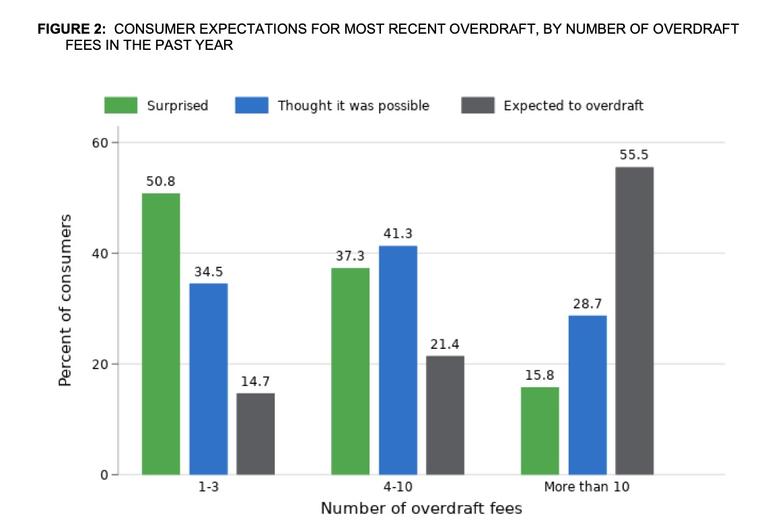
“Many consumers have access to cheaper credit sources, such as on a credit card, and report being surprised by their most recent overdraft,” the CFPB said in releasing its report. “Other consumers appear to use overdrafts often and intentionally: in households charged more than 10 such fees in a year, more than half of respondents reported that they expected their most recent overdraft. Most account overdrafts are exempt from the regulation implementing the Truth in Lending Act, which is designed to promote the informed use of credit and make it easier for consumers to compare the cost of credit products.”
Key Findings
According to the CFPB, key findings in the report include:
- Households frequently incurring overdraft and NSF fees are more likely to struggle to meet their financial obligations. “Among households that frequently incurred overdraft/NSF fees, 81% reported difficulty paying a bill at least once in the past year. This drops to 25% for households that were not charged a fee.”
- Many consumers do not expect overdraft fees. Among consumers in households charged an overdraft fee in the past year, the CFPB said it found 43% were surprised by their most recent account overdraft, 35% thought it was possible, and only 22% expected it. “Consumers who overdraft infrequently are more likely to be surprised by a fee: 15% of consumers from households charged 1 to 3 overdraft fees expected their most recent transaction to overdraft; among households charged more than 10 overdraft fees, 56% expected their most recent overdraft.”
- Most households incurring overdraft fees had available credit on a credit card. “Among households charged 1-3 overdraft fees in the past year, 68% had credit available on a credit card, while 62% of households charged 3-10 overdraft fees had credit available on a credit card. In households charged more than 10 fees in the past year, 51% still had credit available on a credit card.”
- Households face a substantial overlap in being charged overdraft and NSF fees. “Among consumers in households charged an NSF fee in the past year, 85% were also charged an overdraft fee. Among consumers in households charged an overdraft fee in the past year, 72% were also charged an NSF fee.”
- Low-income households are hit the hardest Overdraft and NSF fees. “While just 10% of households with over $175,000 in income were charged an overdraft or an NSF fee in the previous year, the share is three times higher (34%) among households making less than $65,000.”
About the Report
The data for the report comes from the 2023 Making Ends Meet survey and the CFPB’s Consumer Credit Panel. The survey asks consumers about their experiences with overdraft and NSF fees in the past year, as well as their experiences applying for and obtaining credit, use of alternative financial services (e.g., payday or auto title loans), and financial pressures (e.g., difficulty paying bills or carrying an unpaid balance on a credit card).
Read the report, Overdraft and Nonsufficient Fund Fees.
The Best Gift to Unwrap This Holiday Season
The biggest, best and freshest news reporting in credit unions remains free! Each morning CUToday.info delivers its daily Fresh Today news update offering the latest headlines and breaking news right to your email, with the easy-to-read headlines format allowing you to click on the stories that interest you most in order to learn more. So stop paying those bank-fee-like subscription prices from other so-called “news” publications!
If you haven’t yet signed up for the new email solution on which CUToday.info has partnered with ResponseGenius, you can do so here. Signing up requires less than one minute of your time—and it’s free!
Please note that after signing up you may need to go to your Spam/Junk folder and mark the morning headlines email as safe. CUToday.info does not provide its list of readers and emails to outside parties, and we will not be contacting you to sell you an extended warranty or sending you any links so you may cash in on an inheritance you didn’t know was coming.
And did we mention it’s free?