

WASHINGTON–A new report from the CFPB says most consumers have exited any loan payment assistance they may have received early in the coronavirus pandemic, and that includes those who live in communities hit hardest fallout from the crisis. But there is one exception: those getting assistance for student loans.
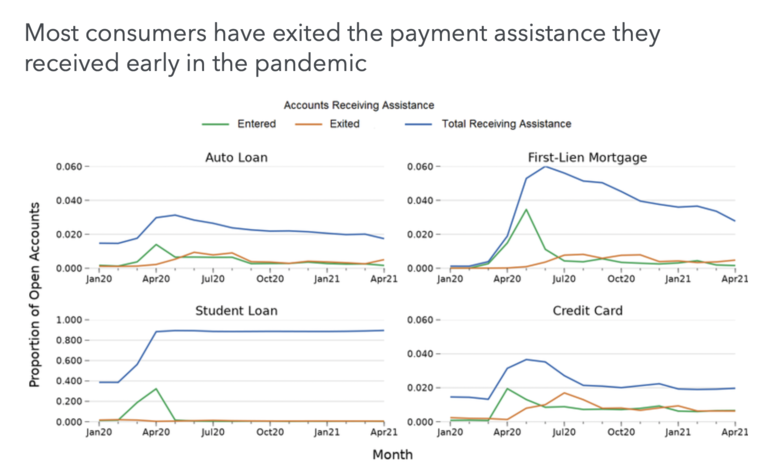
According to the Bureau, the total share of loans with payment assistance began to show a decline in the summer of 2020 as the initial increase in loans moving into assistance crested and accounts began moving away from aid in larger numbers. By March 2021, the Bureau reported auto loans and credit card accounts with assistance were only slightly above pre-pandemic levels.
But the exception to the trendline is student loans, the CFPB stated, citing as the reason the fact the CARES Act put most student loans in automatic payment suspension. It further explained that mortgage loans (along with the student loans) with assistance also remained significantly higher than pre-pandemic baselines.
The CFPB reported in 2020 that majority Black census tracts, majority Hispanic census tracts, older borrowers, and borrowers in counties most affected by COVID cases and layoffs were most likely to receive assistance early in the pandemic, a pattern that continued through March 2021.
In terms of mortgages, the Bureau reported it found consumers in majority Hispanic census tracts were more likely to exit assistance, but consumers in majority Black census tracts were somewhat less likely to exit assistance than their counterparts in majority white census tracts.
A Tale of 2 Borrowers
“Mortgage borrowers in non-metro area census tracts, in counties with higher numbers of COVID-19 cases, and with higher unemployment rates were less likely to exit assistance,” the CFPB stated. “Meanwhile, consumers with higher credit scores and higher balances were both more likely to exit assistance when holding other factors constant, reflecting the likelihood that these consumers are well-off and consequently less affected by the COVID-19 income shocks.”
The full report can be found here.