

ALEXANDRIA, Va.–Maine is leading all other states in asset and deposit growth, according to the latest NCUA state-level data ending in the first quarter of 2020.
At the same time, New Jersey lags behind all other states in those same categories, with negative growth rates in each (-0.2% and -0.8% respectively).
Maine’s asset growth (8.3%) is well above the national median (3%), and its 7.9% growth rate in deposits exceeds the 2.9% national median average.
Overall, federally insured credit unions generally saw asset, share-and-deposit, and loan growth over the year ending in the first quarter of 2020, NCUA reported. The median growth rate of loans outstanding was 2.0% over the year ending in the first quarter of 2020, compared to 5.8% over the year ending in the first quarter of 2019.
About half of federally insured credit unions had fewer members at the end of the first quarter of 2020 than a year earlier, with Idaho (2.0%) and Alaska (1.9%) posting the highest median membership growth rates, NCUA said
Here are report highlights:
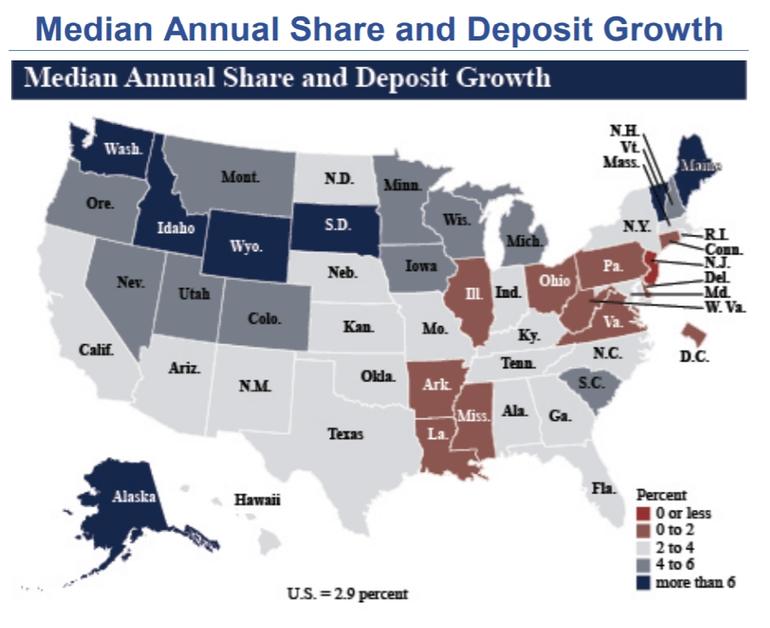
Median Annual Share & Deposit Growth
Nationally, the median growth rate in shares and deposits over the year ending in the first quarter of 2020 was 2.9%. In the year ending in the first quarter of 2019, the median growth rate in shares and deposits was 1.1%.
Over the year ending in the first quarter of 2020, the median growth rate in shares and deposits was highest in Maine (7.9%) and Alaska (7.3%).
The median growth rate in shares and deposits was negative in New Jersey (-0.8%) over the year ending in the first quarter of 2020. At the median, shares and deposits grew the least in Washington, D.C. (0.3%), followed by Arkansas and Louisiana (both 0.4%).
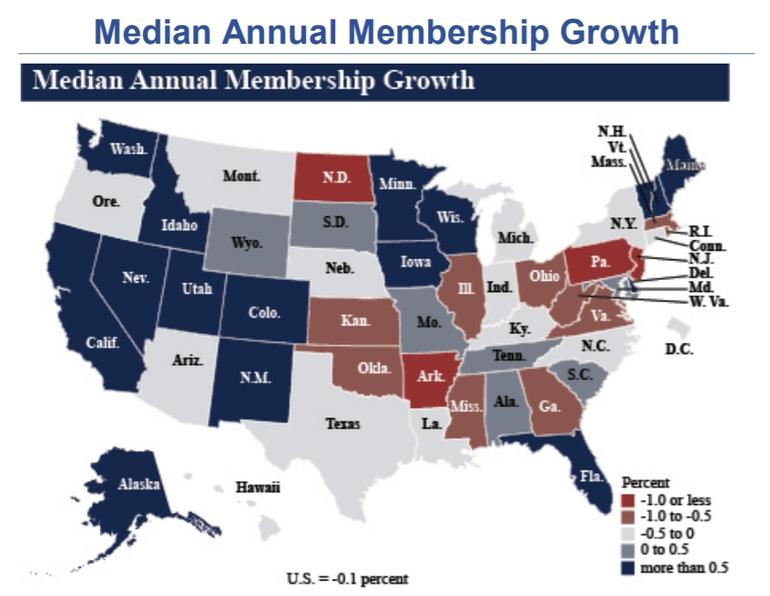
Median Annual Membership Growth
While overall membership in federally insured credit unions continued to grow during the year ending in the first quarter of 2020, at the median, membership declined 0.1%. Membership increased 0.2% at the median over the year ending in the first quarter of 2019. Overall, about half of federally insured credit unions had fewer members at the end of the first quarter of 2020 than a year earlier. Credit unions with falling membership tend to be small; nearly 70% had less than $50 million in assets, NCUA said.
Over the year ending in the first quarter of 2020, credit unions headquartered in Idaho (2.0%) and Alaska (1.9%) posted the highest median membership growth rates.
In 23 states and Washington, D.C., the median membership growth rate for federally insured credit unions was negative. At the median, membership declined the most in New Jersey (-1.8%) and Pennsylvania (-1.2%). Membership was unchanged in Montana, North Carolina, and Texas.
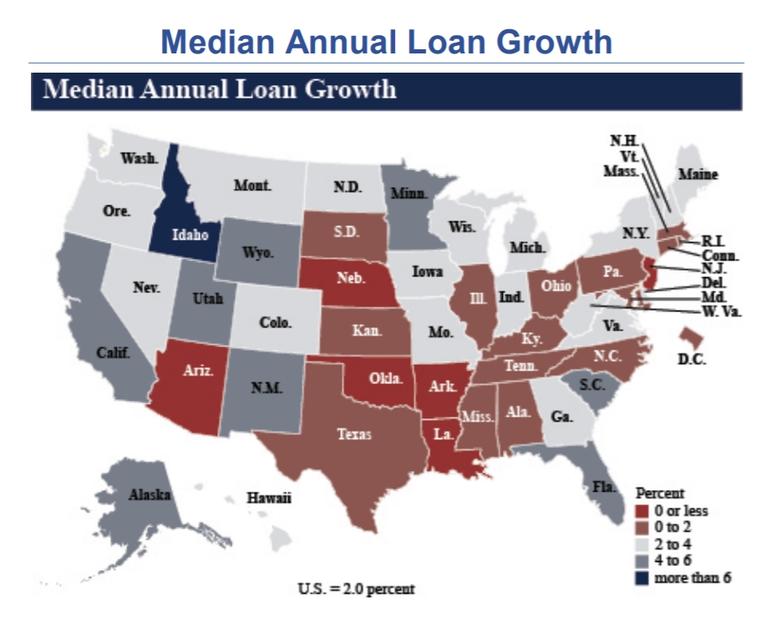
Median Annual Loan Growth
Nationally, the median growth rate in loans outstanding was 2.0% over the year ending in the first quarter of 2020. The median loan growth rate during the previous year was 5.8%.
Over the year ending in the first quarter of 2020, median loan growth was positive in Washington, D.C., and all but six states. Median loan growth was strongest in Idaho (6.1%), followed by Minnesota and Wyoming (both 5.6%) over the year ending in the first quarter of 2020.
At the median, loans outstanding declined the most in New Jersey (-2.0%) and Nebraska (-1.4%). At the median, loans grew the least in Pennsylvania and Washington, D.C. (both 0.2%), followed by North Carolina (0.3%).
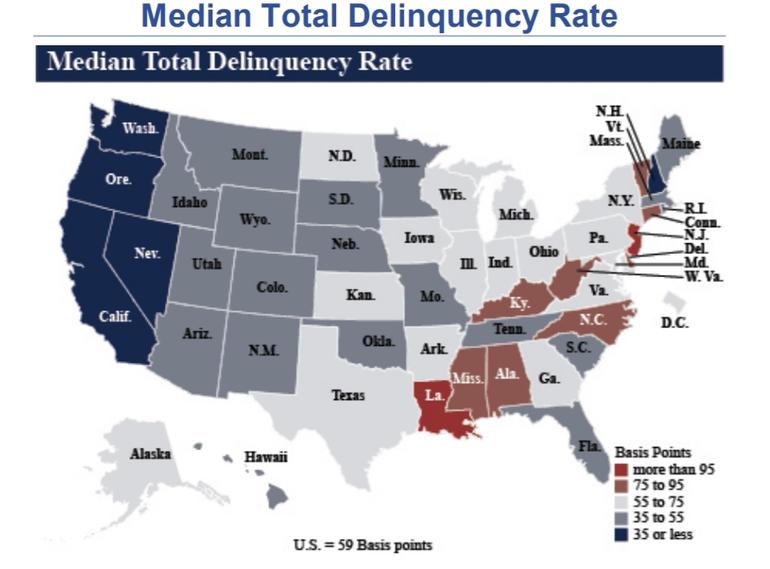
Median Total Delinquency Rate
At the end of the first quarter of 2020, the median total delinquency rate among federally insured credit unions was 59 basis points, compared to 54 basis points in the first quarter of 2019.
At the end of the first quarter of 2020, the median delinquency rate was highest in New Jersey (117 basis points) and Louisiana (105 basis points).
The median delinquency rate was lowest in New Hampshire (25 basis points) and Oregon (32 basis points).
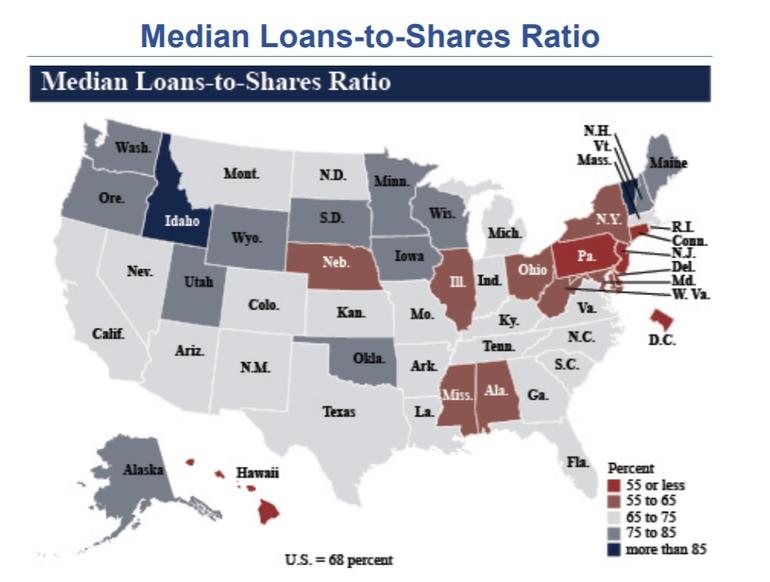
Median Loans-to-Shares Ratio
Nationally, the median ratio of total loans outstanding to total shares and deposits (the loans-to-shares ratio) was 68% at the end of the first quarter of 2020. At the end of the first quarter of 2019, the median loans-to-shares ratio was also 68%.
The median loans-to-shares ratio was highest in Vermont (87%) and Idaho (86%).
The median loans-to-shares ratio was lowest in Delaware and New Jersey (both 49%), followed by Hawaii (51%).
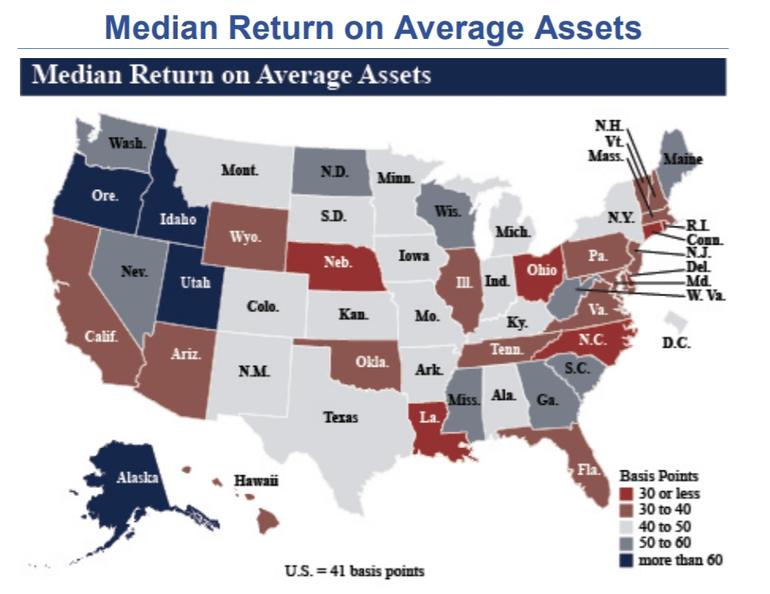
Median Return on Average Assets
Nationally, the median annualized return on average assets at federally insured credit unions was 41 basis points during the first quarter of 2020, compared to 56 basis points during the first quarter of 2019.
Oregon had the highest median annualized return on average assets during the first quarter of 2020 (69 basis points), followed by Idaho and Utah (both 66 basis points).
Nebraska had the lowest median annualized return on average assets during that time (23 basis points), followed by Connecticut, Delaware, and Rhode Island (all 28 basis points).
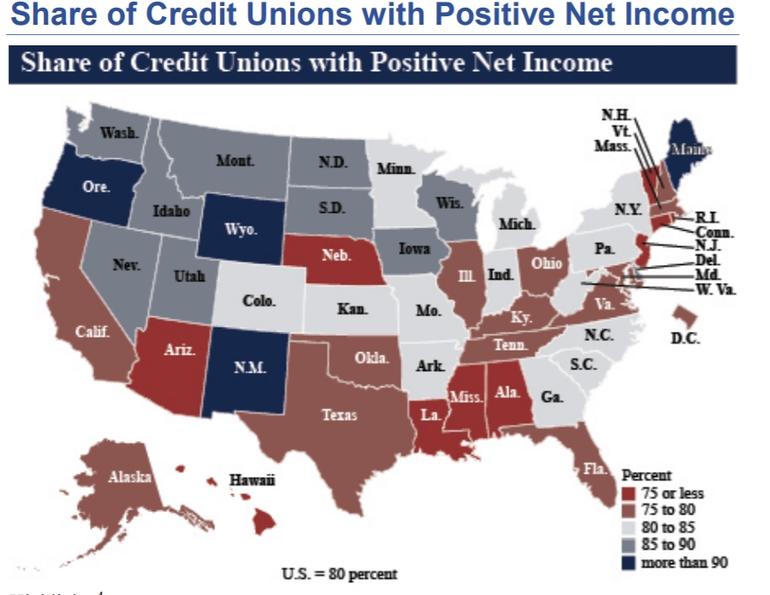
Share of Credit Unions with Positive Net Income
Nationally, 80% of federally insured credit unions had positive net income during the first quarter of 2020, compared to 86% during the first quarter of 2019.
At least 60% of credit unions in every state and Washington, D.C. had positive net income during the first quarter of 2020.
The share of federally insured credit unions with positive net income was highest in Maine, New Mexico, and Oregon (all 93%), followed by Wyoming (92%).
The share was lowest in Arizona (63%), followed by Rhode Island and Vermont (both 68%).