

WASHINGTON—The Federal Trade Commission is sending more than 30,000 checks to people were the victims of two separate financial scams.
In one case, the FTC said it is sending 22,817 checks totaling more than $2 million to borrowers who lost money to a student loan debt-relief scam that operated under the names Student Debt Doctor.
In late 2017, the FTC sued Student Debt Doctor and its owner, Gary B. White Jr. alleging that the company tricked consumers into believing they could receive immediate relief from monthly loan payments and complete loan forgiveness in return for a large, upfront fee. The defendants also told students that their loans were in forbearance when they were not, causing consumers to neglect required payments and to suffer diminished credit scores, according to the FTC.
In reality, the FTC alleged that the vast majority of consumers lost their hard-earned money but received little or no relief—and some borrowers ended up owing more, the FTC explained.
Banned from Industry
In December 2018, the FTC announced a stipulated final order that bans White and his company from the debt-relief industry and from making misrepresentations related to financial products or services.
“The U.S. Supreme Court ruled in 2021 that the Commission lacks authority under Section 13(b) to seek monetary relief in federal court going forward. The money being returned to consumers comes from settlements that were entered before the Supreme Court’s decision. The Commission has urged Congress to restore the Commission’s ability to get money back for consumers,” the FTC said.
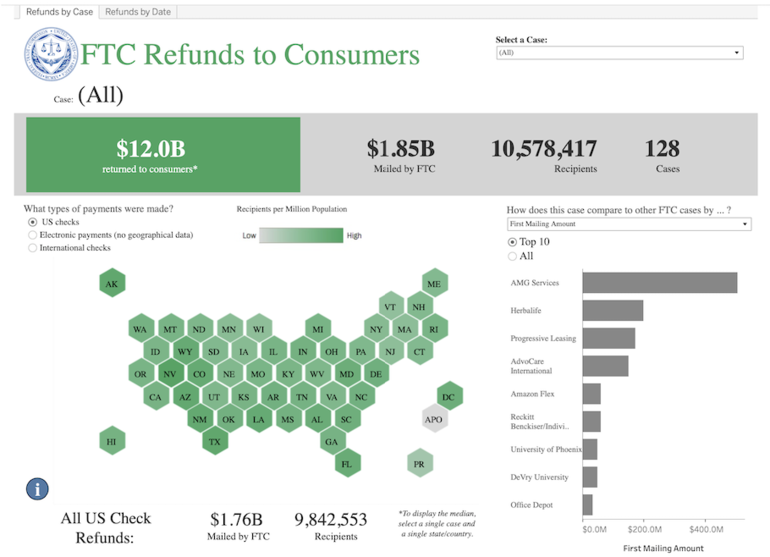
The Commission’s interactive dashboards for refund data provide a state-by-state breakdown of Commission refunds.
Second Set of Checks
In a second case, the FTC said it issending 7,731 checks totaling more than $9.7 million to small businesses that were harmed by Yellowstone Capital, a merchant cash advance company that withdrew money from their bank accounts without permission. Eligible businesses are getting 51% of their money back, averaging more than $1,200 for each check, according to FTC.
The FTC sued Yellowstone and its owners in 2020, alleging that they unlawfully withdrew millions of dollars in excess payments from their customers’ accounts. The complaint alleged that Yellowstone continued to withdraw hundreds or thousands of dollars from businesses after they had repaid the full amounts owed in their contracts.
In some cases, Yellowstone would only refund this money when businesses complained, and even then the refunds could take weeks or months, leaving small businesses without needed cash on hand, the FTC said.
Agrees to Court Order
In 2021, Yellowstone agreed to a court order that required them to surrender funds to the FTC, which the FTC is using to provide refunds. The order also prohibits the defendants from misleading consumers or withdrawing money without authorization and requires them to monitor companies working on their behalf, the FTC explained.
The Commission’s interactive dashboards for refund data provide a state-by-state breakdown of Commission refunds.