

ALEXANDRIA, Va.–Loan growth was the strongest in two decades among federally insured credit unions in the year ending Sept. 30, according to the latest NCUA Quarterly U.S. Map Review, which also reveals how CUs are performing by state.
Overall, performance was strong, but as the agency makes clear, strong numbers are by no means uniform, as it is the largest credit unions that continue to lead the way with positive numbers.
Meanwhile, according to NCUA, while overall membership in federally insured credit unions continued to grow during the year ending in the third quarter of 2022, overall, about 52% of FICUs had fewer members at the end of the third quarter of 2022 than a year earlier.
Here’s how credit unions performed by category, including the state leaders, according to the Quarterly U.S. Map Review.
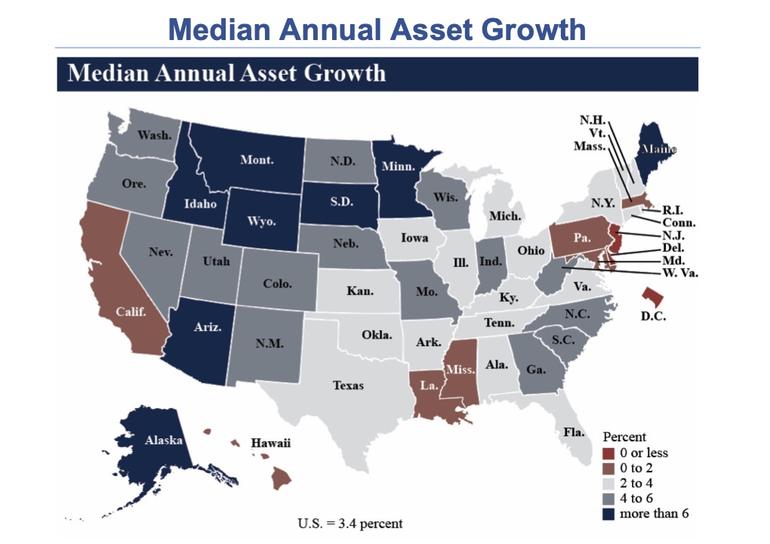
Asset Growth
Nationally, the NCUA data indicate median asset growth over the year ending in the third quarter of 2022 was 3.4%.
“In other words, half of all federally insured credit unions had asset growth at or above 3.4% and half had asset growth of 3.4% or less,” NCUA said. “In the year ending in the third quarter of 2021, the median growth rate in assets was 10.4%.”
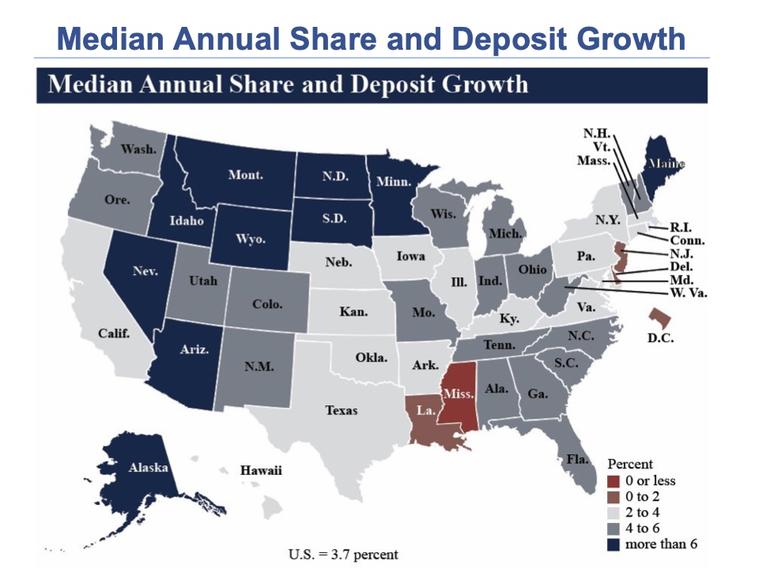
Share & Deposit Growth
Nationally, median asset growth over the year ending in the third quarter of 2022 was 3.4%. In the year ending in the third quarter of 2021, the median growth rate in assets was 10.4%, NCUA said.
Specific data points:
- Over the year ending in the third quarter of 2022, median asset growth was highest in Alaska (9.1%) and Wyoming (8.8%).
- At the median, assets declined in Delaware (-0.2%) and New Jersey (-0.1%) and remained roughly unchanged in Washington, D.C.
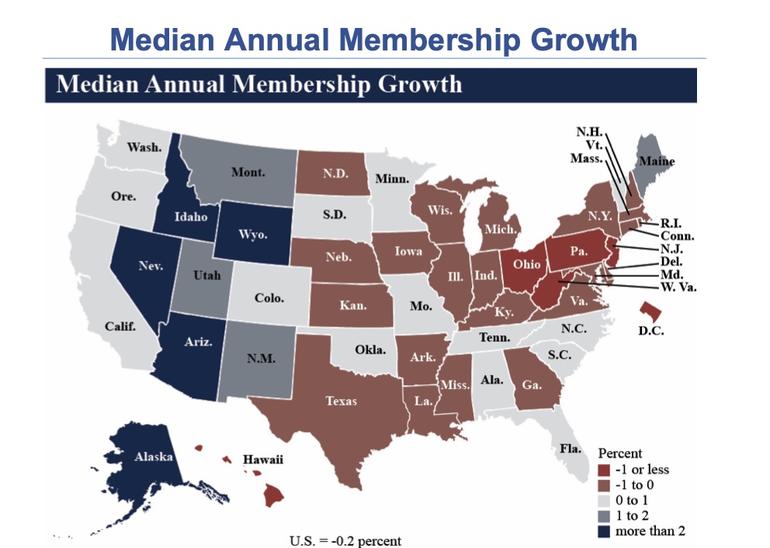
Membership Growth
While overall membership in federally insured credit unions continued to grow during the year ending in the third quarter of 2022, at the median, membership declined 0.2%. Membership declined 0.4% at the median in the year ending in the third quarter of 2021, NCUA said.
Among the specific data points:
- Overall, about 52% of federally insured credit unions had fewer members at the end of the third quarter of 2022 than a year earlier.
- Credit unions with falling membership tend to be small; over 60% had less than $50 million in assets in the third quarter of 2022.
- Over the year ending in the third quarter of 2022, credit unions headquartered in Alaska (4.6%) and Idaho (3.3%) experienced the strongest median membership growth.
- At the median, membership declined in 26 states and Washington, D.C. over the year. Washington, D.C. (-1.5%) and Pennsylvania (-1.3%) saw the largest median declines in membership during that time. Membership was virtually unchanged at the median in Wisconsin, NCUA said.
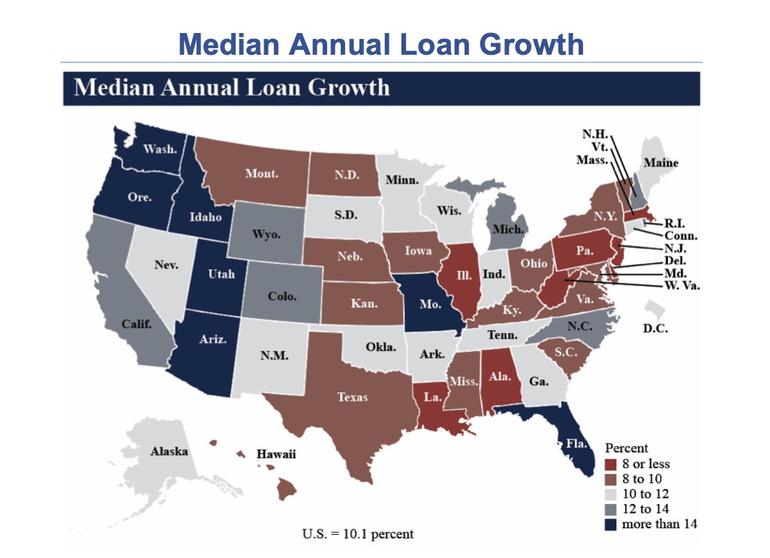
Loan Growth
Nationally, loans outstanding rose 10.1% at the median over the year ending in the third quarter of 2022, according to NCUA. During the previous year, loans grew 2.5% at the median.
The agency also reported:
- Over the year ending in the third quarter of 2022, median loan growth was strongest in Idaho (19.3%) and Arizona (16.8%).
- At the median, loans outstanding grew the least in Delaware (3.6%) and West Virginia (5.7%) during that time.
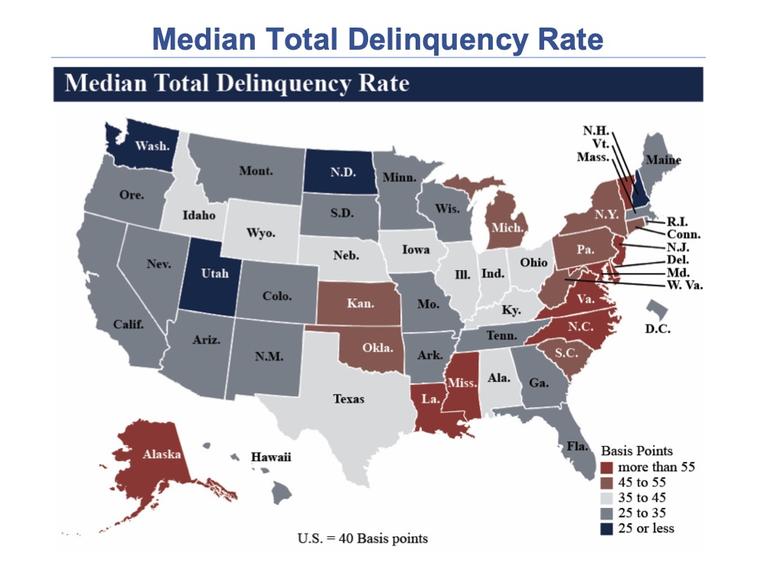
Delinquencies
At the end of the third quarter of 2022, the median total delinquency rate among federally insured credit unions was 40 basis points, compared with 34 basis points in the third quarter of 2021, according to NCUA.
The agency also reported:
- At the end of the third quarter of 2022, the median delinquency rate was highest in New Jersey (121 basis points) and Mississippi (92 basis points).
- The median delinquency rate was lowest in Utah (15 basis points) and North Dakota (19 basis points) at that time.
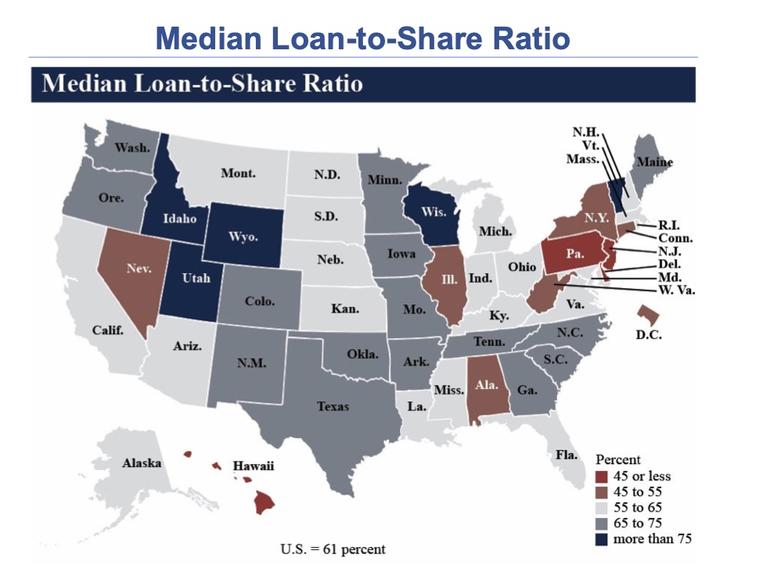
Loan to Share Ratio
NCUA’s new report said that nationally, the median ratio of total loans outstanding to total shares and deposits (the loan-to-share ratio) was 61% at the end of the third quarter of 2022. At the end of the third quarter of 2021, the median loan-to-share ratio was 57%.
Other data points:
- The median loan-to-share ratio was highest in Idaho (90%) and Utah (84%) at the end of the third quarter of 2022.
- The median loan-to-share ratio was lowest in Delaware (39%) and New Jersey (41%) at that time.
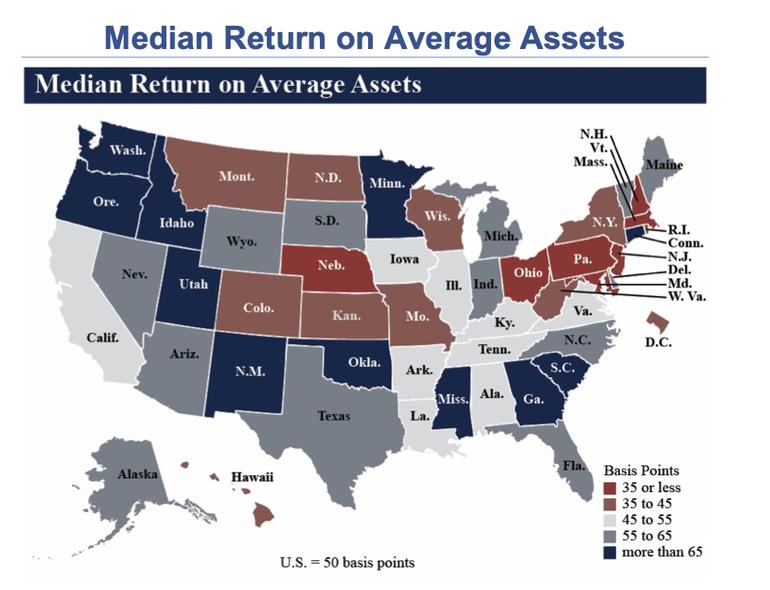
Return on Average Assets
According to the federal regulator, nationally, the median annualized return on average assets at federally insured credit unions was 50 basis points in the first three quarters of 2022, compared with 56 basis points in the first three quarters of 2021.
Among the related findings:
- Idaho (97 basis points) and South Carolina (77 basis points) had the highest median annualized returns on average assets in the first three quarters of 2022.
- New Jersey (24 basis points) had the lowest median annualized return on average assets during that time, followed by Maryland and Nebraska (both 27 basis points).
Positive Net Income
NCUA said that nationally, 83% of federally insured credit unions had positive net income in the first three quarters of 2022, compared with 84% in the first three quarters of 2021.
The agency further reported:
- At least 65% of federally insured credit unions in every state and Washington, D.C. had positive net income in the first three quarters of 2022.
- The share of federally insured credit unions with positive net income was highest in Alaska and Vermont (both 100%), followed by Idaho (96%).
- The share was lowest in Nebraska (68%) and Washington, D.C. (69%) in the first three quarters of 2022.
Just in Time for the Holidays, CUToday’s Free Morning Headline Email is Now Double-Free!
Don’t forget to check your Spam/Junk email folder if you haven’t been receiving your free, popular and daily CUToday.info news headlines.
And if you haven’t yet signed up for the new email solution on which CUToday.info has partnered with ResponseGenius, you can do so here. Signing up requires less than one minute of your time.
CUToday.info has received very positive response from readers following the move to an improved provider of the daily headlines, but many also noted they did need to go to their Spam/Junk folder and mark it as safe.
The new email solution has not only improved every reader’s delivery experience, but it also features a fresh, new format that is easy to read, especially on mobile devices.
Please note and/or make your IT department or email administrator aware the emails will be coming from the domains CUTodayinfo.com and CUTodayinfoReply.com.