MADISON, Wis.–A new forecast is calling for above-average loan growth at credit unions over the next two years, with savings balances to grow in 2022 at half the rate of 2021.
Here’s a look at how credit unions performed by category as summarized in the October Trends Report from CUNA Mutual, which is based on data through August 2021:
Total Credit Union Lending
Credit union loan balances rose 1% in August, above the 0.3% pace set in August 2020. The Trends Report credited much of the growth to fixed-rate mortgage loans, which increased 1.4%, used-auto lending (1.2%) and credit card loans (0.9%).
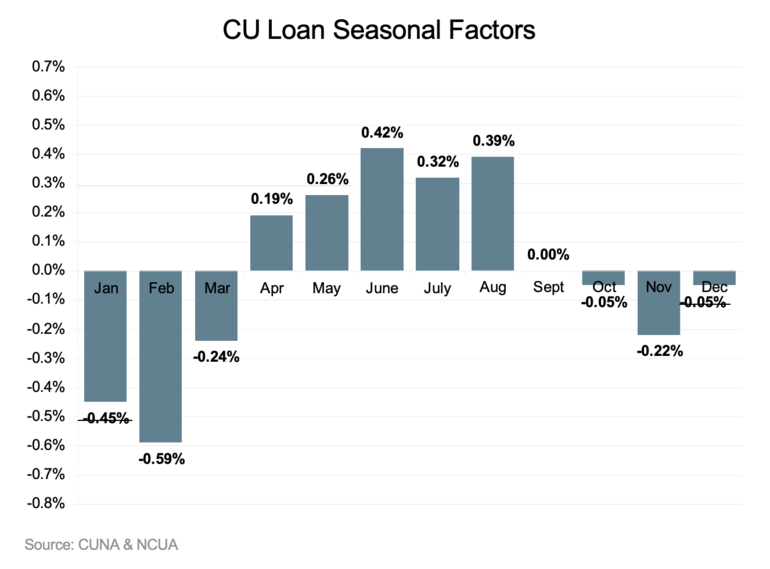
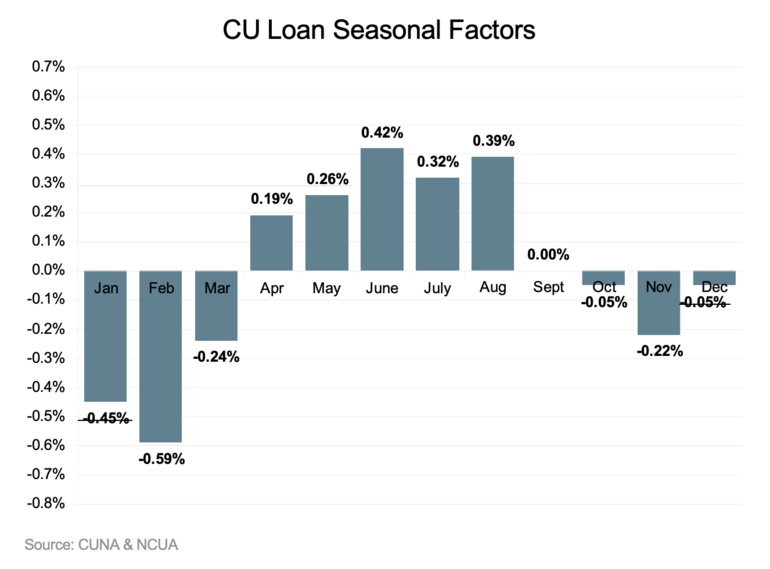
“The strong credit union lending season of April through August is now over as loan seasonal factors turn negative for the rest of the year,” the Trends Report states.
During the last 12 months, credit union loan balances increased 5.5%, slightly slower than the 6.6% pace set in August 2020 and below the 7% long-run credit union average loan growth, according to the CUNA Mutual analysis.
“Credit union loan balances grew at a 5.7% seasonally-adjusted, annualized growth rate in August, significantly better than the 4.8% pace set in August 2020,” wrote CUNA Mutual’s chief economist, Steve Rick. “We are forecasting above-trend credit union loan growth for the next two years (around 9%) as the economy resumes its normal growth, the unemployment rates fall below their natural rate and infrastructure spending kicks in.”
Consumer Installment Credit
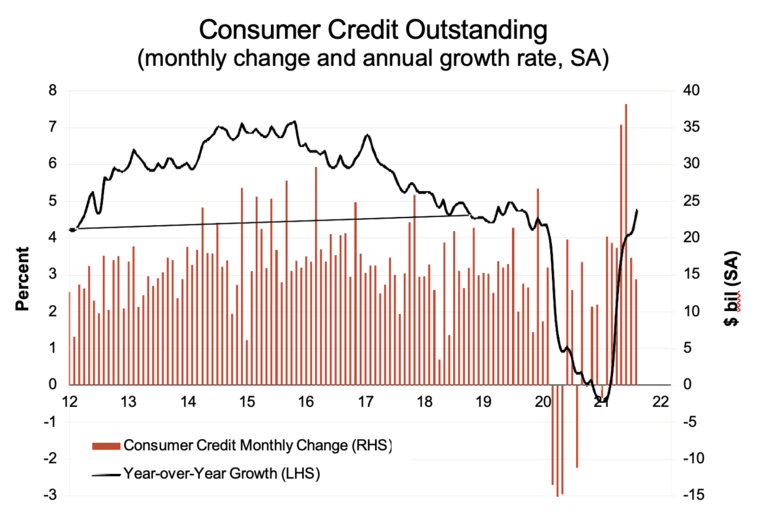
Credit union consumer installment credit loan balances (auto, credit card and other unsecured loans) rose 1.1% in August, an acceleration from the 0.3% pace set in August 2020, according to the Trends Report, which noted during the last 12 months credit union consumer installment credit grew 7.5%, greater than the total market excluding credit unions and government student loans at 4.6%.
“Going forward, expect credit growth to accelerate into 2022 as consumers begin spending on leisure and hospitality again and the unemployment rate drops below full employment and economic uncertainty declines,” the report forecasts.
Vehicle Loans
Vehicle sales fell in July to a 12.2 million unit seasonally-adjusted, annualized sales rate, which is down 25.2% from July 2020 when 16.3 million units were sold, the report notes, adding the chip shortage continues to affect sales and inventories.
“Low inventories lead to higher prices,” the Trends Report states. “The average transaction price for a new vehicle is more than 9% higher than last year. Prices will only fall once supply chain bottlenecks get worked out and auto production levels ramp up.”
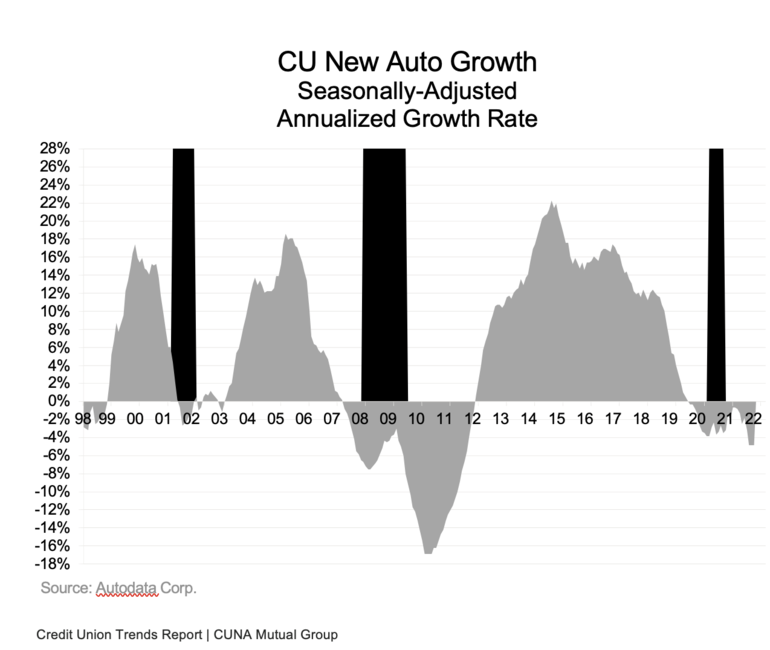
The Trends Report adds that weak auto sales are weighing on credit union new-auto lending, pointing out that in August credit union new-auto loan balances fell 5% at a seasonally-adjusted, annualized growth rate, “a much slower pace compared to what we have seen over the past few years. Credit union new-auto loan balances should continue to fall as loan repayments exceed originations for the next nine months.”
Real Estate
Credit union fixed-rate, first mortgage loan balances grew 1.4% in August, faster than the 1.0% pace reported in August 2020, according to the Trends Report.
“When comparing year-over-year growth, fixed-rate first mortgage balances rose 13.8%, below the 16.7% reported in the year ending in August 2020,” the report states. “The contract interest rate on a 30-year, fixed-rate conventional home mortgage fell to 2.84% in August, from 2.87% in July, and below the 2.94% reported in August 2020.”
Home prices rose 1.3% in August, according to the Core Logic Home Price Index, and 18.1% year- over-year, the “fastest annual growth ever recorded in over 40 years,” the Report states.
“Home prices are now rising much faster than average hourly earnings, which grew 4% over the last year, and this is not sustainable. In the long run, home prices should rise as fast as household income,” Rick noted in his analysis.
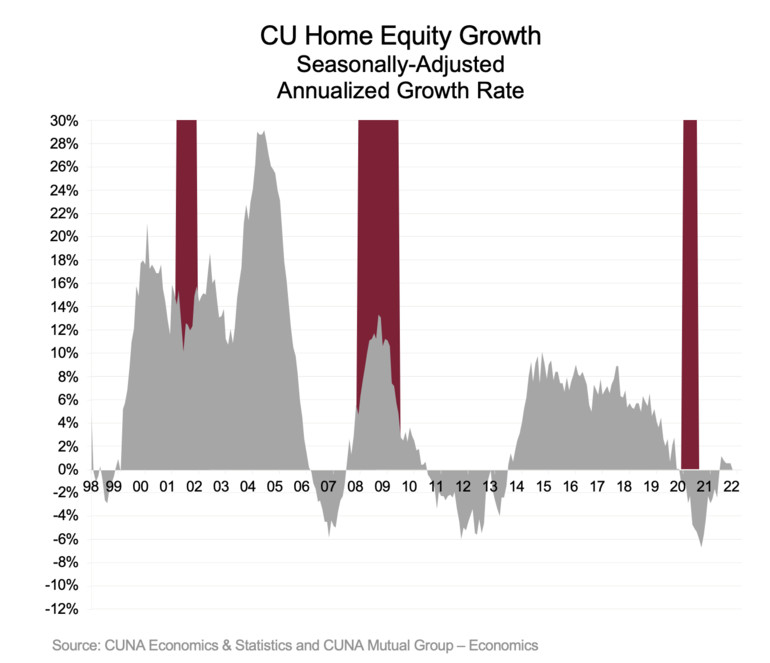
Meanwhile, home equity lending posted its sixth monthly gain in August, increasing 0.6%, at a seasonally- adjusted, annualized pace, and above the -6.0% pace decline reported in August 2020.
“This growth is partly due to fewer members refinancing their first mortgage loans and cashing out some home equity to pay down existing home equity loan balances,” the Report states. “With home prices at record highs, expect them to rise another 5.0% to 7.0% during the next year. We expect home equity loan balances to accelerate further in 2022.”
Savings & Assets
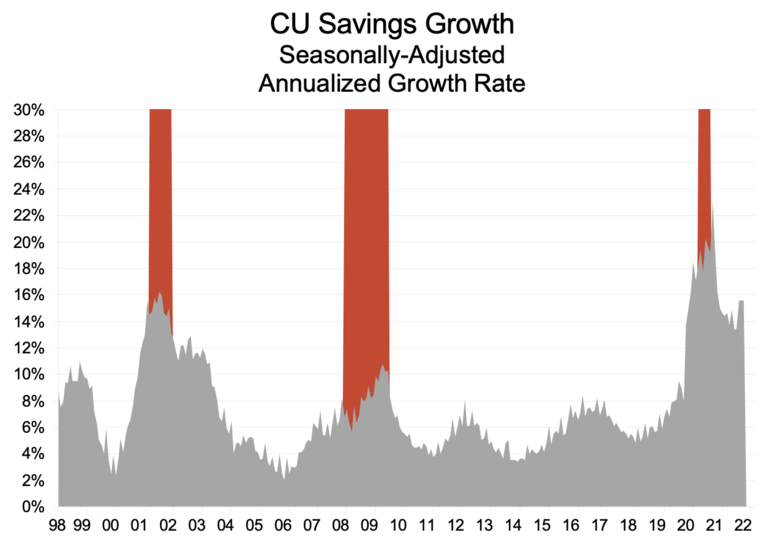
Credit union savings balances rose 0.1% in August, below the 0.3% rise in balances reported in August 2020.
“August is normally one of the weakest months of the year for savings growth due to seasonal factors, such as vacation spending and auto loan down payments. Credit union deposit growth is becoming more unbalanced,” the Trends Report states. “During the first eight months of the year, credit union deposits rose $152 billion. Contributing to this growth was a $70 billion increase in regular shares (11.5% growth rate), making up 46% of total deposit growth.”
The Report adds that savings balances grew at a 15.6% seasonally-adjusted, annualized growth rate in August, due to low consumer spending on services, volatile equity markets and cash-out mortgage refinances being deposited in saving accounts.
“We expect savings balances to grow 12% in 2021 and 6% in 2022, below the long-run average of 7%, as consumers increase their spending on leisure and hospitality,” the Report is forecasting.
Capital & Other Key Measures
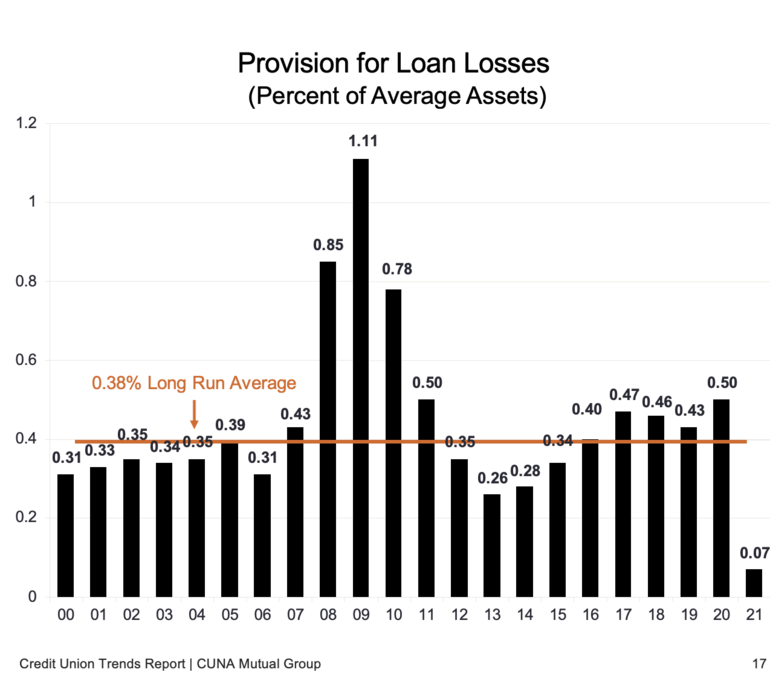
Credit union provisions for loan losses, as a percent of assets, fell to a record low of 0.07% in the first half of 2021, according to the Trends Report, which notes that historically, credit unions set aside 38 cents for every $100 in assets to account for loan losses.
“This year, however, many credit unions have determined their allowance for loan losses may have excess qualitative reserves, and have been pulling funds out of the allowance account or made smaller contributions,” the analysis observes. “This will boost the credit union return-on-assets ratio to 0.95% in 2021, the highest level since 2004.”
The Report further states that members who may have defaulted on their loans during the COVID-19 recession were helped by the three stimulus checks mailed out over the last 18 months.
“With loan growth is expected to accelerate in 2022 and no more stimulus checks expected, credit unions will increase loan loss provisions to levels closer to the long-run average,” the Report states.
Credit Unions & Members
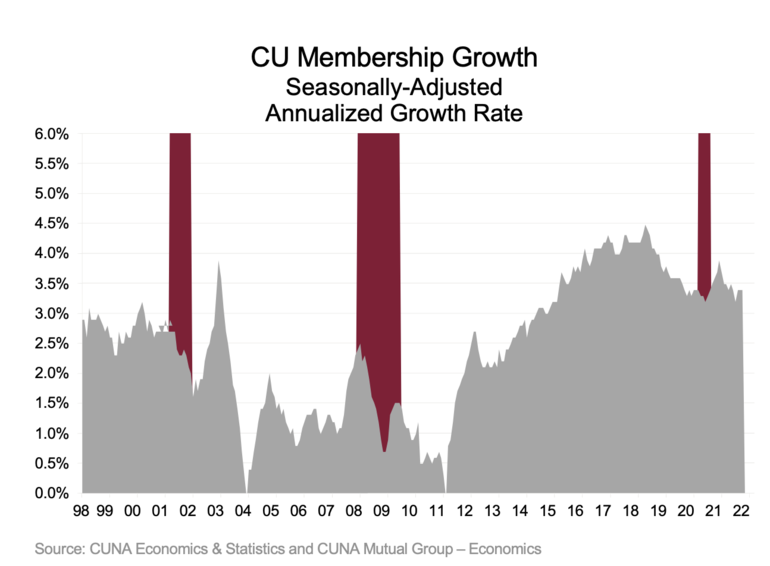
Credit union memberships rose by 261,000 in August, or 0.2%, below the 516,000 new members (0.4%) added in August 2020. This has pushed credit union memberships over the 130 million mark.
According to the Trends Report, during the last year, credit unions added 4.4 million new members, above the 4.1 million growth pace set through August 2020, which translates into a 3.4% seasonally-adjusted, annualized growth rate. Membership growth has stabilized around the 3.5% growth rate during the last three years, the report adds.
“Membership growth is being supported by an unintended consequence of the Durbin Amendment of the Dodd-Frank Act, which capped the fees large banks can charge merchants to process debit card transactions (21 cents plus 0.05% of the total charged),” according to the CUNA Mutual analysis. “To make up for this lost revenue, banks increased their monthly fees for having a debit card or checking account. The higher charges are driving many bank customers to their local low or no-fee, not-for-profit credit union.”