NEW YORK–A number of key fraud trends plus what to be on guard for in 2021 have been compiled by LexisNexis Risk Solutions in its newest State of Fraud Report.
The risk threats were released as part of LexisNexis Risk Solutions, which said a “consolidation of the report findings uncovers a perfect storm of trends that have impacted fraud throughout the past year and those that may linger into the new year.”
“The COVID-19 pandemic caused 2020 to be a year of unique circumstances and disruption to the global economy,” the company said. “One thing that has stayed the same is fraudsters' willpower to gain access to money and confidential information. While many believe that fraud victims are mostly the technologically naïve, 2020 validated that anyone can be a victim.”
LexisNexis Risk Solutions said it examined consumer behavior, popular fraud methods, and social uncertainty due to the pandemic when compiling its data and offering suggestions on what organizations of all shapes and sizes can do to protect their business.
Shifting Consumer Behavior
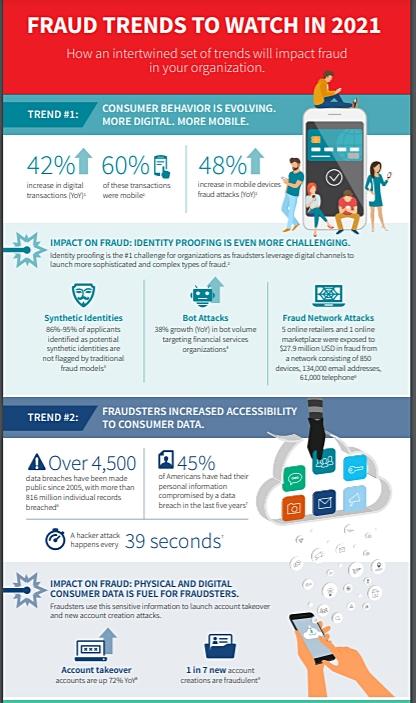
Digital transaction in the U.S. and Canada increased 42% year-over-year leading up to June 2020, with 60% representing mobile transactions, 67% mobile apps, and 33% mobile browsers.
“Consumers now engage in more digital transactions and use different payment methods that fraudsters leverage to target a broader set of businesses through more sophisticated and complex fraud methods. These often involve the mobile channel and the purchase of digital goods and services,” LexisNexis said. “Difficult to detect fraud methods like synthetic identities, identity fraud rings, multiple device linkages and bot attacks create identity proofing challenges for businesses. Identity proofing could prove to be a significant challenge for organizations in 2021, as fraudsters leverage digital channels to launch more sophisticated and complex types of fraud. According to the Federal Reserve, 86%-95% of applicants identified as potential synthetic identities escape flagging by traditional fraud models. This is something every organization should be on the lookout for particularly with the rise in digital transacting.”
Breaches Fuel Sophisticated Fraud Methods
According to Lexis Nexis, “this is more than just about PINs and passwords: this data is valued for both the physical and digital identity attributes linked to transactions and devices, such as email addresses, billing addresses and phone numbers.”
LexisNexis said its Digital Identity Network indicates a risk in fraudulent events through emails are likely from data breaches and are used by multiple fraudsters. Fraudsters are no longer always hidden – they can take the form of a visible business or a network of businesses or devices.
“Physical and digital consumer data is fuel for fraudsters. With 45% of people in the United States having had their personal information compromised by a data breach in the last five years, fraudsters have a trove of personally identifiable information that enables them to use this sensitive information to launch account takeovers and new account creation attacks,” the company sated.
Bad Actors Exploit Weaknesses
LexisNexis stated that in 2020, overall market and economic uncertainty due to COVID-19 significantly increased successful fraud attempts.
“This is especially true for the e-commerce, retail, financial services and lending sectors. We expect the trend will continue in 2021. While professional fraudsters are always ready to attack, economic hardships can also induce others to engage in fraudulent activities,” LexisNexis said. “These can be individuals with no criminal behavior history. Typically, organizations are more sensitive to customer friction during slower economic periods and more concerned about lost opportunities. That does not mean they can let their guard down. In addition to those who attack with intent, consumer stress and fear can lead consumers to riskier transaction behaviors, which may increase successful tactics for malware infection on devices and theft of personal identification information. This presents more opportunities for fraudsters leading to more attacks.”
The Recommendations
LexisNexis recommended businesses:
- Use both physical and digital identity data to get a full view of their customers to effectively fight emerging fraud attacks.
- Utilize multiple layers of fraud defense like actionable decision analytics and investigation tools.
- Couple the multiple layers of fraud defense with digital customer experience and cybersecurity strategies to better protect the relationships that businesses have with their customers and their information.