

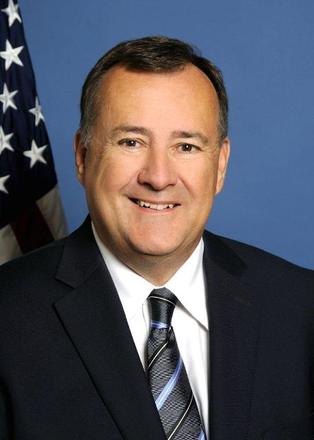
NCUA Chairman Rick Metsger
ALEXANDRIA, Va.––NCUA revealed it has paid approximately 23% of the value of financial recoveries from lawsuits over failed investments in attorney fees.
As of Oct. 11, 2016, NCUA's legal strategy has recovered more than $4.3 billion. Recovery efforts continue with ongoing litigation.
The information has been released as part of a new “Corporate System Resolution Section” on the agency’s website at www.ncua.gov. NCUA Chairman Rick Metsger said the information is being released as part of ongoing efforts he has led at being more transparent. Credit unions and their trade groups have been pressing the agency for some time for more information on how much it is paying law firms as part of the lengthy litigation against banks and other firms that sold mortgage-backed securities to credit unions in the years heading into the financial crisis of the mid-2000s.
“People have asked about our fee arrangements with outside counsel,” Metsger writes in an op-ed that appears in CUToday.info. “It’s commonly understood that such arrangements customarily range between a third of any recoveries to as much as a half, depending on factors such as whether the case is settled before trial or only after lengthy appeals. I am pleased to inform you the contingency agreement NCUA negotiated with our attorneys has proven to be extremely beneficial to credit unions as well as fair to our legal team.
“While earlier cases in which billions of dollars were at stake were pending, NCUA did not disclose attorney fee arrangements to protect our litigation position and ensure we maximized returns to credit unions,” Metsger writes. “We have, however, always recognized that the balance between protecting the financial interest of credit unions and the public interest in disclosure would shift over time. Now that most of the securities cases have been resolved, I can tell you legal fees to date come to approximately 23.2% of our recoveries, or $1,003,029,479.”
In addition, NCUA paid expenses to the firms of $8,094,003, bringing the total paid to the firms $1,011,123,482. NCUA entered into a contingency fee arrangement with two law firms: Korein Tillery and also Kellogg, Huber, Hansen, Todd, Evans & Figel PLLC.
A full listing of the lawsuits, recoveries, expenses, and fees can be found in the corporate system resolution section on the NCUA website.
The release of the information comes a week ahead of the public briefing NCUA will hold at its headquarters in Alexandria, Va., on its 2017-18 budget. The budget proposal is also available on the agency’s budget resource center.
With questions likely inevitable about the amount of money being paid to the law firms, Metsger said, “NCUA was the first federal financial institutions regulator to sue these firms, and we did so knowing we were going up against some of the world’s most powerful companies, each of whom had very deep pockets. The outcome was far from certain.
“We engaged expert outside counsel who took the cases under contingency fee arrangements, insulating credit unions from any costs if the cases weren’t successful,” Metsger wrote. “It’s important to remember that the highly distressed credit unions did not have the ability to hire counsel on an hourly basis, which would have required a commitment of tens of millions of dollars, without any guarantee of success, at a time when the credit unions scarcely could have afforded such additional assessments. Without the contingency fee agreements, which shifted most of the risk of these legal actions to outside counsel, there would have been no legal investigation of potential claims, no litigation, and no legal recoveries. Fortunately, our team has been highly successful. To date, we have obtained settlements and recoveries of about $4.3 billion. The net recoveries have gone to repaying claims on the estates of the five failed corporates, including those of the Stabilization Fund, and reducing potential assessments for credit unions.”
NCUA’s board, acting as liquidating agent for the five corporate credit unions, has filed 26 complaints against 32 defendants in federal courts in California, Kansas, and New York. The five corporate credit unions and the credit union system as a whole suffered billions of dollars in losses from the purchase of the faulty residential mortgage-backed securities.
Among the lawsuits filed were two complaints against 17 banks, alleging their manipulation of the London Interbank Offered Rate, or LIBOR, the benchmark used to set interest rates around the globe. That manipulation, the suits allege, resulted in the loss of income from investments and other assets by the failed corporate credit unions. The lawsuits also include four complaints against five trustees for residential mortgage-backed securities, alleging failure to fulfill duties to trust beneficiaries.