

TALLAHASSEE, Fla.–The League of Southeastern Credit Unions said NAFCU’s interpretation of the risk to CUs from a new state law in Florida overlooks the fact credit unions are exempt.
As CUToday.info reported here,
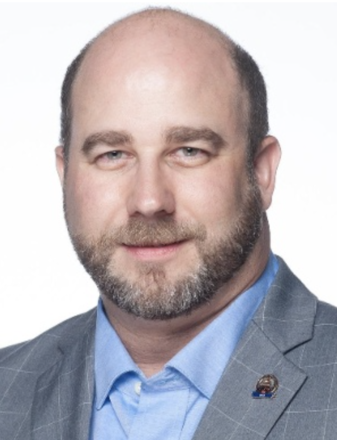
Jared Ross
Florida’s legislature has passed a robocall bill that adds a private right of action to the state's existing anti-robocall law and requires callers to collect a customer's express written consent before placing any marketing calls to consumers via an automated dialing system.
NAFCU expressed uncertainty over provisions of the bill related to "automated system,” which it said put financial institutions in the state at even greater risk of litigation.
But the League of Southeastern Credit Unions said that is not the case.
In a statement to CUToday.info, LSCU President Jared Ross said, “On June 30, 2021, CUToday posted an article about Florida’s robocall prevention legislation, which passed during the 2021 Florida Legislative Session and was signed by Governor DeSantis. Citing NAFCU, the news article stated that financial institutions could face lawsuits under a new private cause of action based on the lack of clarity in SB 1120. However, NAFCU failed to look at the statute as a whole. FL. St. 501.604(7) clearly exempts credit unions from the new section of the law.
The ‘Relevant Language’
“The relevant language reads as follows:
501.604 Exemptions.—The provisions of this part, except ss. 501.608 and 501.616(6) and (7), do not apply to:
(7) A supervised financial institution or parent, subsidiary, or affiliate thereof operating within the scope of supervised activity. As used in this section, “supervised financial institution” means a commercial bank, trust company, savings and loan association, mutual savings bank, credit union, industrial loan company, consumer finance lender, commercial finance lender, or insurer, provided that the institution is subject to supervision by an official or agency of this state, of any state, or of the United States. For the purposes of this exemption, ‘affiliate’ means a person who directly, or indirectly through one or more intermediaries, controls or is controlled by, or is under common control with, a supervised financial institution.”
Some Compliance Required
Ross said credit unions still must comply with time restrictions related to calls, but the new section that creates a private cause of action and is aimed at stopping spurious robocalls does not apply to credit unions.
“The league is always reviewing legislation that could have any consequences to credit unions and was well aware that this exemption existed,” said Ross. “This is another example of the importance of having full-time advocates at the state level looking out for our credit unions.”