

CHICAGO— After more than 100 million U.S. consumers enrolled in a service to monitor their credit data from TransUnion between the start of 2018 and September 2023, a new analysis offers insights into the different ways consumers have monitored their credit and has also identified three distinct segments.
According to TransUnion, its analysis found the majority of Americans doing so have a near-term goal of opening a new credit account (55%). Three in 10 U.S. consumers (30%) monitor their credit to better manage their debt levels, while 15% seek to improve their credit scores.
To better understand the distinct profiles, motivations and future outcomes of credit monitoring consumers, TransUnion said it conducted a global research study examining credit behaviors for millions of consumers in both developed and developing markets, including the United States, Brazil, Canada, Chile, Colombia, Dominican Republic, Guatemala, Hong Kong, India, Philippines, South Africa and United Kingdom.
To further identify how these benefits advance credit education and enable financial inclusion, the study used depersonalized credit data to analyze these outcomes for key consumer credit segments: new-to-credit, underserved, and credit served consumers, according to TransUnion.
Growth in Awareness
“Consumer credit monitoring has expanded considerably in awareness and usage over the past decade. This expansion has recently been fueled by the impact of the pandemic on consumer finances and the heightened familiarity among consumers of becoming victims of credit fraud,” Charlie Wise, co-author of the study and head of global research and consulting at TransUnion, said in a statement. “Our study measures the importance of credit education and quantifies the benefits that credit monitoring consumers experience. These benefits are shown to lead to better credit profiles, greater access to credit, or an improved ability to pay down debt, depending on the intent of consumers who monitor credit.”
What Consumers Said
In the U.S., TransUnion reported 86% of surveyed consumers stated that it is at least moderately important to monitor their credit, with three in 10 saying it’s extremely important. More than half of consumers (58%) report monitoring their credit at least once per month, with 22% and 10% checking weekly and daily, respectively.
TransUnion surveyed consumers to understand their initial intent to sign up for credit monitoring services, and the actual benefits they have experienced in doing so. The most common reasons U.S. consumers initially signed up for credit monitoring services were that it was free (35%), to improve their credit score (32%), and to monitor their report for accuracy (31%).
Additionally, after using monitoring services for some time, consumers reported added benefits that credit monitoring has allowed them to achieve: gain visibility to changes on their credit report (42%), learn how to manage their credit score (41%), detect fraud (39%), and pay down debt (24%), according to the company.
Three ‘Distinct Segments’
TransUnion reported the study further identified three distinct segments of credit monitoring consumers based on their primary motivation for monitoring their credit: Credit Seekers, Credit Managers and Credit Improvers.
Credit Seekers Benefit from Attaining New Credit
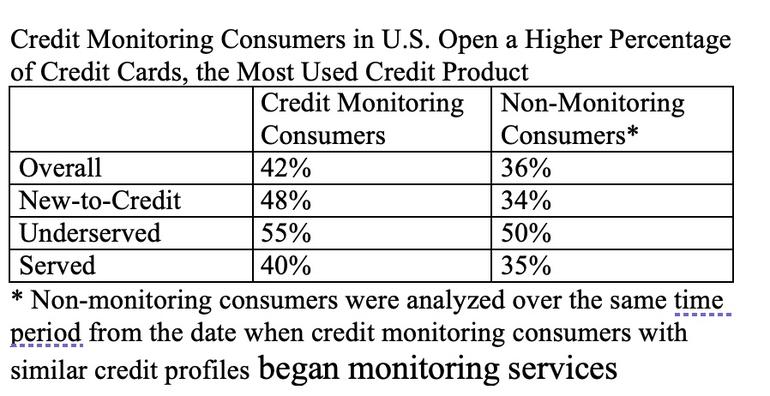
“More than half of the credit monitoring population (55%) is doing so with a goal of attaining new credit. Credit Seekers are consumers with near prime and above credit scores who monitor their credit with the intention of opening new credit accounts in the near future,” TransUnion said. “When comparing Credit Seekers who monitor their credit to those that do not, credit monitoring consumers open 1.16x more credit accounts, such as credit cards and auto loans, over the following year. “
TransUnion further found both New-to-Credit (NTC) consumers – those early in their credit journeys – and underserved consumers – those less engaged in the credit market overall – also saw similar higher activity for the credit monitoring segment.
“NTC consumers who monitor their credit display 1.21x higher origination rates for any credit product than those who do not monitor their credit, and for underserved it is 1.24x,” TransUnion said. “Served consumers, those with established credit histories and readily available access to credit, saw an 1.14x higher rate of opening new accounts.”
Credit Managers Benefit from Paying Down Debt and Detecting Fraud
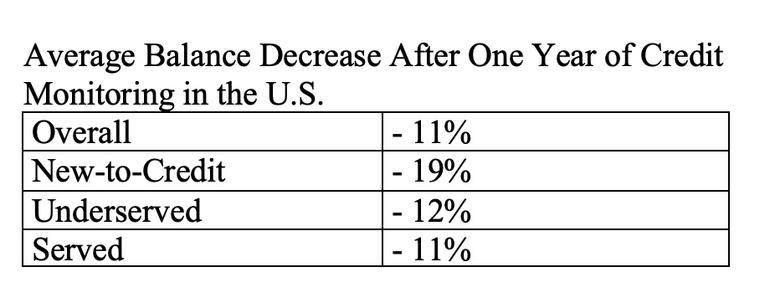
“As debt levels have risen to near-record levels in recent years, the study found that many U.S. consumers (30%) monitor their credit with the intention of keeping an eye on their overall balances,” TransUnion said. “Credit Managers are defined as consumers with near prime and above credit scores who generally monitor their credit with the goal of reducing or maintaining their balances or monitoring for fraud.”
The company said when surveyed, 24% of all U.S. credit monitoring consumers said they were able to pay down debt as a result of credit monitoring.
“In alignment, the study found that Credit Managers decreased their overall balances by an average of 11% within a year after starting monitoring,” the company added.
According to TransUnion, another primary motivation reported by Credit Managers is protecting against fraud. Four in 10 U.S. consumers (42%) reported that they continue to utilize credit monitoring services over time in order to detect and protect against fraud.
“This benefit is of increased importance to consumers in light of the continued rise in fraud activity that has been observed since the onset of the COVID pandemic,” TransUnion said.
Credit Improvers Benefit from Improving Scores and Staying Current on Obligations
Credit Improvers, which make up 15% of the U.S. credit monitoring population, are defined as consumers with subprime (poor) credit scores who likely use credit monitoring to understand their current credit situations and take steps to improve their credit scores, according to the analysis.
“The study found that Credit Improvers in the U.S. generally experienced credit score improvements by an average of 28 points one year after they started monitoring their credit,” TransUnion reported. “The improvement was even better, at 35 points, for NTC consumers. In both instances, the improvement was better than a comparison set of consumers who do not monitor their credit (average 23-point improvements for both overall population and NTC consumers).”
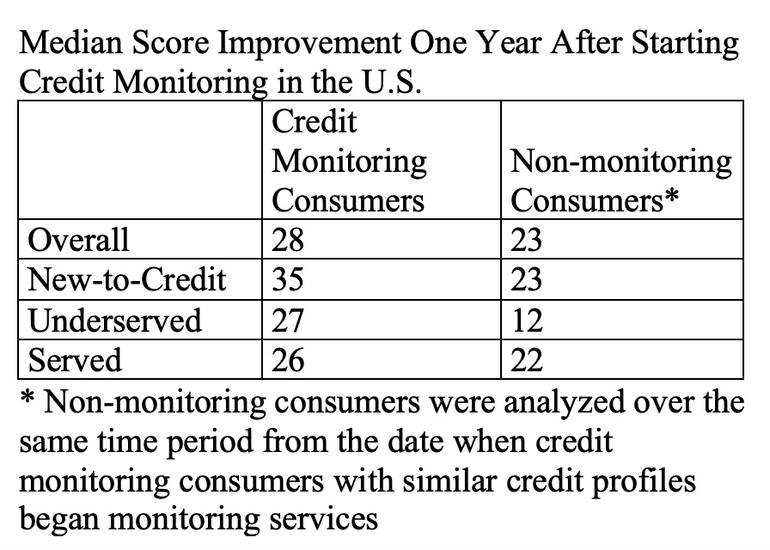
“While Credit Improvers make up the smallest segment of credit monitoring consumers in the U.S., they also tend to see some of the most impactful benefits in terms of credit improvement,” Lindsey Downing, head of TransUnion’s Consumer Interactive business, said in a statement. “It’s a clear indication that those consumers who are actively looking to improve their credit health may achieve better results if they monitor their credit and are able to plan their steps and track their progress.”
Free Credit Monitoring Benefits Findings
TransUnion said 35% U.S. consumers said they initially signed up for credit monitoring because it was free, while 32% stated they would prefer the lender providing free credit monitoring services over other lenders when opening new products; and 21% said they would prioritize that lender’s payments over other lenders’ payments.
For more info, go here.
Now With Free Shipping!
The biggest, best and freshest news reporting in credit unions remains free! Each morning CUToday.info delivers its daily Fresh Today news update offering the latest headlines and breaking news right to your email, with the easy-to-read headlines format allowing you to click on the stories that interest you most in order to learn more. So stop paying those bank-fee-like subscription prices from other so-called “news” publications!
If you haven’t yet signed up for the new email solution on which CUToday.info has partnered with ResponseGenius, you can do so here. Signing up requires less than one minute of your time—and it’s free!
Please note that after signing up you may need to go to your Spam/Junk folder and mark the morning headlines email as safe. CUToday.info does not provide its list of readers and emails to outside parties, and we will not be contacting you to sell you an extended warranty or sending you any links so you may cash in on an inheritance you didn’t know was coming.
And did we mention it’s free?