

WASHINGTON–In response to the coronavirus outbreak and its growing effect on economy, the Federal Reserve has announced a reduction in the fed funds rate to near zero, aggressive expansion of other “tools,” and a coordinated response with the central banks of other countries. In addition, the New York Fed announced plans to pump as much as $1.5 trillion into the economy.
In an emergency session, the Federal Open Market Committee cut the fed funds target range to 0% to .25%. The move comes less than a month after the Fed announced a similar rate cut.
“The coronavirus outbreak has harmed communities and disrupted economic activity in many countries, including the United States. Global financial conditions have also been significantly affected,” the Fed said in announcing the reduction.
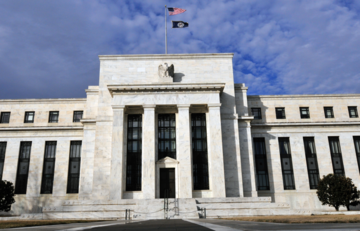
The Fed added available economic data show the U.S. economy came into this “challenging period on a strong footing,” and while the labor market is strong, unemployment low, household spending growth has been “moderate” and business fixed investment and exports remained weak. “More recently, the energy sector has come under stress,” the Fed added, noting there is little indication of inflation growing beyond the Fed’s target of 2% annually.
“The effects of the coronavirus will weigh on economic activity in the near term and pose risks to the economic outlook,” the Fed said. “In light of these developments, the Committee decided to lower the target range for the federal funds rate to 0 to 1/4 percent. The Committee expects to maintain this target range until it is confident that the economy has weathered recent events and is on track to achieve its maximum employment and price stability goals.”
Other Moves Announced
The Fed announced an aggressive package of other moves aimed at minimizing the damage from the coronavirus COVID-19 outbreak, which has closed schools, shut down many public events, cancelled sporting events and led some states to order restaurants to close.
“The Federal Reserve is prepared to use its full range of tools to support the flow of credit to households and businesses and thereby promote its maximum employment and price stability goals,” the Fed said. “To support the smooth functioning of markets for Treasury securities and agency mortgage-backed securities that are central to the flow of credit to households and businesses, over coming months the Committee will increase its holdings of Treasury securities by at least $500 billion and its holdings of agency mortgage-backed securities by at least $200 billion.”
The FOMC said it will also reinvest all principal payments from the Federal Reserve's holdings of agency debt and agency mortgage-backed securities in agency mortgage-backed securities.
“In addition, the Open Market Desk has recently expanded its overnight and term repurchase agreement operations. The Committee will continue to closely monitor market conditions and is prepared to adjust its plans as appropriate,” the Fed said.
The Fed reported all of the FOMC members voted in favor of the actions with the exception of Loretta J. Mester, “who was fully supportive of all of the actions taken to promote the smooth functioning of markets and the flow of credit to households and businesses but preferred to reduce the target range for the federal funds rate to 1/2 to 3/4 percent at this meeting,” the Fed said.
Additional Tools
In addition, the Federal Reserve announced measures related to the discount window, intraday credit, bank capital and liquidity buffers, reserve requirements, and—in coordination with other central banks—the U.S. dollar liquidity swap line arrangements.
The actions taken include:
Discount Window
The Fed said is encouraging depository institutions to turn to the discount window to “help meet demands for credit from households and businesses at this time,” and has lowered the primary credit rate by 150 basis points to 0.25% effective March 16.
“This reduction in the primary credit rate reflects both the 100 basis point reduction in the target range for the federal funds rate and a 50 basis point narrowing in the primary credit rate relative to the top of the target range,” the Fed said. “Narrowing the spread of the primary credit rate relative to the general level of overnight interest rates should help encourage more active use of the window by depository institutions to meet unexpected funding needs.”
In addition, saying it is seeking to further enhance the role of the discount window as a tool for banks in addressing potential funding pressures, the Fed also announced depository institutions may borrow from the discount window for periods as long as 90 days, prepayable and renewable by the borrower on a daily basis. The Federal Reserve said it continues to accept the same broad range of collateral for discount window loans.
Intraday Credit
The Federal Reserve id encouraging depository institutions to utilize intraday credit extended by Reserve Banks, on both a collateralized and uncollateralized basis, to support the provision of liquidity to households and businesses and the general smooth functioning of payment systems.
Bank Capital and Liquidity Buffers
The Federal Reserve said it is encouraging banks to use their capital and liquidity buffers as they lend to households and businesses who are affected by the coronavirus.
“Since the global financial crisis of 2007-2008, U.S. bank holding companies have built up substantial levels of capital and liquidity in excess of regulatory minimums and buffers,” the Fed said. “The largest firms have $1.3 trillion in common equity and hold $2.9 trillion in high quality liquid assets. The U.S. banking agencies have also significantly increased capital and liquidity requirements, including improving the quality of regulatory capital, raising minimum capital requirements, establishing capital and liquidity buffers, and implementing annual capital stress tests.”
“The Federal Reserve supports firms that choose to use their capital and liquidity buffers to lend and undertake other supportive actions in a safe and sound manner,” it said in a statement.
Reserve Requirements
The Federal Reserve also announced changes to reserve requirements, which it said for many years played a central role in the implementation of monetary policy by creating a stable demand for reserves. In January 2019, the FOMC reminded it had announced its intention to implement monetary policy in an ample reserves regime. Reserve requirements do not play a significant role in this operating framework.
In light of the shift to an ample reserves regime, the Board has reduced reserve requirement ratios to 0% effective on March 26.
“This action eliminates reserve requirements for thousands of depository institutions and will help to support lending to households and businesses.
Central Banks Coordinate
In addition to the rate cut, the Bank of Canada, the Bank of England, the Bank of Japan, the European Central Bank, the Federal Reserve, and the Swiss National Bank have announced a coordinated action to enhance the provision of liquidity via the standing U.S. dollar liquidity swap line arrangements.
The central banks have agreed to lower the pricing on the standing U.S. dollar liquidity swap arrangements by 25 basis points, so that the new rate will be the U.S. dollar overnight index swap (OIS) rate plus 25 basis points.
“To increase the swap lines' effectiveness in providing term liquidity, the foreign central banks with regular U.S. dollar liquidity operations have also agreed to begin offering U.S. dollars weekly in each jurisdiction with an 84-day maturity, in addition to the one-week maturity operations currently offered,” the Fed said.
The changes will take effect with the next scheduled operations during the week of March 16.
“The new pricing and maturity offerings will remain in place as long as appropriate to support the smooth functioning of U.S. dollar funding markets,” the Fed said. “The swap lines are available standing facilities and serve as an important liquidity backstop to ease strains in global funding markets, thereby helping to mitigate the effects of such strains on the supply of credit to households and businesses, both domestically and abroad.”
$1.5 Trillion Injection
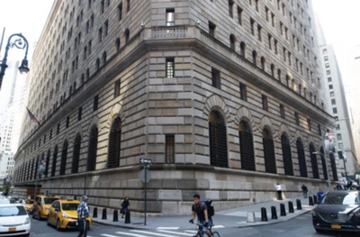
Meanwhile, the New York Federal Reserve said it would make the money available in three tranches of $500 billion each and that it would start purchasing a broader range of U.S. Treasury securities than it has been of late, “a shift that signals the Fed could deploy some of its crisis-era tools sooner than planned,” noted Reuters in its analysis.
The Fed will be meeting this week and many analysts now expect the central bank could go as far as to reduce rates to nearly zero, a surprise U-turn for a year in which many economists had projected the Fed would raise rates.
“The unscheduled move – the latest in a series of actions aimed at providing liquidity and reassurance as the outbreak grows and brings areas of the country to a veritable halt…” reported Reuters. “…It did show the Fed moving to head off a repeat of the events that locked down financial markets and froze credit a little over a decade ago at the start of what became a deep recession. Its offer of effectively unlimited cash to banks was an effort to plant a flag of sorts and remind that the core function of a central bank is as a lender of last resort – to ensure that whatever other ills the economy may face it won’t be a lack of cash.”
Changing Maturities
The Fed said it is also changing the maturities of the Treasury securities it purchases monthly to increase reserves, and will buy across a full range of short- and longer-term assets to match the composition of Treasury securities outstanding, including coupons, bills, Treasury Inflation-Protected Securities and Floating Rate Notes.
According to the New York Fed, the changes were made at the direction of Fed Chair Jerome Powell, in consultation with the Fed’s policymaking panel, to “address highly unusual disruptions in Treasury financing markets associated with the coronavirus outbreak,” the New York Fed said.