

WASHINGTON–A strongly worded opinion piece published in a national publication suggests “There’s a new predator making money off overdraft fees: credit unions.”
The piece, published by Politico under the headline, “Credit Unions Are Making Money Off People Living Paycheck to Paycheck,” was authored by Aaron Klein, the Miriam K Carliner chair and senior fellow in economic studies at the Brookings Institution. Klein served as deputy assistant secretary of the Treasury from 2009 to2012 and as chief economist of the Senate Banking, Housing and Urban Affairs Committee from 2004 to 2009.
In its "CU Weekly" publication, the California and Nevada leagues called the article a "hit job."
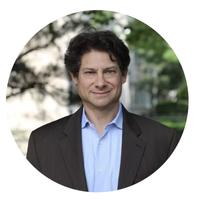
Aaron Klein
Opinion Based on New Report
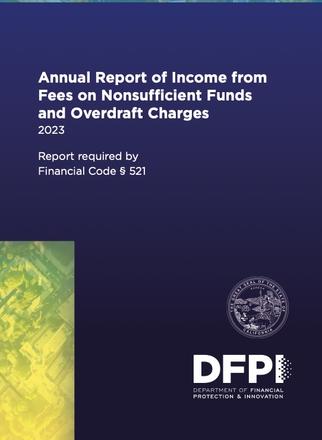
The article follows the release of the first annual report from California’s financial regulator following a law requiring data be published showing how much institutions are making from overdraft fees and NSFs, as CUToday.info reported here.
“Two years ago, I helped draw attention to a small group of banks that were overdraft giants, relying on these fees for the majority and, in some cases, the totality of their profits,” wrote Klein. “Since then many of America’s banks, particularly the largest ones, have made major changes to their overdraft policies, resulting in over $5 billion a year in savings for people living on the financial edge.
“Credit unions escaped the overdraft debate back then for two reasons. The first is their reputation for being small, nonprofit, member-owned entities; one would hardly think they would become addicted to charging their most vulnerable members high fees,” Klein continued. “The second is a lack of data because credit unions are exempt from federal reporting requirements on overdraft fees.”
But with data in hand for the state-chartered institutions in California, Klein stated “many California credit unions are taking millions from their most vulnerable customers and spending it on perks and bonuses for executives that resemble those of big banks more than nonprofits.”
‘Predatory’ Practices
Klein said overdraft fees “can be predatory,” arguing “Every overdraft by definition turns money from someone who has run out of it into nearly pure profit for the bank or credit union that charged it because they get paid back immediately when the next deposit hits. Eighty percent of overdraft fees come from just 9% of account holders, highlighting that this product is targeted at people living paycheck to paycheck who run out of money from time to time.”
Two CUs Highlighted
Among the California credit unions Klein highlighted in his analysis:
- The Golden 1, which took in $24 million in overdraft from their members, “while spending $6 million a year for naming rights for an NBA stadium in Sacramento.”
- North Island Credit Union “bought naming rights for a famed music venue in Chula Vista and created an exclusive entrance, ticket discounts and other perks for some of its members while taking over $10 million last year in overdraft and non-sufficient funds charges from its members.”
‘Sounds Like a Bank’
“Do these business practices sound like those of nonprofits designed to provide basic banking services to people who share what the law calls a ‘common bond,’ such as a workplace or other connection required for membership?” asked Klein. “Or are they what would expect from for-profit banks?”
Klein called the overall data compiled in the state DFI’s report “alarming,” pointing to a total of $252 million in OD and NSF fees during 2022, with 30 CUs earning half or more of their net profit from overdraft and NSF fees alone, according to Klein.
“Any financial institution, bank or credit union, that relies on overdraft fees for a majority of their earnings is operating in an unsafe and unsound manner,” Klein alleged. “Federal and state regulators have been asleep at the switch allowing this to occur at banks and credit unions.”
As an example, he pointed to Frontwave CU in Oceanside, Calif., which showed $7.8 million in overdraft and NSF fees in 2022, “equal to $63.73 per each of its 122,550 members. Without these fees, Frontwave would have been in the red for the year. Frontwave is one of eight California credit unions whose entire profit came from overdraft.
A Dozen CUs Cited
“Twelve other California credit unions lost money overall, despite overdraft revenue that was often quite high,” Klein continued. “Chief among them was the Police Credit Union of California, which charged their members $1.84 million in overdraft fees while losing $510,572 for the year. Law enforcement officers, like other public servants, deserve better.”
Klein said there is some “good news” in the data: 10% of California state-chartered credit unions report zero overdraft fees, and just under 20 percent report fees in the single digits of total net earnings.
“These credit unions show that you don’t need to rely on overdraft fees,” Klein stated, adding the “California’s data is a wake-up call for the nation as a whole.”
Just Because It’s Autumn Doesn’t Mean Falling for Schemes to Overcharge You for CU Industry News. Instead, Try This Crisp Offer
The biggest, best and freshest news reporting in credit unions remains free! Each morning CUToday.info delivers its daily Fresh Today news update offering the latest headlines and breaking news right to your email, with the easy-to-read headlines format allowing you to click on the stories that interest you most in order to learn more. So stop paying those bank-fee-like subscription prices from other so-called “news”” publications!
If you haven’t yet signed up for the new email solution on which CUToday.info has partnered with ResponseGenius, you can do so here. Signing up requires less than one minute of your time—and it’s free!
Please note that after signing up you may need to go to your Spam/Junk folder and mark the morning headlines email as safe. CUToday.info does not provide its list of readers and emails to outside parties, and we will not be contacting you to sell you an extended warranty or sending you any links so you may cash in on an inheritance you didn’t know was coming.
And did we mention it’s free?