

WASHINGTON—The Fannie Mae Home Purchase Sentiment Index (HPSI) was largely unchanged in June, decreasing by 0.3 points to 79.7, despite even greater volatility among its underlying components, Fannie Mae reported.
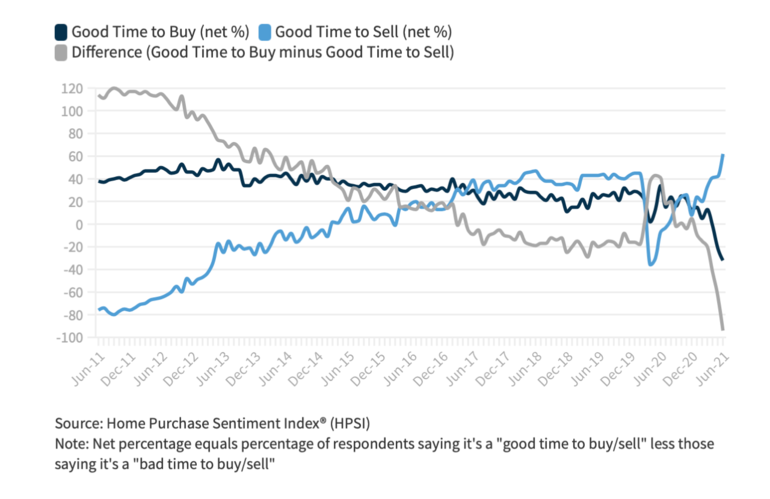
The “Good Time to Buy” and “Good Time to Sell” components once again produced the most notable results. On the buy-side, 64% of respondents said it’s a bad time to buy a home, up from 56% last month; while on the sell-side, 77% of respondents said it’s a good time to sell, up from 67% last month. The components more closely associated with household finances were largely flat month over month but remain elevated compared to this time last year, particularly the component regarding job security, according to Fannie Mae.
Year over year the overall index is up 3.2 points.
‘Record’ Readings
“The HPSI remained flat this month, although its underlying buy and sell components continued to diverge, setting record positive and negative readings, respectively,” said Doug Duncan, Fannie Mae senior vice president and chief economist. “Consumers also continued to cite high home prices as the predominant reason for their ongoing and significant divergence in sentiment toward homebuying and home-selling conditions. While all surveyed segments have expressed greater negativity toward homebuying over the last few months, renters who say they are planning to buy a home in the next few years have demonstrated an even steeper decline in homebuying sentiment than homeowners. It’s likely that affordability concerns are more greatly affecting those who aspire to be first-time homeowners than other consumer segments who have already established homeownership.
“Despite the pessimism in homebuying conditions, we expect demand for housing to persist at an elevated level through the rest of the year,” Duncan continued. “Mortgage rates remain not too far from their historical lows, and consumers are expressing even greater confidence about their household income and job situation compared to this time last year, when the pandemic had shut down wide swaths of the economy.”
Component Highlights
Among the highlights in the most recent HPSI:
- Good/Bad Time to Buy: The percentage of respondents who say it is a good time to buy a home decreased from 35% to 32%, while the percentage who say it is a bad time to buy increased from 56% to 64%. As a result, the net share of those who say it is a good time to buy decreased 11 percentage points month over month.
- Good/Bad Time to Sell: The percentage of respondents who say it is a good time to sell a home increased from 67% to 77%, while the percentage who say it’s a bad time to sell decreased from 25% to 15%. As a result, the net share of those who say it is a good time to sell increased 20 percentage points month over month.
- Home Price Expectations: The percentage of respondents who say home prices will go up in the next 12 months increased from 47% to 48%, while the percentage who say home prices will go down increased from 17% to 21%. The share who think home prices will stay the same decreased from 29% to 25%. As a result, the net share of Americans who say home prices will go up decreased 3%age points month over month.
- Mortgage Rate Expectations: The percentage of respondents who say mortgage rates will go down in the next 12 months remained unchanged at 6%, while the percentage who expect mortgage rates to go up increased from 49% to 57%. The share who believe mortgage rates will stay the same decreased from 38% to 30%. As a result, the net share of Americans who say mortgage rates will go down over the next 12 months decreased 8 percentage points month over month.
- Job Concerns: Fannie Mae reported the percentage of respondents who say they are not concerned about losing their job in the next 12 months increased from 87% to 88%, while the percentage who say they are concerned decreased from 12% to 11%. As a result, the net share of Americans who say they are not concerned about losing their job increased 2%age points month over month.
- Household Income: The percentage of respondents who say their household income is significantly higher than it was 12 months ago decreased from 29% to 27%, while the percentage who say their household income is significantly lower remained unchanged at 13%. The percentage who say their household income is about the same increased from 54% to 56%. As a result, the net share of those who say their household income is significantly higher than it was 12 months ago decreased two percentage points month over month.
For additional info, click here.