

WASHINGTON–The House of Representatives has adopted the Amodei-Aguilar amendment, which stops the NCUA budget from being moved under the House appropriations process.
The amendment, which had the strong backing of credit unions, was offered by Reps. Mark Amodei (R-NV) and Pete Aguilar (D-CA.) removed a provision from H.R. 3354 that would have made the change.
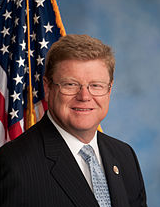
Rep. Mark Amodei
“This is a huge victory for credit unions and their member-owners. We thank Reps. Amodie and Aguilar for their steadfast leadership in keeping NCUA out of the appropriations process and the thousands of CUNA/League credit union activists who took action – these voices made all the difference on the Hill,” said Jim Nussle, CUNA president/CEO, in a statement. “Placing NCUA under appropriations would be the functional equivalent of a hidden tax on credit unions and their members.”
In a statement sent to credit unions, Nussle credited the passage of the amendment to what he called a “ferocious display of credit union advocacy.”
Meanwhile, NAFCU Vice President of Legislative Affairs Brad Thaler thanked representatives for standing up for credit unions in remarks offered during the trade group’s Congressional Caucus here.
"This amendment is imperative to preserving the NCUA as an autonomous regulator acting for the betterment of credit unions," said Thaler, who made the case for the amendment from the Congressional Caucus stage this morning.
CUNA, DCUC Meet with DoD on MLA
Separately, CUNA and the Defense Credit Union Council met with representatives of the Department of Defense on the Military Lending Act yesterday.
“We’ve been seeking guidance from the DoD on these MLA changes for many months now,” said CUNA’s chief compliance officer, Jared Ihrig.
Credit unions deserve unambiguous guidance on how they can continue service to servicemembers and their families without running afoul of the MLA. The DoD recognized our concerns about implementation of the credit card provisions, and said they would listen to credit unions and other industry concerns about difficulties they experience in implementing the regulation over the coming months, but advised that the forthcoming guidance will not touch upon the credit card provisions set to go into effect on Oct. 3; rather such guidance will address clarifications and ambiguities of regulatory provisions that became effective in October 2016.”
Ihrig added that DoD officials also indicated they have been consulting with other federal banking regulators, including NCUA and the Consumer Financial Protection Bureau, in developing additional guidance, and hope to meet with federal banking regulators near the end of October to further assess efforts of the regulatory implementation process by affected creditors and financial institutions.