

ORLANDO, Fla.–In a case over card “swipe fees,” the Supreme Court has issued another decision that makes it easier to challenge federal regulations, ruling the six-year statute of limitations clock under the Administrative Procedures Act does not start ticking until a plaintiff is adversely affected by the regulation.
The ruling comes just days after it ruled to overturn the so-called Chevron doctrine, which is expected to have huge repercussions for regulatory agencies such as the NCUA and CFPB, the courts and Congress.
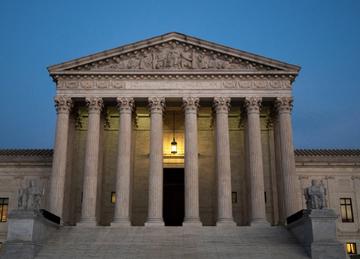
In its newest ruling, and again by a 6-3 vote that reflects its partisan divide, the conservative majority ruled the statute of limitations under the APA does not begin “until the plaintiff is injured by final agency action.”
The Biden administration had contended in its arguments before the court that the clock starts as soon as the agency in question issues its rule, a standard that would cut off many possible challenges, analysts noted.
Truck Stop Filed Case
The court’s ruling came in a case filed by Corner Post, a North Dakota truck stop that challenged a Federal Reserve regulation issued in 2011 that set a cap on debit card swipe fees
The Supreme Court reversed a lower court decision that had earlier dismissed the complaint as outside the statute of limitations.
In the case Corner Post argued the Fed set the cap higher than the “reasonable” limit directed by the 2010 Dodd-Frank Act. But the truck stop didn’t open its doors until 2018 — seven years after the Fed’s regulation — yet it argued it should still be able to file suit.
America's Credit Unions: 'Wild, Wild West'
“Between the rulings in Chevron and Corner Post v. Fed, the Supreme Court has created a wild, wild west for regulations," said America's Credit Unions' Chief Advocacy Officer Carrie Hunt. "Because of today's ruling, we are going to see industries working to one up each other and a constant dash to the courthouse to file lawsuits based on changing business circumstances. Prior to this decision, there were limitations in place, but now most credit unions and financial institutions won't have the certainty they rely on to run their operations. In regard to interchange, the merchants may come to regret this ruling because financial institutions have just as much, if not more ground to stand on to sue, due to the unstopped increase in fraud. Fraud merchants are not stopping.”
Retailers Praise Decision
Following the decision the National Retail Federation (NRF) issued a statement praising the ruling.
“The bottom line is that a small business harmed by a faulty regulation should not be denied its day in court based on a technicality, especially one that has been in dispute,” Stephanie Martz, the NRF’s chief administrative officer and general counsel, said in a statement. Martz was initially co-counsel on the case. “The Federal Reserve set the cap far higher than intended by Congress and merchants like Corner Post have paid millions of dollars too much as a result, in turn driving up prices for their customers. That harm is ongoing and hasn’t been changed by the passage of time. The Supreme Court has made the right decision by allowing this lawsuit to be decided on its merits.”
‘Wreaking Havoc’
Indicative of how strongly the minority felt about the decision, Justice Katanji Brown Jackson read her dissent aloud from the bench.
“Never mind that, in the administrative-law context, limitations statutes uniformly run from the moment of agency action. Never mind that a plaintiff ’s injury is utterly irrelevant to a facial APA claim. According to the Court, we must ignore all of this because, for other kinds of claims, accrual begins at the time of a plaintiff ’s injury,” Jackson said in her dissent. “The majority refuses to accept the straightforward, commonsense, and singularly plausible reading of the limitations statute that Congress wrote. In doing so, the Court wreaks havoc on government agencies, businesses, and society at large.”