

FT. LAUDERDALE, Fla.—Noting CECL can be a very daunting and data-driven process, one data analyst outlined what credit unions can expect from the new FASB standard and the steps they should be taking.
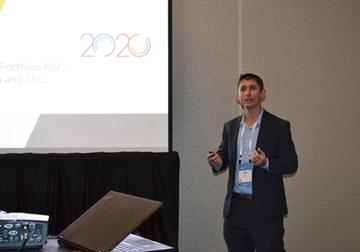
Dan Price
Speaking at Trellance’s Immersion19 meeting, Dan Price, president of 2020 Analytics, emphasized the large task at hand with the Financial Accounting Standards Board’s (FASB) current expected credit loss model (CECL) will require institutions to reserve not just for 12 months of projected losses on the loan portfolio, but for the entire life of all loans.
“Until a loan balance goes down to zero, you have to reserve for projected losses on that loan,” said Price.
Price stressed that a credit union’s ability to manage its way through CECL falls comes down to the completeness of the organization’s loan data, the data validity, and the staff’s ability to work with it.
“So, really understanding how much data history you have, what data elements are captured, what's in your loan portfolio…,” he said, “because if you don't understand that information, your knowledge of CECL, specifically, isn't going to give you enough to comply.”
Understanding the Lifecyle
Credit unions, Price stated, have to truly understand what the lifecycle of their loan portfolio looks like.
“And to do that you have to have the data,” he said. “You should be able to fill everything out and understand how your loans have performed historically.”
Addressing industry chatter that many credit unions may not be ready for CECL (with some even holding out hope it will not happen), Price said he believes CUs are split.
“I think some are paying attention, but there are some folks kind of procrastinating,” he said.
As CUToday.info reported here, one FASB official, in remarks to credit unions a week ago, has made it clear CECL is here to stay.
Price noted that lobbying groups from credit unions and community banks had been hoping to slow the advance of CECL, but feels they have pulled back now, adding that CECL’s expected compliance deadline in early 2020 should arrive on time.
“There is still dialogue between these groups and FASB, but now it’s more about how can you make CECL a little bit easier, not how do we slow it down or even stop it,” he said.
What About Lending?
Addressing concerns shared by some analysts that CECL will prompt some lenders to mistakenly tighten lending standards, Price agreed that’s a possibility.
“Yes, I think that is something for people to pay attention to,” he said. “It’s important for institutions to understand that nothing has changed about the loans they have in their portfolios. If they were good loans before CECL, they will be good after. If they were bad before CECL, they will be bad after. The cash flows are no different.”
One Step at a Time
How should credit unions get their arms around managing their loan data to comply with CECL?
“One step at a time,” said Price. “Think about the systems you have. If you got a core system, credit card and mortgage processors, take a step back and say, ‘Okay, what can we extract from our core, and how far can we go back,’ and then start communicating with your credit card processor and mortgage servicer to ask what can you get. Because they might not know. So start that dialogue early will be the best way to understand what you have.”
One attendee asked Price how loans made using non-traditional financing scores that use rent history, bill payment and other form of non-mainstream credit history could be impacted by CECL.
“Those can become a challenge as you factor them into the CECL model,” he said.