

WASHINGTON—U.S. residential construction activity weakened in October, with housing starts falling sharply even as permits held roughly steady, underscoring continued volatility in the housing market amid higher borrowing costs and affordability pressures.
New data from the U.S. Census Bureau and the Department of Housing and Urban Development show that builders pulled back on new groundbreakings, while completions rose modestly as projects already in the pipeline moved forward.
Housing starts declined 4.6% in October to a seasonally adjusted annual rate of 1.246 million units, down nearly 8% from a year earlier. The slowdown was driven largely by multifamily construction, while single-family starts rose 5.4% from September to an annual rate of 874,000, suggesting builders remain cautious but see some resilience in demand for single-family homes.
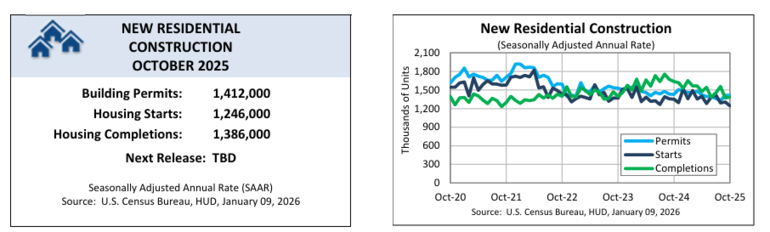
Building permits—a forward-looking indicator of construction—were essentially flat, slipping 0.2% from September to an annual rate of 1.412 million and down 1.1% year over year. Single-family permits edged lower, while authorizations for buildings with five units or more increased, pointing to a mixed outlook as developers weigh financing costs and market conditions.
Housing completions increased 1.1% in October to an annual rate of 1.386 million but remained more than 15% below last year’s level, reflecting a slowdown in the overall pace of finished homes entering the market. Census officials cautioned that month-to-month movements can be volatile and said it may take several months to establish a clearer trend in construction activity.