

MIAMI—As consumers look to boost spending power heading into the holiday season, a new report from personal-finance site WalletHub finds that Americans are holding—and opening—credit cards at an accelerating pace, with notable variation by state that could signal heightened risks of overspending or missed payments.
The average American now has more than five open credit cards, according to WalletHub’s analysis of consumer-finance data from the third quarter of 2025. While multiple cards can help consumers build credit and manage cash flow when used responsibly, WalletHub warned that rapid growth in card ownership can also increase financial strain, particularly as households juggle inflation, interest rates, and seasonal spending.
To identify where credit card ownership is growing fastest, WalletHub analyzed four metrics: the average number of credit cards owned per person, the average number of new cards opened per person in Q3 2025, and the year-over-year percentage change in both measures compared with Q3 2024.
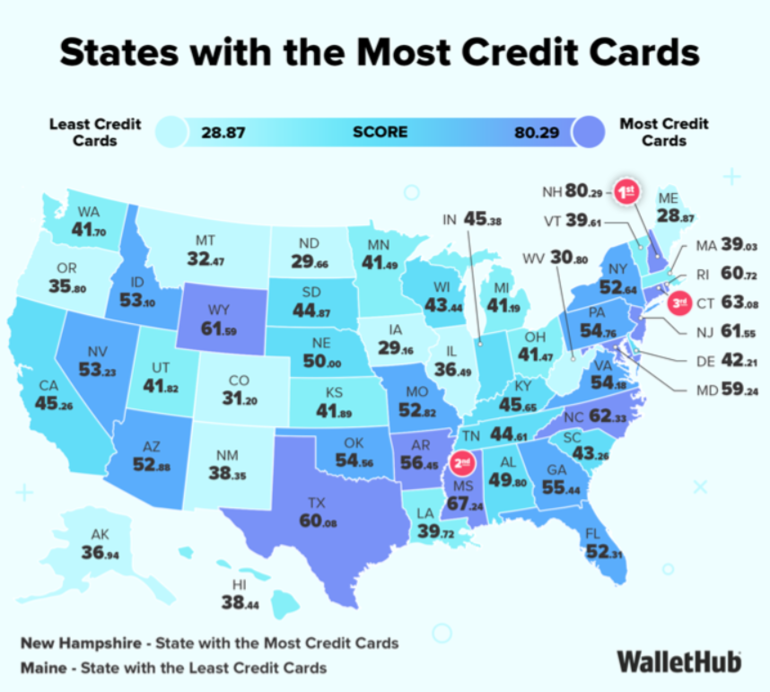
New Hampshire ranked first overall, driven by residents opening an average of 1.4 new credit cards during the third quarter—more than any other state—and a 16.9% year-over-year increase in new cards, the largest jump nationwide. The average New Hampshire resident now holds 5.6 credit cards. While the state has the 15th-highest median credit card debt, WalletHub noted that residents generally have good credit and only mid-range levels of financial distress, suggesting they can manage the growing number of accounts, at least for now.
Mississippi ranked second, with residents opening 9.2% more credit cards than a year earlier and expanding their portfolios faster than any other state. The average number of cards per person rose 4.3% year over year, and consumers added an average of 1.3 new cards in Q3 2025. WalletHub said Mississippi’s below-average credit card debt and slower debt growth suggest new cards may be helping consumers lower credit utilization rather than fueling excess spending.
Connecticut rounded out the top three, with residents opening an average of 1.3 new cards in the third quarter, the second-highest rate in the country, and an 8.6% year-over-year increase. The average Connecticuter holds 5.6 credit cards, though growth in total cards owned was more modest. WalletHub noted that Connecticut also ranks among the top states for household credit card debt and for the fastest growth in that debt—raising concerns about whether consumers can sustain the expanding use of credit.